1 week ago
Trump Election Emergency Talk Raises Fears of Federal Takeover
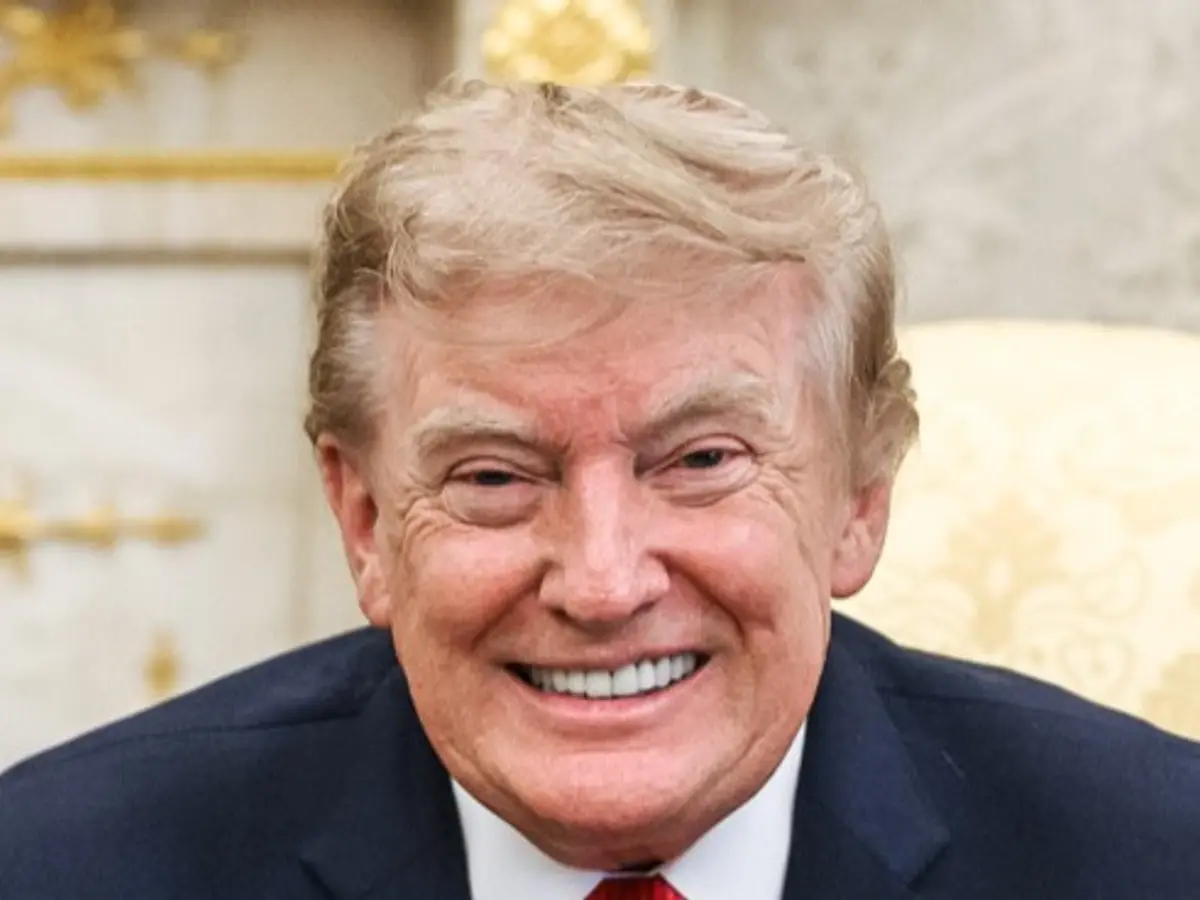
People are discussing whether President Donald Trump might declare a special emergency before the midterm elections.
He has warned that foreign countries and noncitizens could affect elections.
Some of his supporters want stricter rules, such as showing proof of citizenship to register to vote.
They also discuss limits on mail voting and stronger identification checks.
Former adviser Steve Bannon has predicted that Trump will announce an emergency.
Critics worry that federal agents or the National Guard could appear at polling places and scare some voters.
However, declaring an emergency does not automatically give the president unlimited power.
States run many parts of elections, so courts would probably decide whether any new actions were legal.

Donald Trump has declined to rule out declaring a national emergency before the November midterm elections, despite previously saying he did not plan to do so.
Trump allies have promoted an emergency declaration over alleged noncitizen voting, foreign interference, voting-machine vulnerabilities and mail ballots.
Supporters say emergency powers could help advance voter-identification and citizenship-proof requirements, while critics fear intimidation and federal interference in elections.
The existing 2018 emergency addressing foreign interference allows certain responses, but does not give the president general authority to rewrite election rules or take over administration.
Legal experts say states administer much of the election system and any attempt to expand federal control would likely face immediate court challenges.
- Who
- President Donald Trump, his allies and critics, election lawyers, advocacy groups, and state election authorities are involved in the debate.
- What
- The debate concerns whether Trump could declare a national emergency related to election security and use it to pursue greater federal control before the midterms.
- Where
- The issue concerns elections across the United States, including polling places and state-administered election systems.
- When
- The discussion has intensified after Trump's July national address and concerns the November midterm elections; the relevant SAVE America Act version was introduced in 2026.
- Why
- Supporters cite alleged foreign interference, noncitizen voting, voting-system vulnerabilities and election disinformation; critics say these claims could be used to justify unlawful or intimidating federal intervention.
Supporters of an Election Emergency
Critics of Federal Election Intervention
Need for emergency action
Supporters of an Election Emergency
Supporters argue that alleged foreign interference, noncitizen voting, voting-machine and mail-ballot vulnerabilities, and election disinformation justify urgent national-security action.
Critics of Federal Election Intervention
Critics say the claims about noncitizen voting and election vulnerabilities are unsupported or methodologically flawed and may be intended to stoke fear.
Possible election measures
Supporters of an Election Emergency
Supporters have linked an emergency declaration to voter-identification checks, proof-of-citizenship requirements and restrictions on mail-in voting if Congress does not pass the SAVE America Act.
Critics of Federal Election Intervention
Critics warn that using emergency powers this way could intimidate minority and immigrant voters and facilitate attempts to seize voting machines.
Federal control of elections
Supporters of an Election Emergency
Some Trump allies suggest an emergency could provide a basis for stronger federal involvement, including possible ICE or National Guard presence at polling places.
Critics of Federal Election Intervention
Legal experts and election advocates say the president cannot simply nationalize elections, rewrite state rules, postpone federal elections or take over administration without separate legal authority.
Key facts
- Existing emergency
- Executive Order 13848 established an emergency in 2018 concerning foreign interference in U.S. elections and efforts to undermine confidence in the electoral system.
- Trump's recent position
- In July, Trump said, “stranger things have happened” when asked whether he would declare an election-related national security emergency; in February, he said he did not intend to do so.
- SAVE America Act
- The proposed Safeguard American Voter Eligibility Act would require documentary proof of U.S. citizenship to register for federal elections.
- Noncitizen registration claim
- The administration highlighted a New Jersey software error that registered 6,600 noncitizens, fewer than 400 of whom actually voted.
- 2020 voting claim
- The Census Bureau said a preliminary matching exercise identified 24,000 noncitizens who voted in the 2020 election, while an election expert disputed the analysis.
- Emergency powers
- The National Emergencies Act allows a president to activate specific statutory authorities, but a declaration alone does not create unlimited powers.
- Election administration
- The Constitution assigns key election-administration responsibilities to the states, while Congress can alter rules for federal elections.
Quotes

Donald Trump
US president responding to a question about declaring an election-related national security emergency
“We need a National Security Emergency about the midterm elections immediately – this is a powerful predicate for that”
 wionews.com
“Let me just say, stranger things have happened, OK? I’ll leave it at that.”
wionews.com
Sources
Related news

Trump Election Moves Raise Fears of Emergency Voting Powers

Trump's Cryptic Response to Plan for Election Power Grab
Trump Renews Noncitizen Voting Claim, Urges Passage of SAVE Act

Trump renews voter ID push as midterms approach

Trump Cites India’s Voter ID System to Push SAVE Act
Congress Jibes as Trump Praises India's Voter ID System

Meta’s Cambridge Analytica Settlement Leaves New Mexico Trial Ahead

Americans Falling Out of Love With Israel, Polls Show

Trump suggests Fauci should be prosecuted after Rand Paul's demand

BBC Wins Court Approval for Trump Subpoenas