

Archive · 15 Nov 2025
Digital Campaign in Bihar Polls Deemed Hateful, Targeting Muslims
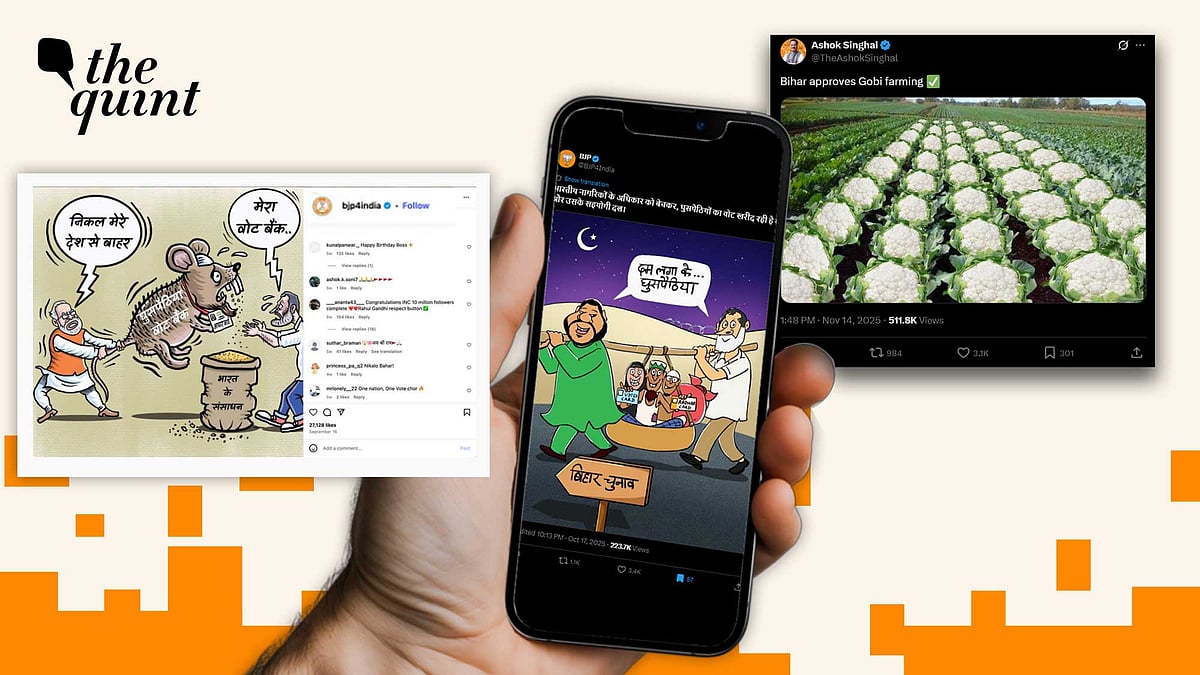
Imagine a big online discussion during an election in a place called Bihar.
Some people online started saying very mean and hateful things about Muslims, calling them names like 'rats' and using strange phrases.
A group that helps people with human rights looked at many of these online pages.
They found that these hateful messages were not just random; they were part of a plan.
This plan was to make people believe that Muslims were not real citizens and shouldn't be allowed to participate in important decisions.
It was like spreading a harmful story to make others dislike and exclude a group of people.

A digital campaign during the Bihar polls used hateful language targeting Muslims, including terms like 'Gobi Farming' and referring to them as 'rats'.
A report by the Foundation Diaspora in Action for Human Rights and Democracy (DAHRD) documented a systemic campaign of anti-Muslim hate speech on social media.
The analysis covered 211 social media pages and groups with a combined following of 91.1 million users.
Digital narratives were used to construct Muslims as illegitimate citizens.
The campaign aimed to rationalize the exclusion of Muslims from political life.
- Who
- Foundation Diaspora in Action for Human Rights and Democracy (DAHRD) and social media users
- What
- A hateful digital campaign using terms like 'Gobi Farming' and referring to Muslims as 'rats', aiming to construct Muslims as illegitimate citizens and justify their exclusion from political life.
- When
- During the Bihar polls (specific dates not provided, but linked to election period)
- Where
- On social media platforms, during the Bihar polls.
- Why
- To construct Muslims as illegitimate citizens and rationalize their exclusion from political life.
Concerns Raised by DAHRD Report
Implied Lack of Official Counter-Narrative
Nature of the Campaign
Concerns Raised by DAHRD Report
The campaign included hateful terms like 'Gobi Farming' and referred to Muslims as 'rats'.
Implied Lack of Official Counter-Narrative
The report outlines a systemic campaign of anti-Muslim hate speech on social media.
Objective of the Campaign
Concerns Raised by DAHRD Report
Digital narratives systematically constructed Muslims as illegitimate citizens.
Implied Lack of Official Counter-Narrative
The campaign aimed to rationalize the exclusion of Muslims from political life.
Scope of the Campaign
Concerns Raised by DAHRD Report
The analysis covered 211 social media pages and groups.
Implied Lack of Official Counter-Narrative
These platforms collectively had a following of 91.1 million users.
- Reporting Organization
- Foundation Diaspora in Action for Human Rights and Democracy (DAHRD)
- Type of Organization
- Indian diaspora-led non-profit
- Analysis Scope
- 211 social media pages and groups
- Total Following
- 91.1 million users
- Focus of Analysis
- Systemic campaign of anti-Muslim hate speech and digital narratives