

Archive · 9 Dec 2025
NOAA Warns of Strong Geomagnetic Storm on Tuesday
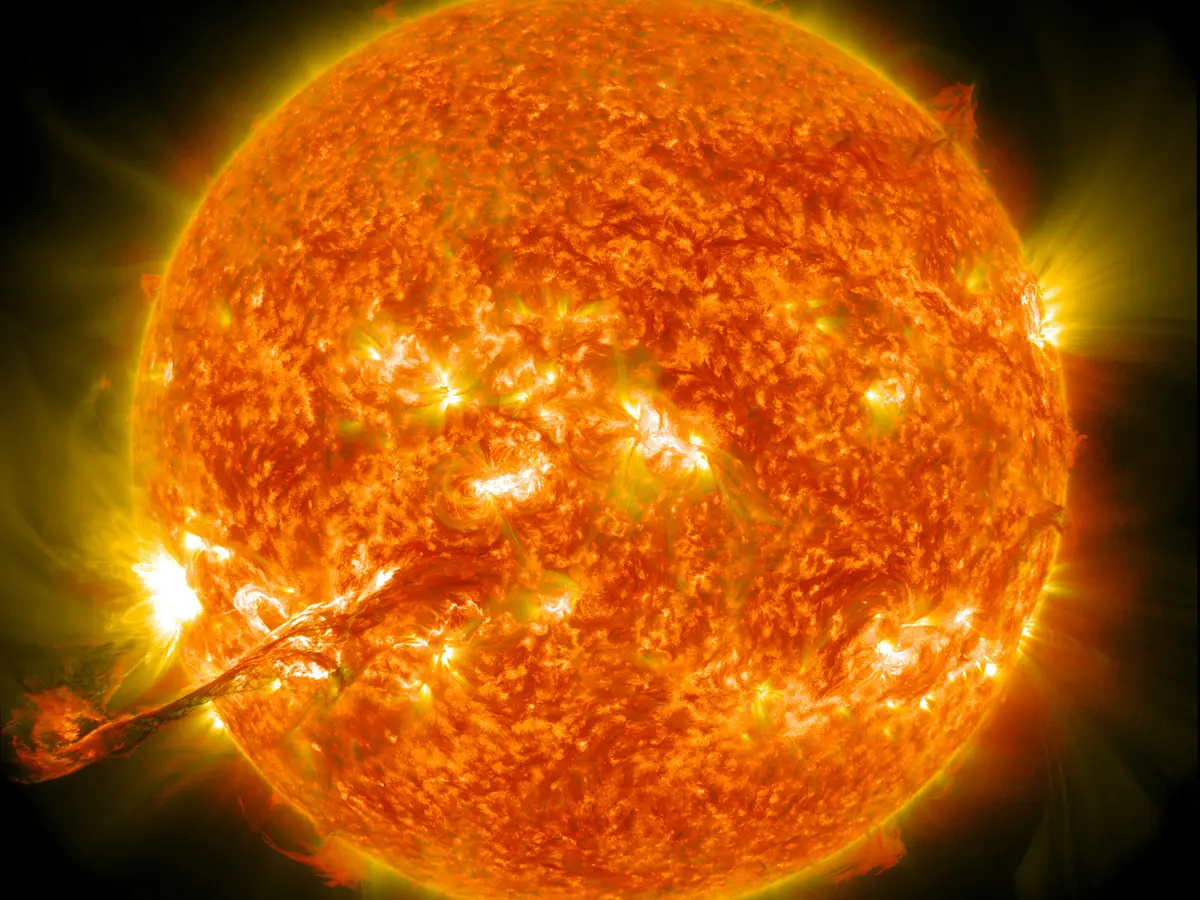
The Sun sometimes sends out big bursts of energy and particles, called coronal mass ejections.
On Tuesday, one of these bursts is expected to reach Earth.
This could cause a strong geomagnetic storm, which might mess with satellites and radio signals.
It could also make the northern lights visible in places where they aren't usually seen, like Oregon.
The NOAA, which studies space weather, says this storm could be strong but not dangerous for people on Earth.

A coronal mass ejection (CME) is expected to reach Earth between early morning and midday Tuesday.
The CME is tied to an M8.1-class solar flare and may trigger a G3-level geomagnetic storm.
The storm could cause minor to moderate technological disturbances, including satellite and radio signal issues.
The surge in solar energy may intensify auroras, making them visible as far south as Oregon.
NOAA’s Space Weather Prediction Center issued the alert, noting the potential impacts on technology and aurora visibility.
- Who
- NOAA’s Space Weather Prediction Center
- What
- A strong geomagnetic storm due to a coronal mass ejection
- When
- Expected to arrive between early morning and midday Tuesday
- Where
- Earth, with potential aurora sightings as far south as Oregon
- Why
- The coronal mass ejection is tied to an M8.1-class solar flare, which may trigger heightened geomagnetic activity
- Event Type
- Coronal Mass Ejection (CME)
- Expected Arrival
- Between early morning and midday Tuesday
- Storm Level
- G3 (Strong)
- Potential Impacts
- Minor to moderate technological disturbances, including satellite and radio signal issues
- Aurora Visibility
- Possible sightings as far south as Oregon
- Source of Alert
- NOAA’s Space Weather Prediction Center
- Associated Solar Flare
- M8.1-class