

Archive · 16 Nov 2025
Moon Confirmed to Have Solid, Iron-Like Inner Core, Solving Decades-Old Mystery
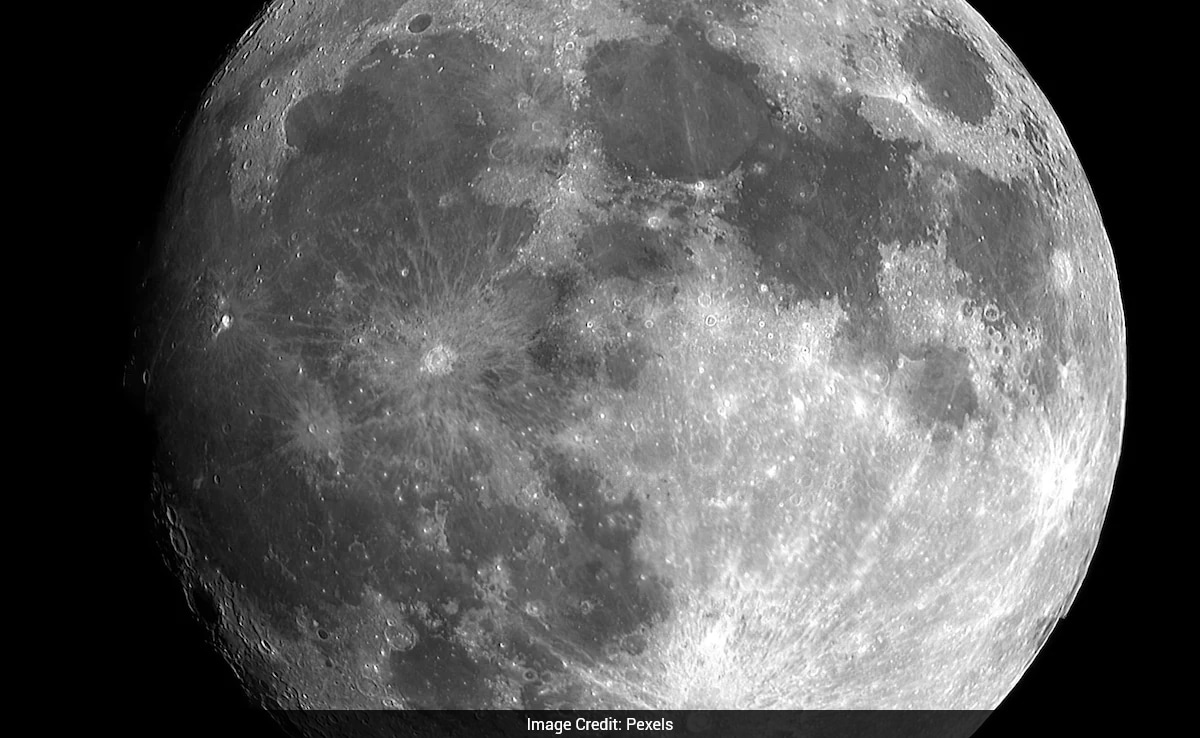
Imagine the Moon is like a peach!
For a long time, scientists weren't sure what was at its very center.
Some thought it was like jam (liquid), and others thought it was like a hard seed (solid).
A new study used lots of information from space missions and moonquakes to figure it out.
They discovered that the Moon has a solid middle part, like a tiny iron seed, and around that, it has a squishy, liquid part.
This is similar to how Earth is built inside.
Knowing this helps us understand why the Moon used to have a magnetic shield, like Earth does, but lost it a long, long time ago.
It also helps explain why certain things appear in the Moon's volcanic areas.
It tells us the Moon was much more active in its younger days.

A new study published in Nature reveals the Moon possesses a solid inner core with an iron-like density.
The Moon's core structure is now understood to be a solid inner core surrounded by a liquid outer core, mirroring Earth's composition.
Data from seismic activities, lunar laser ranging, and space missions were used to create an accurate model of the Moon's interior.
The findings help explain the historical loss of the Moon's magnetic field, linking it to the cooling and solidification of its core.
The study also sheds light on the Moon's ancient volcanic activity and the phenomenon of 'global mantle overturn'.
- Who
- A team of scientists led by Arthur Breu of CNRS
- What
- Published a study confirming the Moon has a solid inner core and a liquid outer core, similar to Earth.
- When
- Published in May 2023, based on data collected over several years.
- Where
- The Moon
- Why
- To resolve long-standing debate about the Moon's core composition and better understand its evolution, magnetic field loss, and volcanic activity.
Previous Beliefs
New Study Findings
Nature of the Moon's Core
Previous Beliefs
Scientists were divided, with some believing the Moon's core was molten (liquid) and others suggesting it could be solid.
New Study Findings
The Moon has a solid inner core surrounded by a liquid outer core, similar to Earth's structure.
Explanation for Magnetic Field Loss
Previous Beliefs
The reasons for the Moon's ancient magnetic field weakening and disappearing were unclear.
New Study Findings
The cooling and solidification of the Moon's inner core led to decreased activity, causing the loss of its magnetic field.
- Publication Date
- May 2023
- Lead Researcher
- Arthur Breu (French National Centre for Scientific Research - CNRS)
- Journal
- Nature
- Solid Inner Core Radius
- Approx. 258 km (160 miles)
- Liquid Outer Core Radius
- Approx. 362 km (225 miles)
- Solid Inner Core Density
- Approx. 7,822 kg/m³ (similar to iron)