Archive · 22 Aug 2025
Indian Team Releases Advanced Data Set for Gravitational Wave Search

Scientists in India have released a new set of data from their special telescope that studies tiny stars called pulsars.
This data helps them look for ripples in space called gravitational waves, which are created by huge things like black holes.
The new data uses a bigger telescope and is more accurate than before, allowing scientists to study the effects of space 'stuff' and find these waves more easily.
This new release is expected to contribute significantly to the worldwide hunt for gravitational waves.

The Indian Pulsar Timing Array (InPTA) released its second data set, DR2, for gravitational wave research.
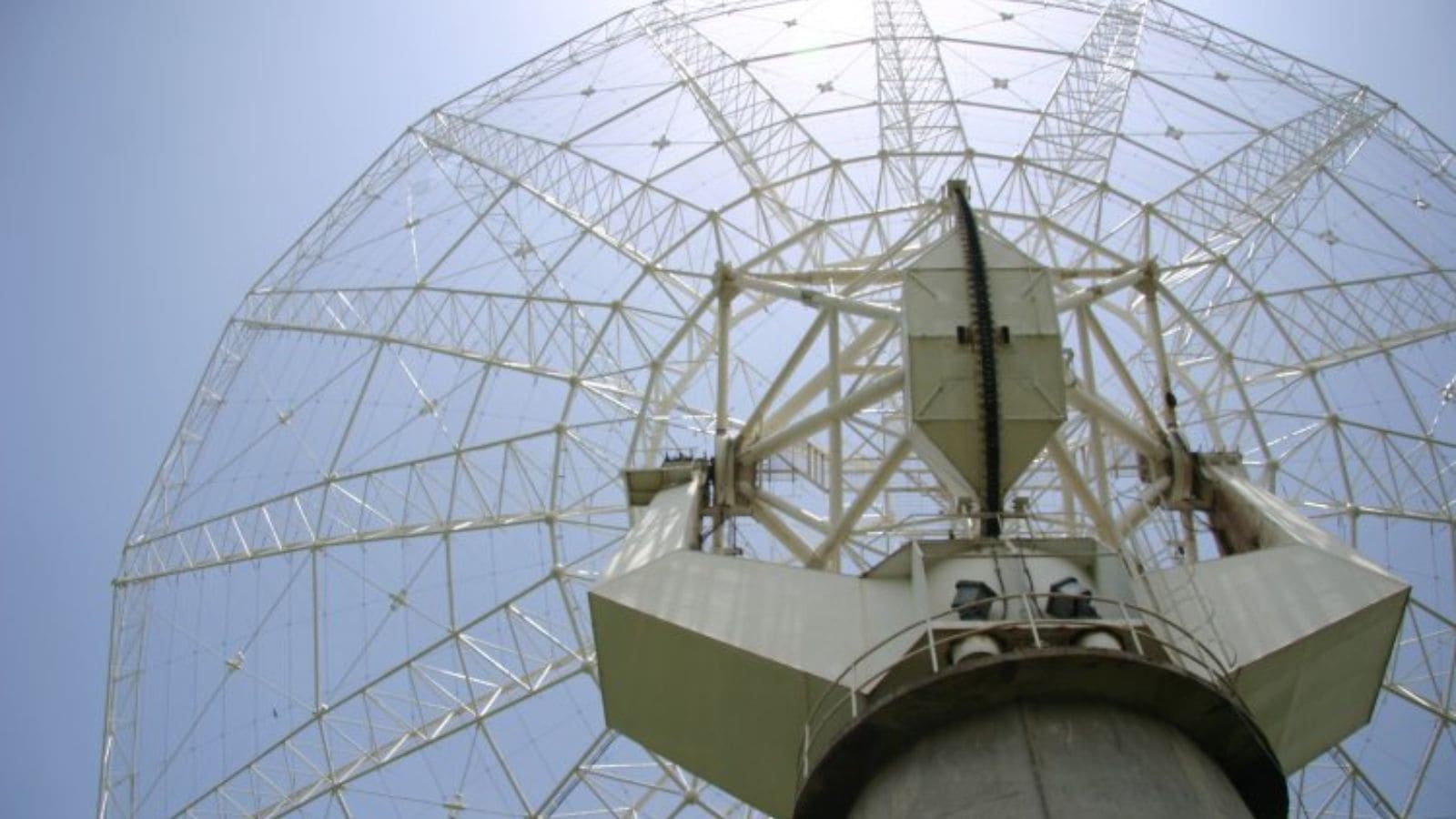
DR2 utilizes seven years of observations of 27 pulsars using the upgraded Giant Meterwave Radio Telescope (GMRT) in Pune.
The data set includes enhanced timing accuracy, improved mitigation of interstellar medium effects, and expanded pulsar network.
Researchers include astronomers from NCRA, IITs of Mumbai, Hyderabad, and Roorkee, and other institutions.
DR2 is expected to contribute significantly to the International Pulsar Timing Array's upcoming DR3.
- Who
- Researchers from NCRA, IITs, and other institutions.
- What
- Release of the second data set (DR2) by the Indian Pulsar Timing Array for gravitational wave research.
- When
- The data release spans over seven years of observations.
- Where
- Pune, India, using the Giant Meterwave Radio Telescope (GMRT).
- Why
- To contribute to the search for ultra-low-frequency gravitational waves and enhance understanding of the interstellar medium.
- Data Set Name
- DR2 (Data Release 2)
- Pulsars Observed
- 27
- Observation Duration
- Up to 7.3 years
- Telescope Used
- Giant Meterwave Radio Telescope (GMRT)
- Location
- Pune, India
- Timing Accuracy
- Better than a millionth of a second for some sources