

Archive · 26 Sep 2025
Common Car Insurance Claim Mistakes and How to Avoid Them
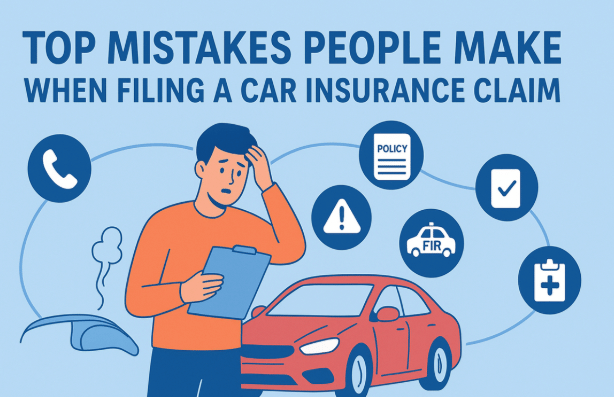
When you have a car accident or damage, you file a claim with your insurance company.
But sometimes, claims get delayed or denied because of simple mistakes.
One mistake is waiting too long to tell your insurance company about the problem.
Another is not reading your insurance policy to know what's covered.
You also need to provide correct and complete information and file a police report when required.
Don't start fixing your car before the insurance inspector checks it.
Finally, keep all your receipts and photos as proof, and remember to keep your insurance policy up to date to ensure a smooth claim process.

Failing to immediately notify the insurer after an incident can invalidate a claim.
Skipping the details in the car insurance policy leads to filing claims for uncovered issues.
Providing inaccurate or incomplete information on claim forms causes delays and complications.
Not filing a First Information Report (FIR) when required can result in claim denial.
Starting repairs before the insurance surveyor inspects the car is a critical error.
- Who
- Car insurance policyholders and insurers.
- What
- Common mistakes made when filing a car insurance claim.
- When
- When filing a car insurance claim.
- Where
- When filing a claim.
- Why
- To avoid delays or rejection of car insurance claims.
- Reporting Timeframe
- Notify insurer immediately after an accident or damage
- Required Documents
- Claim form, insurance policy copy, vehicle registration, driving license, FIR (if applicable), repair estimates and bills, damage photos, and loss details form
- FIR Requirement
- File for theft, injuries, or major third-party damages
- Repair Timing
- Start repairs after surveyor review and insurer approval
- Claim Rejection Grounds
- Late reporting, incomplete paperwork, false details, or damages not covered