5 hrs ago
Trump Administration Proposes $70,000 Fee for International Students’ Work

The US government has proposed a very large fee for a programme that lets international students work in jobs related to their studies.
Colleges and universities, not the students directly, would have to pay the fee.
It would be $70,000 for a first application and $30,000 for a renewal.
Most students can work for up to a year after graduation, and some STEM graduates can work for two more years.
The Department of Homeland Security says the fee would help address fraud and abuse.
Education groups say the programme helps students gain experience and that the fee could discourage them from studying in the United States.
People have 60 days to comment, and the proposal is not yet final.
A different rule limiting how long students could stay without federal approval was blocked by a court in September.

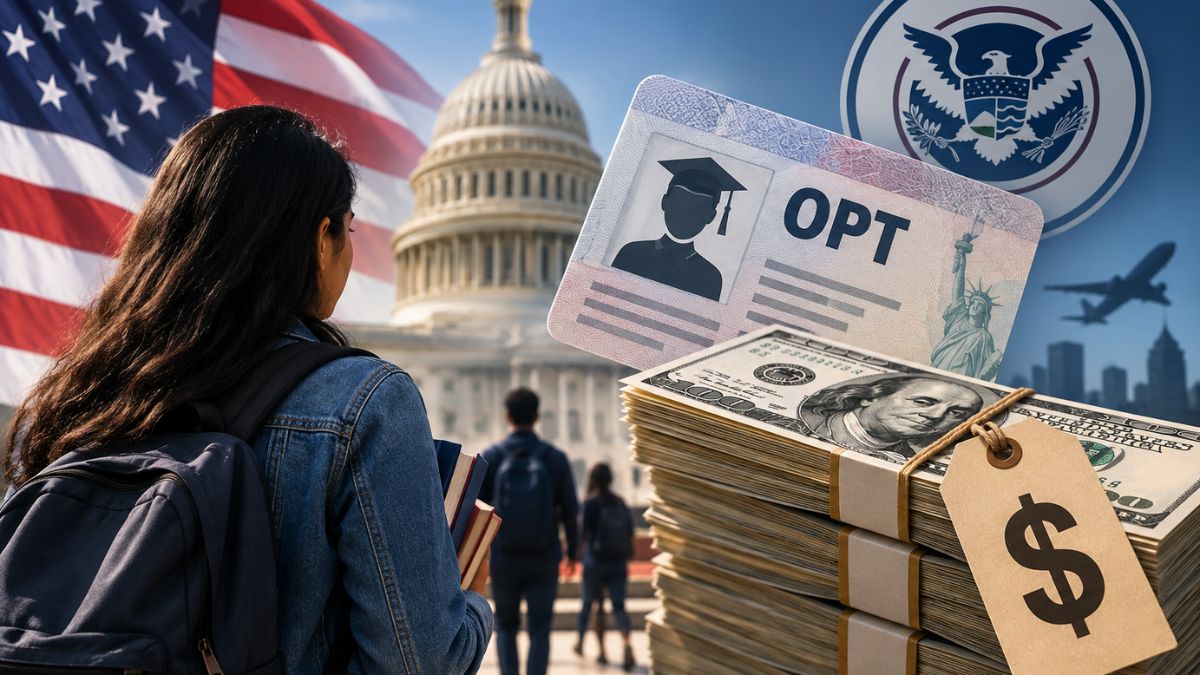
The Department of Homeland Security proposed a $70,000 fee for each international student’s initial Optional Practical Training application, payable by schools.
The proposal sets a $30,000 fee for each renewal of an OPT application.
OPT allows international students to work in jobs related to their studies; eligible STEM graduates may work for up to two additional years after the usual one-year post-graduation period.
DHS said the fee is intended to address fraud and abuse, while education representatives warned it could hurt innovation and international enrollment.
The proposal is open to public comment for 60 days and could face legal challenges; a separate four-year stay rule was blocked by a federal court in September.
- Who
- The Department of Homeland Security proposed the fee; colleges and universities would pay it for international students.
- What
- A proposed $70,000 initial fee and $30,000 renewal fee for participation in Optional Practical Training.
- Where
- United States
- When
- The proposal was announced on a Wednesday; the public has 60 days to comment. The articles do not specify the date.
- Why
- DHS cited fraud and abuse in the visa programme; education representatives say OPT provides work experience and helps fill labor shortages in high-demand STEM fields.
DHS’s stated rationale
Critics’ concerns
Purpose of the fee
DHS’s stated rationale
DHS described the fee as a response to fraud and abuse and called OPT a “pipeline for cheap foreign labor.”
Critics’ concerns
NAFSA’s Fanta Aw said international students’ skills and perspectives support innovation, economic growth, workforce development and US global leadership.
Effect on universities and employers
DHS’s stated rationale
DHS presented the fee as a measure addressing abuse of the visa programme.
Critics’ concerns
Education and business interests warned that the high fee could discourage schools from using OPT, harm international enrollment, and affect employers hiring international graduates.
Legal outlook
DHS’s stated rationale
The proposal remains open for public comment before DHS can finalize it.
Critics’ concerns
Former US Citizenship and Immigration Services adviser Doug Rand predicted the fee would be struck down; the articles say the proposal could face legal challenges.
Key facts
- Initial OPT fee
- $70,000 per student application, paid by the school under the proposal
- Renewal fee
- $30,000
- Programme
- Optional Practical Training (OPT), for work related to students’ fields of study
- Typical post-graduation period
- Up to one year
- STEM extension
- Eligible graduates may qualify for two additional years
- Comment period
- 60 days
- Enrollment figures cited
- New international student arrivals fell 17% last fall; some colleges reported 30%–40% declines
- Separate stay rule
- A rule limiting stays beyond four years without federal approval was blocked by a federal court in September
Quotes
Steven Brown
Houston-based immigration lawyer
“I think this is the next level of attack, and I think it’s a design to kill the program without killing the program. I don’t see too many schools wanting to pay $70,000 for a student to get OPT.”
 deccanchronicle.com
“Driving away the talents, perspectives, and aspirations of international students will only hurt American innovation, economic growth, workforce development, and global leadership.”
 firstpost.com
deccanchronicle.com
firstpost.com
deccanchronicle.com
Doug Rand
Former senior adviser at U.S. Citizenship and Immigration Services during the Biden administration
“When we educate international students at our universities, and they want to work and apply their talents here after graduating, of course we should embrace them -- not use an exorbitant fee as a pretext to send them packing”
deccanchronicle.com
Sources
Related news
Trump Administration Proposes $70,000 OPT Fee for F-1 Students

US Proposes $70,000 Fee for First-Time OPT Participation
DHS Proposes Fees Up to $100,000 for Student OPT
OPT Fee Proposal Advances, Raising Concerns for Indian Students
White House Review Advances Proposed OPT Fee Rule
Trump Extends $100,000 H-1B Fee Order Amid Legal Challenges
US Universities Report International Application Declines Amid Visa Uncertainty