Archive · 25 Jul 2026
India Plans Standard Design for Bullet Train Network
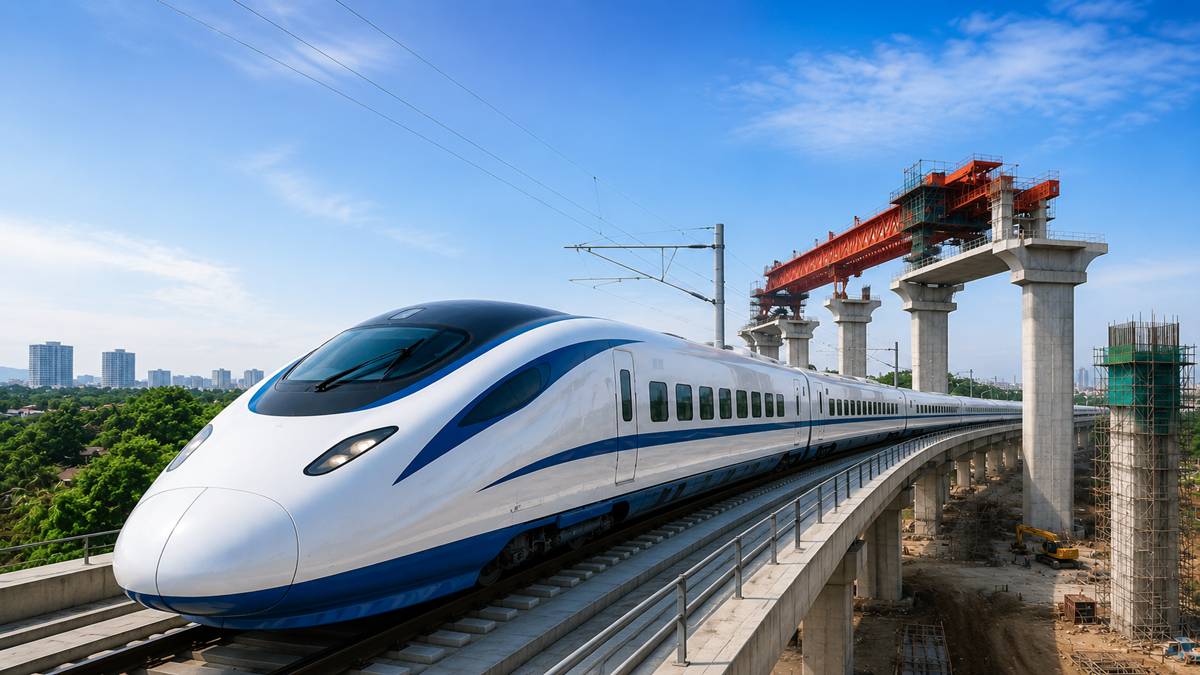
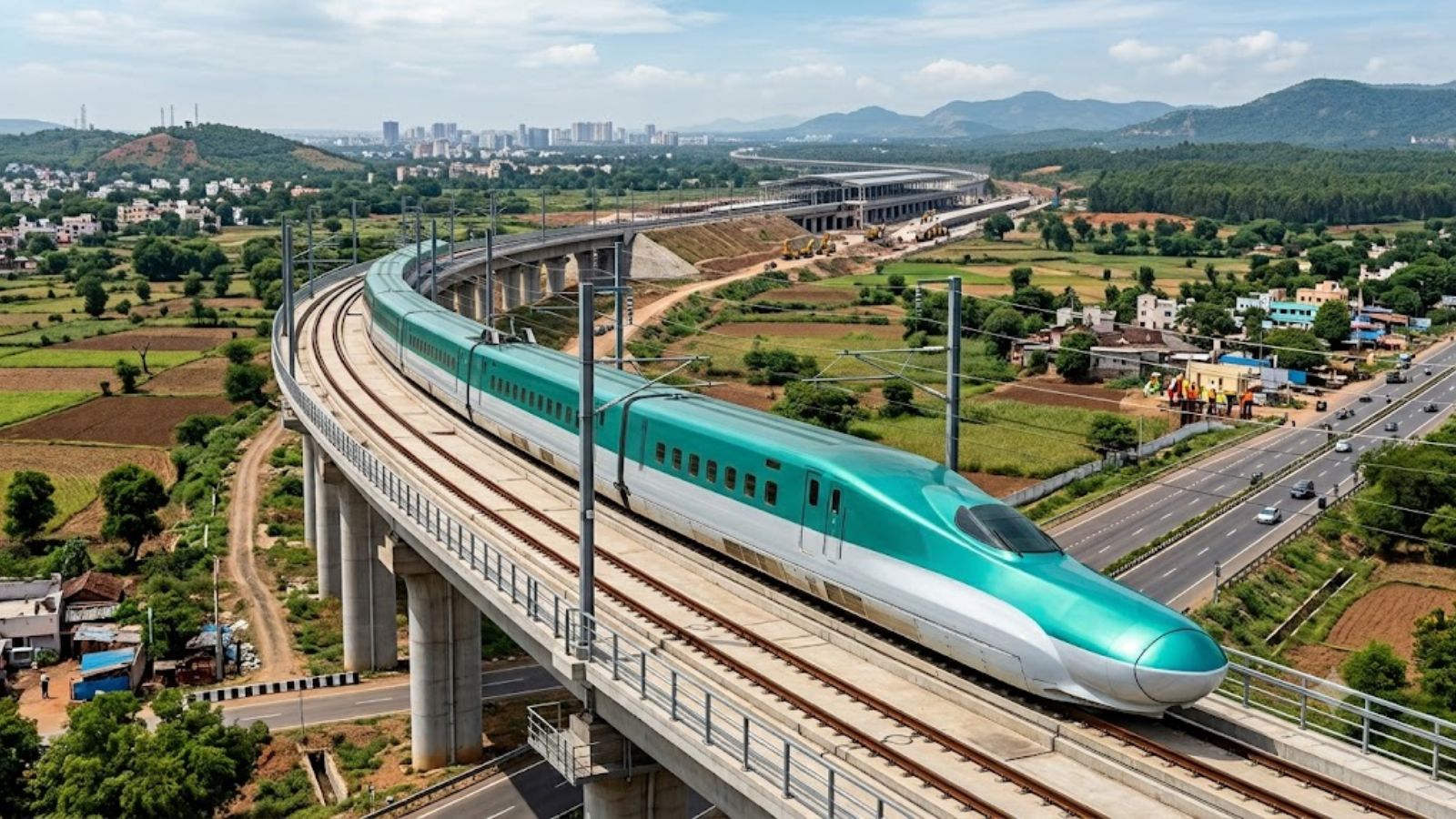
India is building its first bullet train between Mumbai and Ahmedabad.
This train will be very fast, traveling at up to 320 kmph.
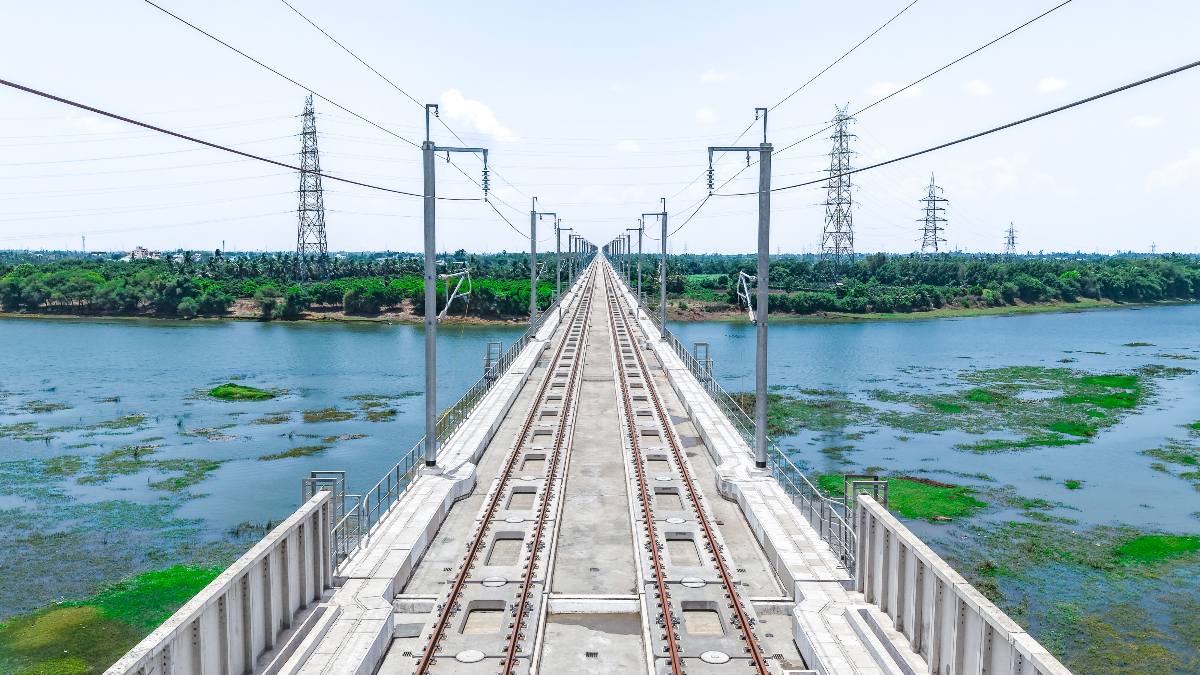
To make this possible, a special power system is being installed.
This system, called the 2×25 kV Overhead Traction System, will provide a stable and uninterrupted power supply to the trains.
The system includes 14 Traction Substations, 31 Switching Posts, and 16 Distribution Substations.
It also has safety features like Early Earthquake Detection Seismometers to protect the trains in case of earthquakes.
The bullet train will have 12 stations and will reduce the travel time between Mumbai and Ahmedabad to just 2 hours and 7 minutes.
Additionally, India plans to use the experience from this project to shape its future high-speed rail network, adopting a common design for seven new bullet train corridors announced in the Union Budget 2026-27.

India is planning to use the experience from the Mumbai-Ahmedabad Bullet Train project to shape its future high-speed rail network.
The Railways plans to adopt a common design for seven new bullet train corridors announced in the Union Budget 2026-27.
The National High Speed Rail Corporation Limited (NHSRCL) is developing standard designs and technical specifications based on the Mumbai-Ahmedabad project.
The seven proposed bullet train corridors are Mumbai–Pune, Pune–Hyderabad, Hyderabad–Bengaluru, Hyderabad–Chennai, Chennai–Bengaluru, Delhi–Varanasi, and Varanasi–Siliguri.
The common design will help reduce construction time, lower costs, and strengthen India's engineering capabilities.
- Who
- National High Speed Rail Corporation Limited (NHSRCL)
- What
- Installation of advanced power system for Mumbai-Ahmedabad Bullet Train and planning for seven new bullet train corridors
- When
- Ongoing
- Where
- Mumbai-Ahmedabad High-Speed Rail corridor and seven new proposed corridors
- Why
- To provide stable and uninterrupted power supply for bullet trains operating at high speeds and to standardize designs for future high-speed rail corridors
Proponents of High-Speed Rail
Critics of High-Speed Rail
Economic Benefits
Proponents of High-Speed Rail
Proponents argue that the bullet train will significantly reduce travel time, boost economic activity, and create jobs.
Critics of High-Speed Rail
Critics contend that the project is too expensive and that the funds could be better spent on improving existing infrastructure.
Environmental Impact
Proponents of High-Speed Rail
Supporters believe the bullet train will reduce carbon emissions by providing a faster, more efficient mode of transportation.
Critics of High-Speed Rail
Opponents argue that the construction and operation of the bullet train will have a negative environmental impact, including habitat destruction and increased energy consumption.
- Project Name
- Mumbai-Ahmedabad High-Speed Rail (MAHSR)
- Corridor Length
- 508 km
- Maximum Speed
- 320 kmph
- Number of Stations
- 12
- Expected Travel Time
- 2 hours and 7 minutes
- Power System
- 2×25 kV Overhead Traction System
- Number of Traction Substations
- 14
- Number of Seismometers
- 28
- New Corridors Announced
- 7
- Standard Design Library
- Bharat High Speed Rail Programme