

Archive · 12 Jan 2026
Declining Tradition: Sankranti Bulls Face Extinction
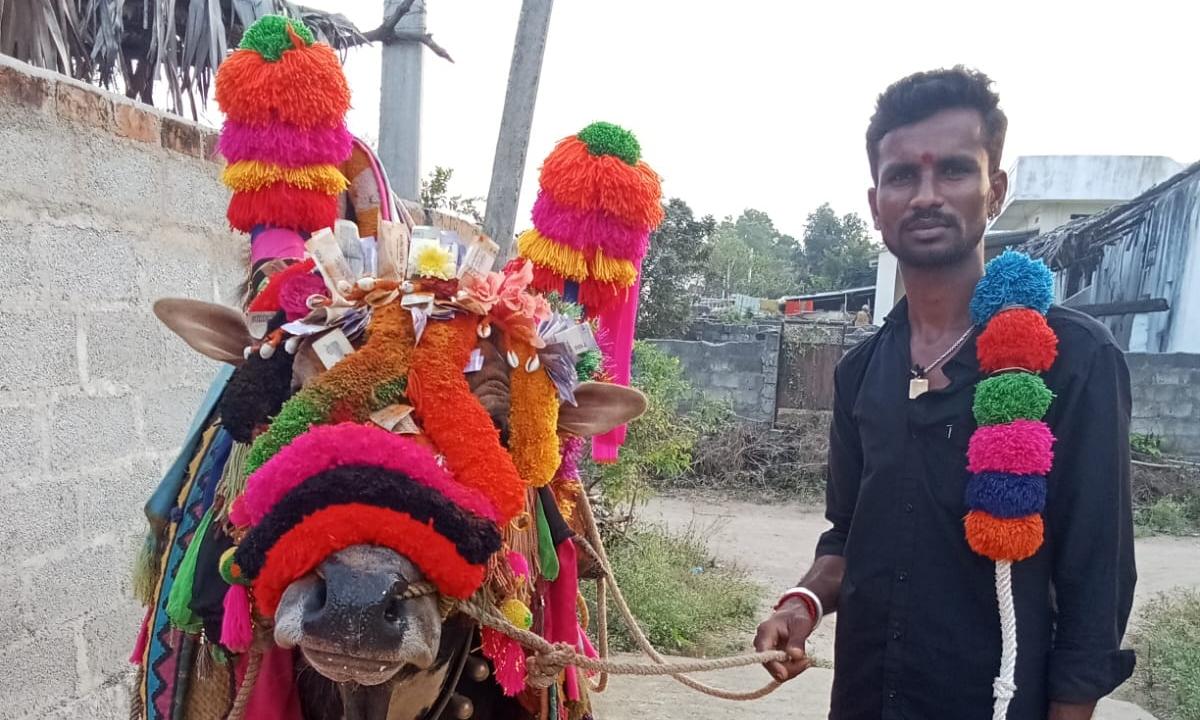
In a village in Nalgonda district, there's a tradition where people take decorated bulls called Gangireddulu and performers called Haridasulu from house to house during the Sankranti festival.
But now, this tradition is disappearing.
A long time ago, many families in the village had these trained bulls, but now only a few families keep them.
The families say it's hard to earn enough money to take care of the bulls and themselves.
They spend a lot on food for the bulls and sometimes get hurt while performing.
Because of this, many families have stopped doing this and found other jobs.
But a few families still do it for a few days during Sankranti to keep the tradition alive.

Traditional Sankranti performances with Gangireddulu bulls and Haridasulu minstrels are declining in rural areas.
Only a few families from the Pooja Golla and Dasari communities continue these traditions due to low income and high costs.
Trained bulls cost ₹70,000 each, and maintaining them is expensive with monthly fodder costs of ₹20,000 per bull.
Performers earn only ₹1,000 to ₹1,200 per day, making it difficult to sustain the tradition.
Many families have abandoned the tradition and taken up other occupations, with only five trained bulls remaining in Mamillagudem village.
- Who
- Pooja Golla and Dasari communities
- What
- Decline of traditional Gangireddulu and Haridasulu performances during Sankranti
- When
- Present day, with significant decline over the past decade
- Where
- Mamillagudem village in Nalgonda district, Telangana
- Why
- Low income, high costs, and health risks associated with maintaining the tradition
- Traditional Art Forms
- Gangireddulu and Haridasulu
- Communities Involved
- Pooja Golla and Dasari
- Cost of a Trained Bull
- ₹70,000
- Daily Earnings
- ₹1,000 to ₹1,200
- Monthly Fodder Cost per Bull
- ₹20,000
- Number of Trained Bulls Remaining
- 5
- Location
- Mamillagudem village, Nalgonda district