

Archive · 19 Jul 2026
India's Vikram-1 Rocket Launch Marks Private Space Milestone
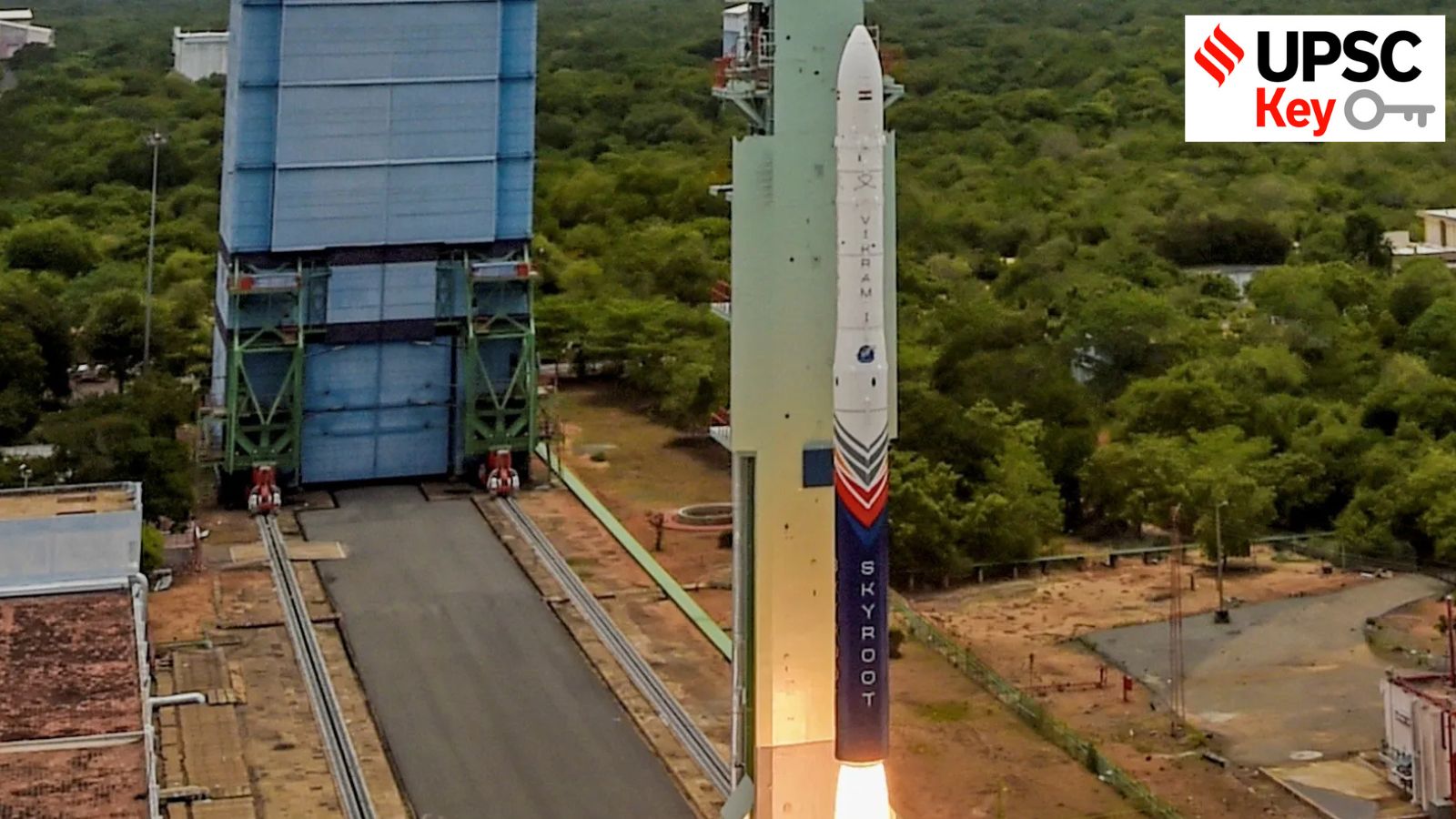
India's space program has reached a new milestone with the successful launch of the Vikram-1 rocket, developed by a private company called Skyroot Aerospace.
This rocket is special because it is the first privately-built launch vehicle in India to achieve an orbit around the Earth and deploy satellites.
The rocket is named after Vikram Sarabhai, the father of India's space program.
It is made of carbon composite instead of metal and has 3D-printed engines, which make it more efficient and cost-effective.
The launch is significant because it shows that private companies can play a big role in advancing space technology.
The Indian government has been supporting this by creating organizations like IN-SPACe to help private companies participate in the space sector.
This launch makes India only the third country, after the United States and China, to have private companies that can launch rockets into space.
The Vikram-1 rocket can carry small satellites weighing up to 350 kg to Low Earth Orbit, which is the region between 160 km and 2,000 km above Earth's surface.
The rocket's engines are named after famous Indian scientists like Dr. APJ Abdul Kalam and Dr. C V Raman.
This achievement is a big step forward for India's space program and shows the potential of private sector involvement in space exploration.

India's Vikram-1 rocket, developed by Skyroot Aerospace, successfully achieved an orbit around the Earth and deployed satellites.
The rocket is named after Vikram Sarabhai, the father of India's space program, and features 3D-printed engines and a carbon composite structure.
This launch marks India as the third country, after the United States and China, to have private companies capable of launching rockets into space.
The Indian government has been supporting private sector participation in the space sector through organizations like IN-SPACe.
The Vikram-1 rocket can carry small satellites weighing up to 350 kg to Low Earth Orbit, which is the region between 160 km and 2,000 km above Earth's surface.
- Who
- Skyroot Aerospace, a Hyderabad-based company, developed the Vikram-1 rocket.
- What
- The Vikram-1 rocket successfully achieved an orbit around the Earth and deployed satellites.
- When
- The launch took place on Saturday, July 19, 2026.
- Where
- The launch occurred in India, with the rocket deploying satellites in Low Earth Orbit.
- Why
- The launch marks a significant milestone in India's space program, enabling private sector participation and advancing space technology.
Proponents of Private Sector Participation
Critics of Private Sector Participation
Economic Benefits
Proponents of Private Sector Participation
Private sector participation can drive innovation, reduce costs, and create jobs, benefiting the economy.
Critics of Private Sector Participation
Private sector involvement may lead to monopolistic practices and unfair competition, harming smaller players.
National Security
Proponents of Private Sector Participation
Private companies can enhance India's space capabilities and reduce dependency on foreign technology.
Critics of Private Sector Participation
Private companies may prioritize profit over national security, posing risks to sensitive space technologies.
- Vikram-1 Rocket
- India's first privately-built launch vehicle, developed by Skyroot Aerospace.
- Low Earth Orbit
- The region between 160 km and 2,000 km above Earth's surface.
- IN-SPACe
- Indian National Space Promotion and Authorisation Centre, facilitating private sector participation in the space sector.
- Sangam Literature
- A group of texts written in old Tamil, dating back to the 3rd century BCE to the 3rd century CE.
- Falkland Islands Dispute
- A territorial dispute between Argentina and the United Kingdom over the sovereignty of the Falkland Islands.
- Kudankulam Nuclear Power Plant
- India's flagship nuclear project located in Tamil Nadu, facing a recent data breach.
- Consumer Price Index (CPI)
- A measure of the average change over time in the prices paid by consumers for a market basket of consumer goods and services.
- Wholesale Price Index (WPI)
- A measure of the average change in prices received by domestic producers for their output, excluding taxes.