

Archive · 11 Aug 2025
Key Events of the Swadeshi and Quit India Movements
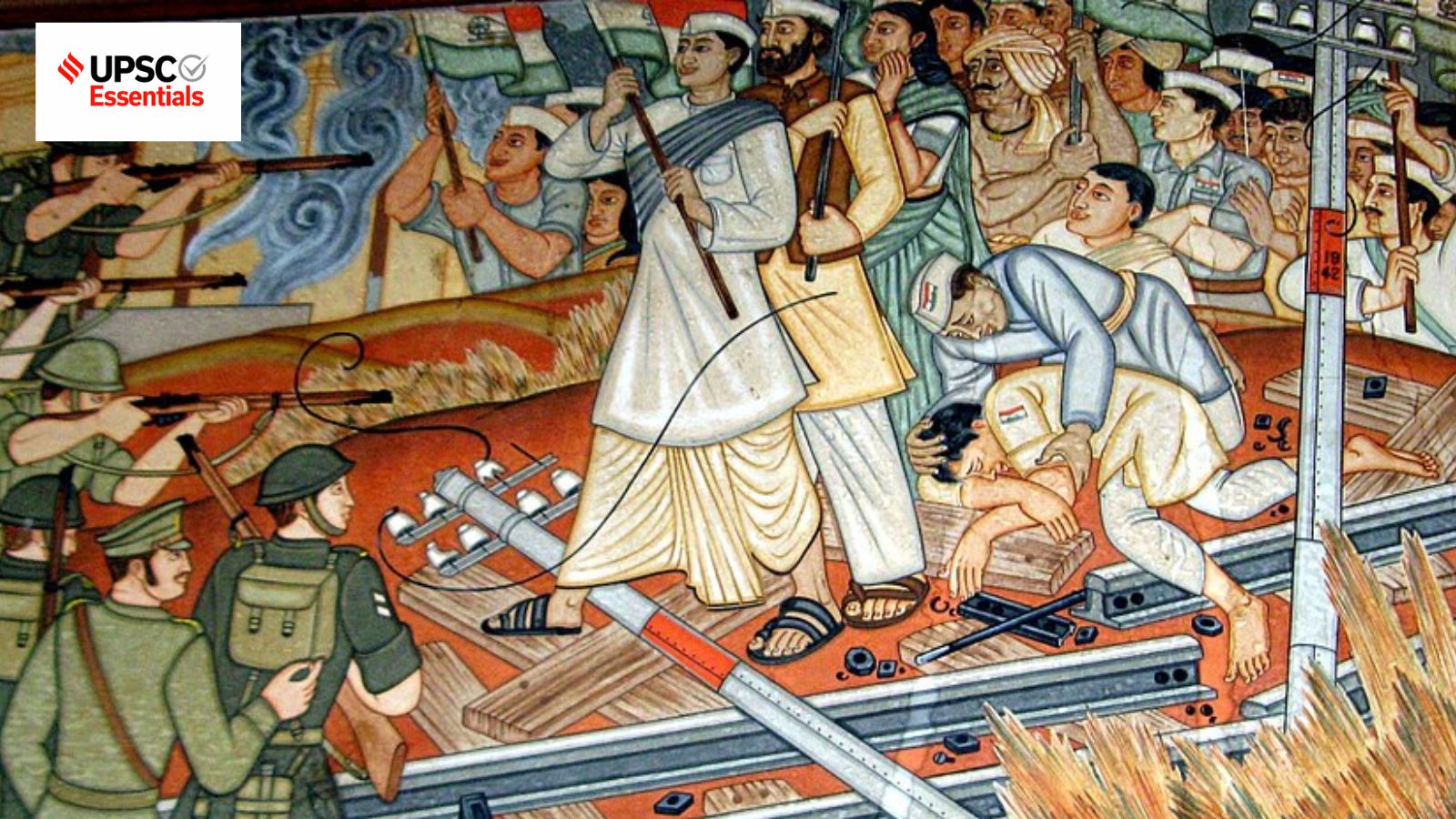
India's fight for freedom involved many actions.
The British divided Bengal to control the people, which caused anger and protests.
People decided to stop buying British goods to hurt their business.
Many different types of people joined the fight for independence.
Leaders disagreed on how to achieve freedom, and this led to splits within the movement.
The Quit India movement was a major push for independence, with a famous slogan calling for the British to leave.

Curzon divided Bengal to weaken opposition to British rule, a move that led to protests.
Boycotting British goods was first proposed in a weekly publication called 'Sanjivani'.
The Swadeshi movement attracted diverse groups, including women, workers, and peasants.
The Swadeshi movement saw splits among leaders regarding political methods and religious revivalism.
The Quit India Movement began in 1942 with the slogan coined by Yusuf Meherally.
- Who
- Lord Curzon, Indian nationalists, Mahatma Gandhi, and other leaders.
- What
- A summary of events from the Swadeshi and Quit India movements.
- When
- Early 1900s, particularly 1905 and 1942.
- Where
- Bengal and across India.
- Why
- To address the effects of the partition of Bengal, to seek Swaraj and to demand complete end to British rule.
British Colonial Perspective
Indian Nationalist Perspective
Bengal Partition Motive
British Colonial Perspective
Partition of Bengal was for administrative convenience.
Indian Nationalist Perspective
Partition aimed to divide nationalists and foster Hindu-Muslim tensions.
- Bengal Partition Year
- 1905
- Slogan Originator
- Yusuf Meherally
- Quit India Resolution Date
- July 14, 1942
- Simla Conference Viceroy
- Lord Archibald Wavell
- Ahmednagar Fort Inmate
- Jawaharlal Nehru, Maulana Abul Kalam Azad
- Book by Jawaharlal Nehru
- The Discovery of India
- Autobiography of Maulana Abul Kalam Azad
- India Wins Freedom