

10 months ago
Filmmaker Rita Banerji Champions Wildlife Conservation Through Documentaries
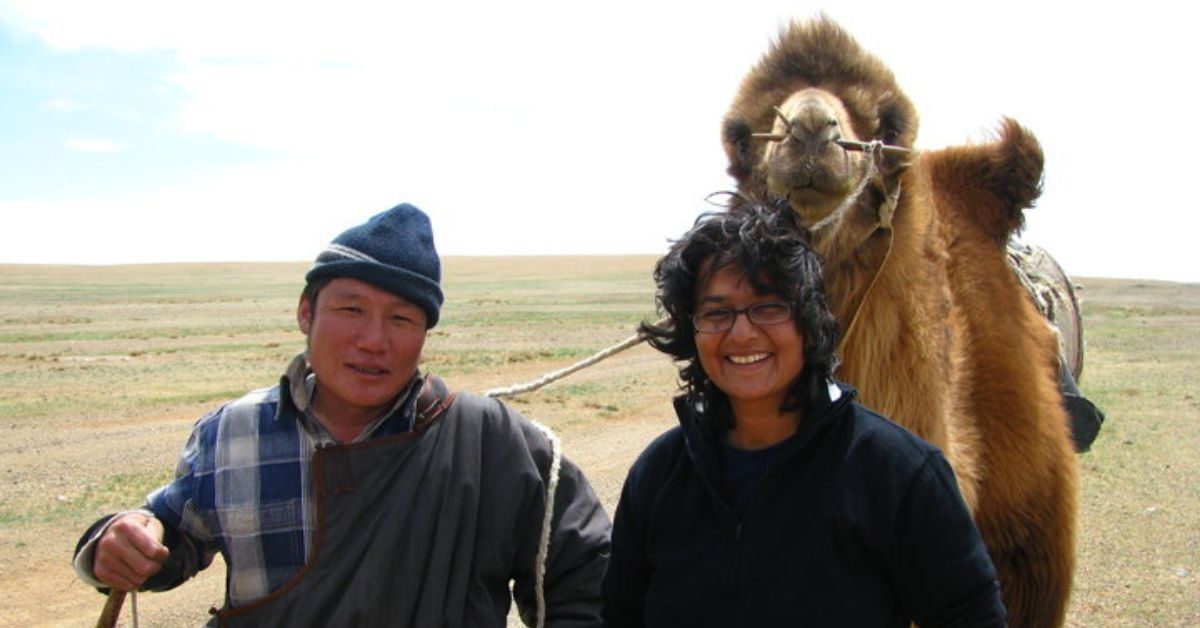
Imagine a filmmaker named Rita who loves animals and forests.
She makes movies about wild animals to show people how important they are and how we can help protect them.
Rita has made films about many animals, like turtles and birds, and also about rare shawls made from an endangered antelope's wool.
She believes that people who live near forests know a lot about them, so she helps young people in Northeast India learn to make their own movies about nature.
These young filmmakers can then share stories from their own villages to help save the animals and plants around them.
Rita's work has won many awards, and she hopes her films inspire everyone to listen to the voice of nature and be its friend.

Wildlife filmmaker Rita Banerji has dedicated three decades to creating documentaries that advocate for conservation and highlight community involvement.
Her films, including 'A Shawl to Die For' and 'The Wild Meat Trail,' address critical issues like the illegal trade of endangered species and the impact on local communities.
Banerji founded the GreenHub Network in Northeast India to empower local youth through filmmaking, enabling them to document and champion conservation efforts in their native lands.
She has received numerous accolades for her work, including the National Geographic – CMS Prithvi Ratna Award and Panda Awards (Green Oscars).
Banerji emphasizes learning from nature's interdependence and fostering a belief in continuous effort and hope for conservation success.
- Who
- Wildlife filmmaker Rita Banerji and the youth involved in her GreenHub Network.
- What
- Rita Banerji uses her documentaries to highlight conservation issues, promote community involvement in protecting wildlife, and empower local youth to become conservationists through filmmaking.
- Where
- Primarily Northeast India, with films also focusing on regions like Kashmir, Odisha, and Gujarat.
- When
- Throughout her three-decade career, with specific films and initiatives launching over the years (e.g., GreenHub Network started in 2014).
- Why
- To raise awareness about threats to wildlife, illegal trade, the interdependence of humans and nature, and to inspire action for conservation.
Key facts
- Filmmaker
- Rita Banerji
- Notable Films
- The Turtle Diaries, The Wild Meat Trail, Flight to Freedom: The Amur Falcon Story, A Shawl to Die For, Right to Survive, Shores of Silence
- Key Initiatives
- GreenHub Network, 'Under the Canopy' ecolub
- Awards
- National Geographic – CMS Prithvi Ratna Award, RBS Earth Hero Award, Panda Awards (Green Oscars)
- Focus Areas
- Community conservation, wildlife trade, interspecies relationships
Quotes
Rita Banerji
Wildlife filmmaker
“Hornbills, barbets and many rare species, sold for Rs 500 to 800 per cluster. Civets and squirrels were on sale for under Rs 1,000. A barking deer was sold to a government officer for Rs 6,000. While the meat is mostly traded for local consumption, the gall bladders of Himalayan black bears are retained by hunters as these could be sold at a premium ranging from Rs 3,000 to 15,000 in different parts of the Northeast.”
 thebetterindia.com
“The idea is filmmaking that helps you learn from nature. Every being in the forest — right from leaf litter to snails or the canopy — is interdependent. It contributes to the forest. It grows with the forest, and as it grows, it feeds back into the growth of the forest. This collective growth is beautiful, and we can learn from it.”
thebetterindia.com
Mushtaq
A master weaver from the Kashmir Valley
“Overnight, we went from being called ‘royal artisans’ to ‘criminals’.”
thebetterindia.com