

Archive · 11 Oct 2026
What Makes Good Journalists and Civil Servants? Philosophers Offer Lessons
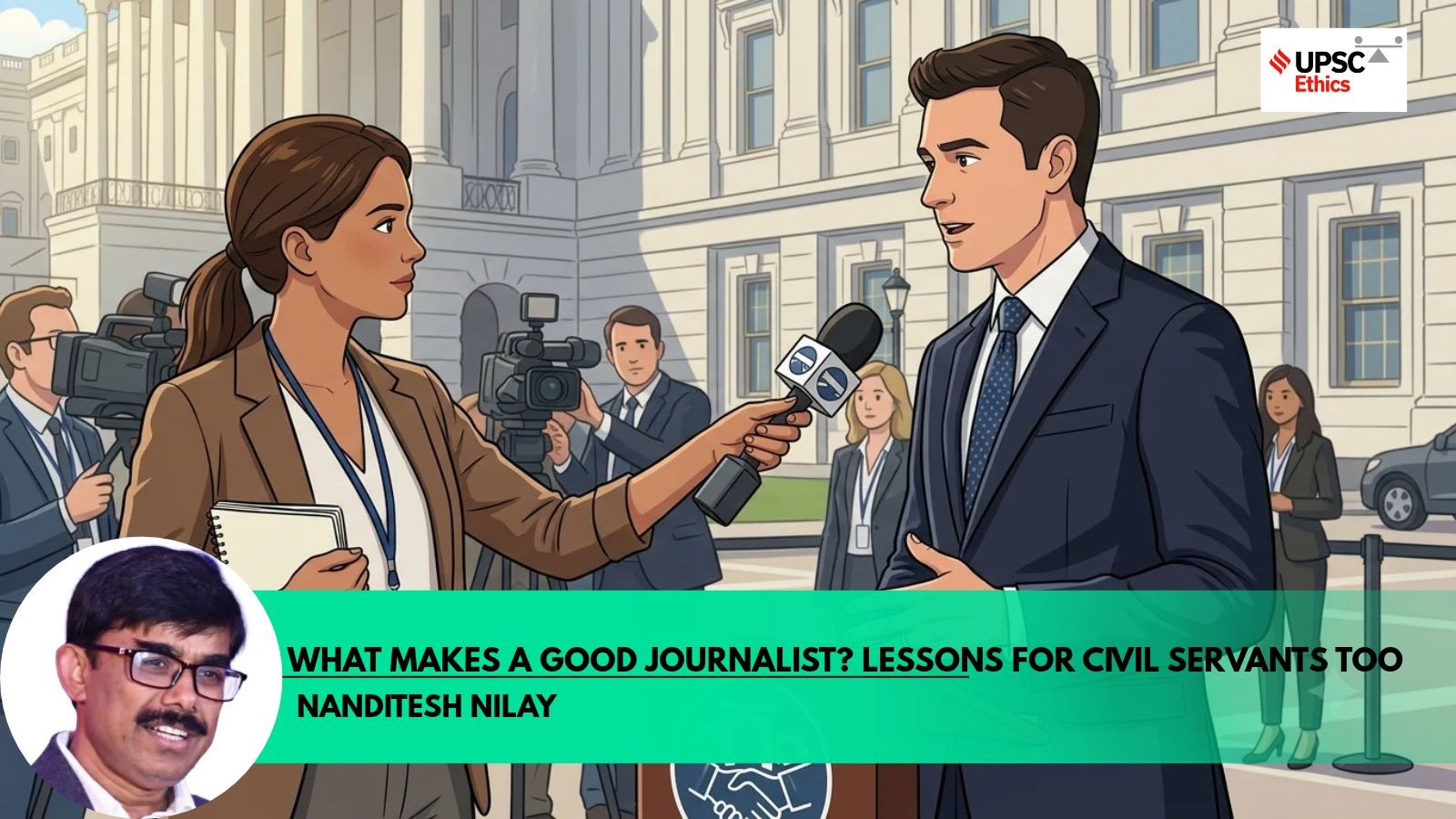
Journalists help people understand what is happening, and civil servants help put laws and public decisions into practice.
Both jobs require more than knowing how to do the work.
They should tell the truth, use evidence and treat people fairly.
They may need to challenge wrongdoing, but they should not make claims without proof.
The article uses ideas from philosophers to explain why honesty, good judgement and concern for others matter.
It says that helping people does not make lying acceptable.
Civil servants should also explain decisions and take responsibility for mistakes.
The main lesson is to ask not only what we can do, but what we ought to do.

The article argues that journalists and civil servants need integrity, courage, responsibility and commitment to truth, alongside professional competence.
It uses Indian Express reporting on the Election Commission’s voter-roll revision to highlight journalism’s responsibility to scrutinise power with evidence and impartiality.
The article says courage must be balanced with sound judgement: avoiding scrutiny can fail professional duties, while unsupported allegations are reckless.
It draws on Plato, Aristotle, Kant, utilitarian thinkers and Bertrand Russell to explain goodness, truth, duty, welfare and intellectual honesty.
It identifies integrity, impartiality, courage, accountability, transparency and public-service orientation as ethical values for civil servants.
- Who
- Journalists and civil servants; the article also discusses the Election Commission of India and commissioners Sukhbir Singh Sandhu and Vivek Joshi.
- What
- An ethics article examines how truth, integrity, impartiality and professional responsibility apply to journalism and civil service.
- When
- The article refers to the Special Intensive Revision beginning in Bihar in June 2025.
- Where
- The voter-roll revision began in Bihar and covered 30 States and Union Territories, according to the article.
- Why
- To explain how ethical principles and philosophical ideas can guide professional decisions and public responsibilities.
- Series
- UPSC Ethics Simplified, under The Indian Express’s UPSC Essentials
- Central theme
- Ethical responsibilities in journalism and civil service
- Election-related context
- The Special Intensive Revision began in Bihar in June 2025.
- Voter-roll figure cited
- The article says more than 13 crore names were struck off draft voter rolls in 30 States and Union Territories.
- Commissioners named
- Sukhbir Singh Sandhu and Vivek Joshi
- Philosophers discussed
- Plato, Aristotle, Immanuel Kant, Jeremy Bentham, John Stuart Mill and Bertrand Russell
- Civil-service values listed
- Integrity; impartiality and objectivity; courage; responsibility and accountability; transparency; public-service orientation