Archive · 11 Aug 2026
Parliament Clears Tribunals Reforms Bill, 2026 Setting Up Commission

India's Parliament just passed a new law about special courts called tribunals.
Tribunals are like helper courts that try to decide cases faster than regular courts.
The new law creates a special group called the National Tribunal Commission.
This group will choose the judges, called chairpersons and members, who work in 16 different tribunals.
The government says the selection will be fair, transparent, and based on merit.
Tribunal judges will serve for five years, and their pay and rules will be written down clearly.
The Supreme Court had earlier told the government to create this commission.
The opposition parties were upset and walked out when their leader was not allowed to speak.
The new law replaces an older 2021 law about tribunals.
The goal is to make justice faster and easier for everyone, especially for businesses.

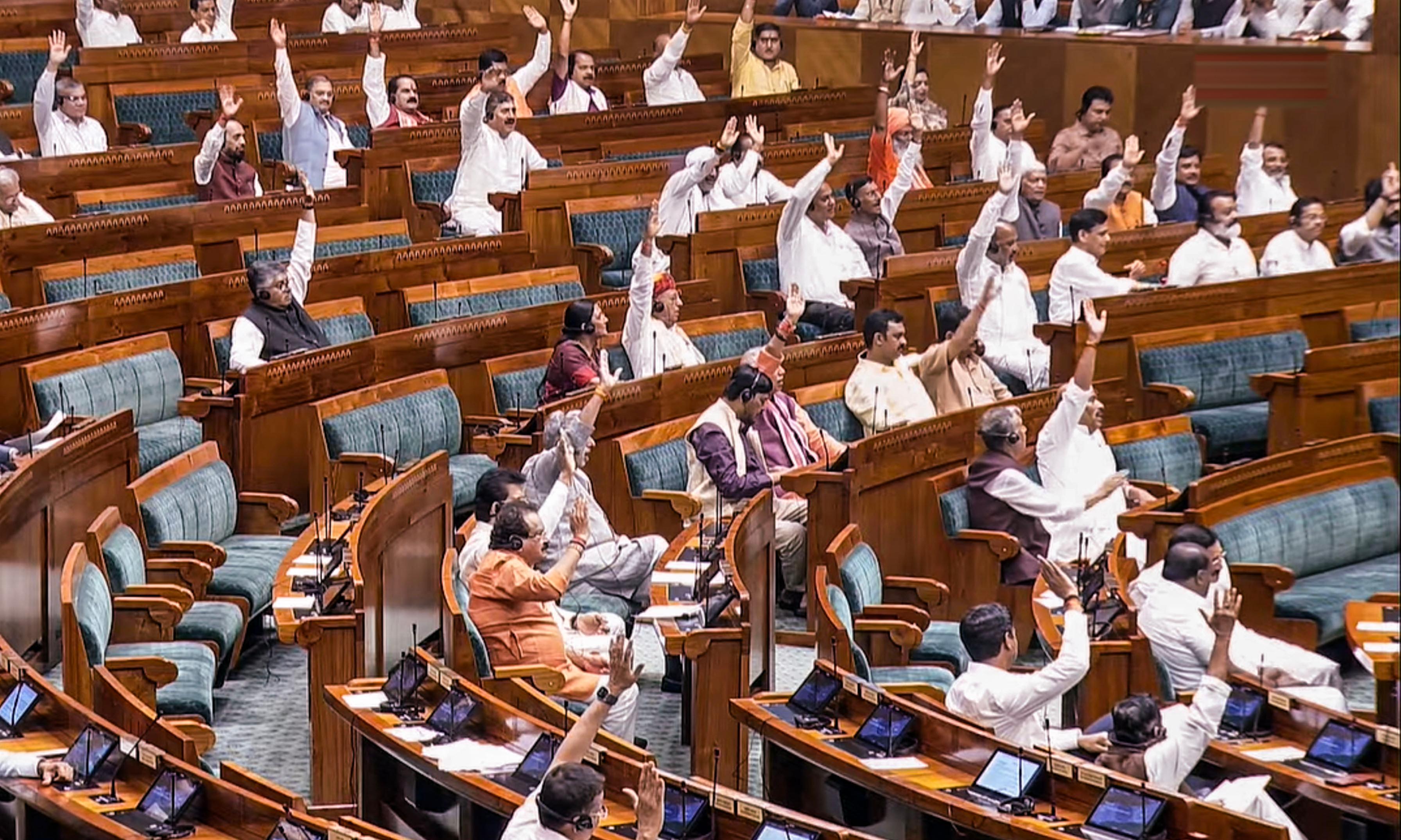
The Rajya Sabha passed the Tribunals Reforms Bill, 2026 on Tuesday, a day after the Lok Sabha approved it on Monday.
The bill establishes a National Tribunal Commission empowered to appoint and remove chairpersons and members of 16 tribunals, including income tax, electricity, customs, and environment.
The NTC will be chaired by a former Supreme Court judge or former chief justice of a High Court, with two judicial and two technical members, supported by a dedicated secretariat.
Tribunal chairpersons and members will serve a five-year tenure with a prescribed upper-age ceiling, while service conditions will be regulated via rules.
Opposition INDIA bloc parties walked out of the Rajya Sabha after Leader of Opposition Mallikarjun Kharge was not allowed to speak during the debate.
- Who
- India's Parliament (Lok Sabha and Rajya Sabha), Law and Justice Minister Arjun Ram Meghwal, and opposition INDIA bloc parties led by Leader of Opposition Mallikarjun Kharge.
- What
- Parliament passed the Tribunals Reforms Bill, 2026, which creates a National Tribunal Commission to handle appointments, tenure, and service conditions of tribunal chairpersons and members.
- When
- The Lok Sabha passed the bill on Monday and the Rajya Sabha passed it on Tuesday during the ongoing monsoon session.
- Where
- New Delhi, India.
- Why
- The government says the bill ensures an independent, transparent, and uniform tribunal system, and it follows the Supreme Court's direction in Madras Bar Association vs. Union of India to establish a National Tribunals Commission.
Opposition's Concerns
Government's Defence
Parliamentary Debate and Protest
Opposition's Concerns
Opposition INDIA bloc parties walked out of the Rajya Sabha after Leader of Opposition Mallikarjun Kharge was not allowed to speak by the Chair during the debate.
Government's Defence
The government proceeded with the debate, with Law Minister Arjun Ram Meghwal defending the bill as a milestone for timely justice, ease of justice, and ease of doing business.
Judicial Independence and Appointments
Opposition's Concerns
The Supreme Court struck down provisions of the Tribunals Reforms Act, 2021 as contrary to separation of powers and judicial independence, signalling concerns over executive control of tribunal appointments.
Government's Defence
The government says the five-year tenure, clear service conditions, and transparent, merit-based selection through the National Tribunal Commission strengthen institutional independence and adopt global best practices.
- Bill
- Tribunals Reforms Bill, 2026
- Status
- Passed by Lok Sabha (Monday) and Rajya Sabha (Tuesday)
- Key Provision
- Establishes National Tribunal Commission (NTC) with a dedicated secretariat
- Tribunals Covered
- 16 tribunals and appellate tribunals; includes NCLAT, excludes NCLT
- NTC Composition
- Chairperson (former Supreme Court judge or former High Court chief justice) plus two judicial and two technical members
- Member Tenure
- Five years with a prescribed upper-age ceiling; no minimum age determined
- Replaces
- Tribunals Reforms Act, 2021, partly struck down by the Supreme Court
- Pending Disputes
- Over ₹24 trillion pending across 10 tribunals (DAKSH State of Tribunals Report 2025)