

Archive · 30 Jul 2025
Modern Tech Interferes with Scientists' Black Hole Location System
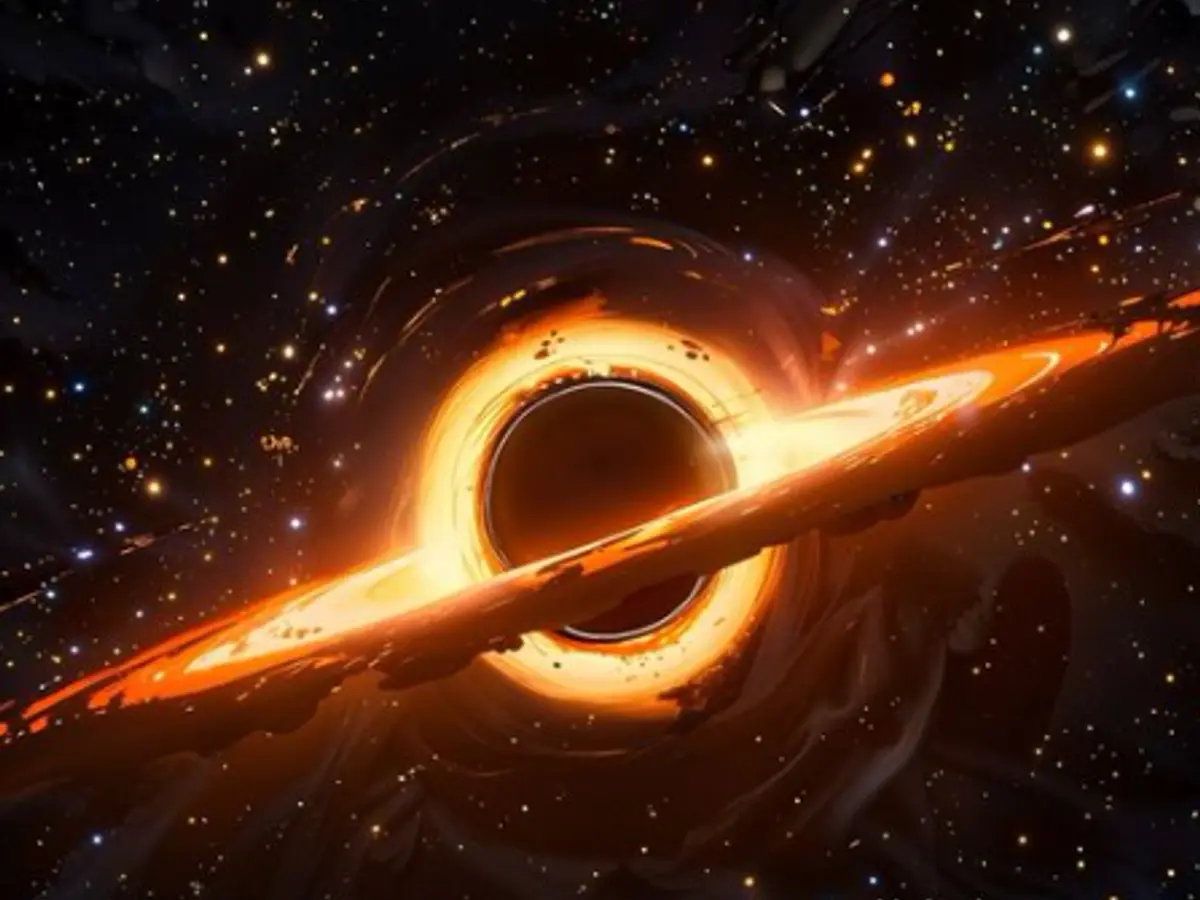
Imagine scientists using radio waves from faraway black holes to find out exactly where Earth is, like using a super-powered GPS.
They need to listen to these radio waves with special telescopes.
But, our phones, Wi-Fi, and internet satellites are making it hard for them to hear those faint signals.
It's like too much background noise on the radio, so the scientists need to find clearer channels to continue measuring Earth's position.

Scientists use black holes to precisely measure Earth's position for navigation.
Wi-fi, mobile phones, and satellite internet are blocking radio frequencies needed for tracking black holes.
Radio telescopes detect radio waves from black holes to pinpoint Earth's location.
Human-made electromagnetic pollution has increased with technological advancements.
Scientists are running out of radio frequency lanes due to increased traffic.
- Who
- Scientists who use black holes for precise measurements of Earth's position.
- What
- Scientists are facing interference in tracking black holes due to increased radio traffic from modern technology.
- When
- In recent decades, especially with the rise of mobile phones and internet satellites.
- Where
- Scientists are using radio telescopes to observe black holes in distant galaxies.
- Why
- To accurately measure Earth's position for navigation, communication, and Earth observation using satellites.
Scientists' Perspective
Public/Technology Sector
Radio Frequency Access
Scientists' Perspective
Need access to specific radio frequencies.
Public/Technology Sector
Not applicable as there's no explicit opposing side.
- Method
- Using radio telescopes to detect radio waves from black holes
- Purpose
- Precise measurement of Earth's position
- Technology Interference
- Wi-fi, mobile phones, and satellite internet
- Scientific Field
- Geodesy
- Radio Wave Source
- Black holes in distant galaxies