Archive · 21 May 2025
SC Mandates Practice for Judge Aspirants; Sparks Debate

The Supreme Court has decided that lawyers who want to become judges must have at least three years of experience.
This means they must have practiced law for that time.
The court wants to make sure new judges have enough practical experience.
Some people think this is a good idea because experienced lawyers will make better judges.
Others worry it may discourage young, bright graduates from joining the judiciary, potentially impacting the diversity of the judges.

The Supreme Court reinstated the requirement of three years of advocacy experience for judicial aspirants.
The ruling reverses a previous decision that allowed fresh law graduates to apply.
The court aims to improve judicial competence and address concerns about judicial preparedness.
Critics believe the rule may discourage talented young graduates from joining the judiciary.
The ruling has implications for diversity and the financial burdens on potential aspirants.
- Who
- Supreme Court of India
- What
- Reinstated the three-year practice rule for civil judge aspirants.
- When
- May 20, 2025
- Where
- India
- Why
- To address concerns regarding judicial preparedness and potentially improve the quality of judges, but some believe it will limit the pool of talent.
Advocates for the three-year rule
Critics of the three-year rule
Impact on Talent Pool
Advocates for the three-year rule
The rule ensures judges have practical courtroom experience to effectively perform their duties.
Critics of the three-year rule
The rule will discourage talented young graduates from entering judicial services, especially those from less privileged backgrounds.
Effect on Diversity
Advocates for the three-year rule
The rule ensures a certain level of maturity.
Critics of the three-year rule
The three-year rule may disproportionately impact women and those from economically disadvantaged backgrounds.
- Ruling Body
- Supreme Court of India
- Minimum Experience Required
- Three years of legal practice
- Bench Composition
- CJI B R Gavai, Justices A G Masih, and K Vinod Chandran
- Impacted Aspirants
- Those seeking subordinate judicial services
Sources
3-year law practice mandatory to join judicial service: Supreme Court
Supreme Court makes three years of legal practice mandatory to join judiciary as civil judge
Supreme Court makes three years’ legal practice mandatory to apply for judicial service

SC bars fresh law graduates from judicial exams, mandates 3 years’ legal practice

3 years' advocate practice must to be eligible for judicial service
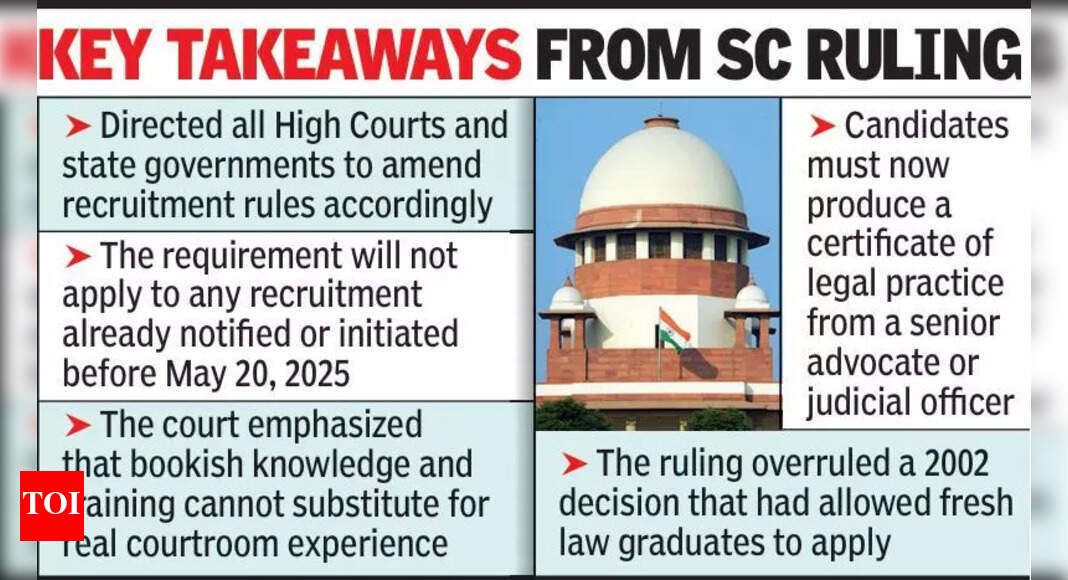
3-year bar practice must for judgeship aspirants, rules SC