Archive · 16 Sep 2026
New Zealand Parliament Advances India Free Trade Agreement
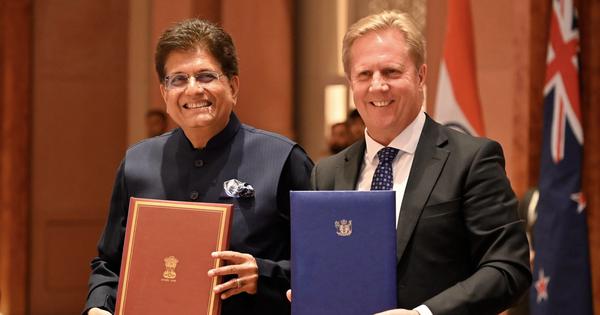
New Zealand’s Parliament approved a trade agreement with India.
A trade agreement can make it cheaper for countries to buy and sell each other’s products.
The deal would remove tariffs on 57% of New Zealand’s exports to India as soon as it begins.
Over time, tariffs on about 95% of those exports would be removed or reduced.
Indian goods would receive duty-free access to New Zealand.
India would also reduce tariffs on many products from New Zealand.
The agreement includes trade in goods and services, as well as rules about skilled workers, students, farming and technology cooperation.
New Zealand says its kiwifruit industry could save about NZ$125 million in tariffs over five years.
The agreement cannot begin until both countries finish their approval procedures.

New Zealand’s Parliament approved legislation implementing an India free trade agreement by 93 votes to 29.
The deal would make 57% of New Zealand exports to India duty-free immediately and cut tariffs on about 95% once fully implemented.
New Zealand will provide duty-free access across 100% of tariff lines for Indian goods, while India will liberalize 70% of its tariff lines.
New Zealand has committed to invest $20 billion in India over the next 15 years.
The agreement, signed on April 27, 2026, still requires both countries to complete domestic ratification and implementation procedures.
- Who
- New Zealand’s Parliament, the New Zealand government, India, and New Zealand’s Labour Party are involved; Prime Minister Christopher Luxon and Trade Minister Todd McClay supported the agreement.
- What
- Parliament passed legislation to implement a free trade agreement that reduces tariffs, expands market access and includes a planned $20 billion New Zealand investment in India.
- When
- The legislation passed on Wednesday; the agreement was signed on April 27, 2026, and is expected to take effect after both countries complete their approval procedures.
- Where
- The vote took place in New Zealand, and the agreement covers trade and investment between New Zealand and India.
- Why
- The agreement is intended to reduce trade barriers, expand market access and strengthen economic and investment ties between the two countries.
- Parliamentary vote
- 93 votes in favour and 29 against; the New Zealand Labour Party supported the legislation.
- New Zealand exports
- 57% would become duty-free immediately, while tariffs on about 95% would be eliminated or significantly reduced once fully implemented.
- Indian market access
- New Zealand will provide duty-free access across 100% of tariff lines for Indian goods.
- India’s tariff offer
- India will liberalize 70% of tariff lines, covering about 95% of the value of bilateral trade.
- Planned investment
- New Zealand has agreed to invest $20 billion in India over the next 15 years.
- Kiwifruit savings
- The industry expects to save about NZ$125 million in tariffs over five years.
- Bilateral trade
- Two-way trade totaled NZ$3.99 billion in the year to June 2026, with India ranking ninth among New Zealand’s goods and services export markets.
- Agreement status
- The pact will take effect after both countries complete domestic ratification and remaining implementation procedures; one report said it could become operational in the second half of October, while another described the timeline as unclear.