3 days ago
India Remains 131st in Global Gender Gap Assessment
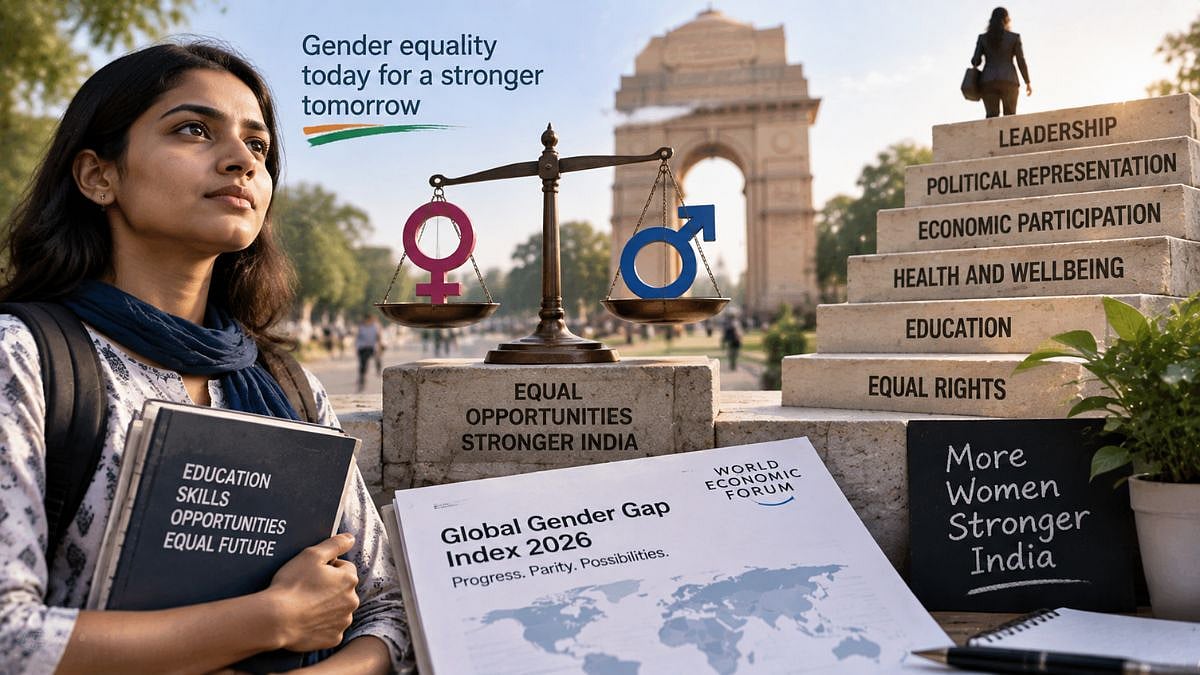
The World Economic Forum published a report about equality between women and men.
India stayed at 131st place out of 145 countries.
Its score was 0.64, the same as in 2014.
The report looks at jobs, education, health, and political power.
India is doing better at educating women than at helping them find paid work.
A private report cited in the article said 18% of young women were in paid employment, compared with 78–79% of young men.
Many other countries improved their scores this year.
The article says India needs long-term policies and practical work, not only laws or election promises.
It also says political participation for women has improved the least.

India retained 131st place among 145 countries in the World Economic Forum’s Global Gender Gap Index 2026.
India’s gender-parity score was 0.64, unchanged from 2014, when the BJP-led government took office.
The index measures economic participation, education, health and survival, and political empowerment.
More than two-thirds of the 143 measured economies improved their gender-parity scores, but India was not among the five biggest year-on-year improvers.
India has made greater progress in women’s education than in employment, with a cited private report putting paid employment at 18% for young women versus 78–79% for young men.
- Who
- India, the World Economic Forum, and people working to improve women’s status.
- What
- India retained 131st place in the Global Gender Gap Index 2026 with a gender-parity score of 0.64.
- Where
- India, in a global assessment covering countries and economies.
- When
- The index was released on Wednesday; the article also compares the result with 2014.
- Why
- The result reflects continuing gaps in women’s employment and political empowerment despite government programmes and other measures.
Critics and Gender-Equality Advocates
Government-Oriented or Skeptical View
Value of the index
Critics and Gender-Equality Advocates
The index is an in-depth, globally accepted benchmark that should be taken seriously because it tracks gender progress across four areas.
Government-Oriented or Skeptical View
The government’s general attitude may treat such rankings as less relevant because they follow Western models.
What India needs
Critics and Gender-Equality Advocates
India needs visionary policies, sustained work on the ground, and structural changes to improve women’s employment and political participation.
Government-Oriented or Skeptical View
The government has introduced specific programmes for women’s upliftment and welfare, although the article says these have not produced meaningful improvement in the overall score.
Education and employment
Critics and Gender-Equality Advocates
Women’s educational progress has not translated into comparable participation in paid employment, showing a persistent systemic gap.
Government-Oriented or Skeptical View
The article does not present a detailed government response disputing the employment figures or explaining the gap.
Key facts
- Index
- World Economic Forum Global Gender Gap Index 2026
- India’s rank
- 131st out of 145 countries
- India’s score
- 0.64 on a scale from zero to one
- Score comparison
- India’s score was unchanged from 2014
- Assessment areas
- Economic participation and opportunity, educational attainment, health and survival, and political empowerment
- Young women’s paid employment
- 18%, according to a private report cited in the article
- Young men’s paid employment
- 78–79%, according to the same cited report
Sources
Related news

India Retains 131st Rank as Iceland Leads Gender Gap Index
Global Gender Gap Narrows, But Parity Remains 120 Years Away

India’s 7.8% Growth Leaves Many People Feeling Left Behind
India’s Gig Economy Growth Leaves Women Behind, Study Finds

UPI Turns Ten, but India’s Gender Gap Persists

Supreme Court extends Section 498A protection to live-in relationships
India Slips in Global Gender Gap Rankings, Citing Slow Progress and Economic Disparities