

Archive · 12 Sep 2025
Algae Pigments: A Natural and Sustainable Solution for Food Colouring
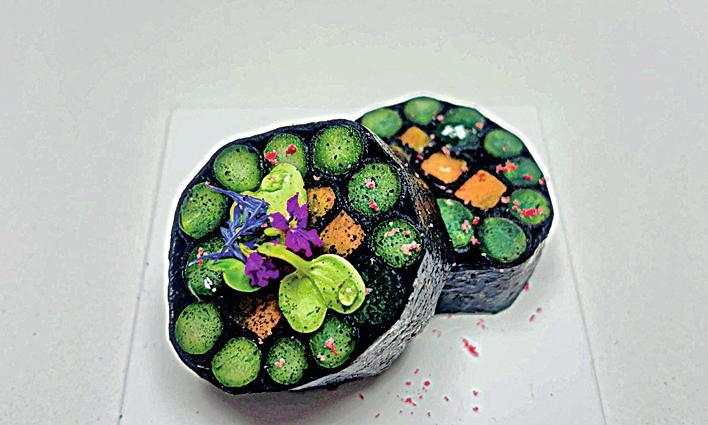
Food companies are looking for natural ways to colour food instead of using artificial dyes that may be bad for us.
They're exploring algae, tiny plants found in water, as a solution.
Algae like spirulina can make food blue and green, while others provide orange and red hues.
It's a challenge because these natural colours are sensitive to heat and light, so food scientists are working on ways to make them work well.
Chefs are experimenting with these new colours, which are expected to start in sweets, drinks, and health products.
Eventually, the goal is to bring these colours to everyday Indian dishes.

The food industry is moving away from artificial dyes.
Scientists and chefs are looking for natural edible dyes and microalgae-derived pigments.
Spirulina provides vibrant blue and green pigments.
Dunaliella is rich in beta-carotene for orange-yellow hues.
Haematococcus pluvialis produces astaxanthin for red-orange colours.
- Who
- Scientists, chefs, and the food industry
- What
- Exploring the use of microalgae pigments as a natural alternative to synthetic food dyes.
- When
- Currently, with growing interest and research.
- Where
- Globally, with a particular focus on India.
- Why
- To provide natural, sustainable, and safe food coloring options, as consumers demand more transparent and healthy choices.
- Primary Source
- Microalgae
- Key Pigments
- Phycocyanin, Beta-Carotene, Astaxanthin
- Industry Focus
- Food industry
- Challenge
- Pigments sensitivity to light, heat, and pH
- Geographical focus
- India