2 days ago
Hotel Management vs Hospitality Management: Choosing the Right Career Path
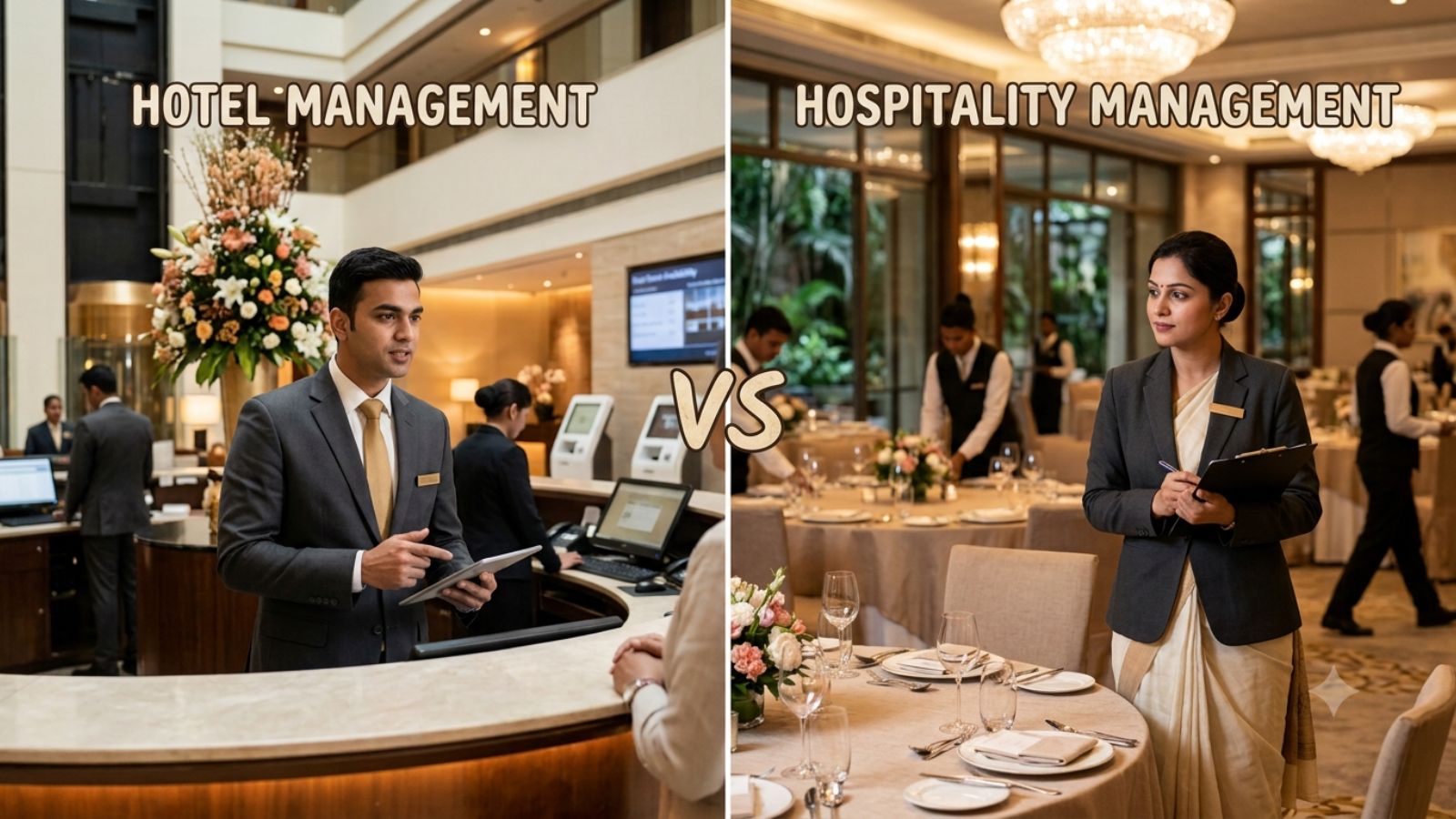
Hotel Management teaches students how the different parts of a hotel work.
This includes cooking, serving food, welcoming guests, cleaning rooms, and managing accommodation.
Hospitality Management teaches these same basics but also covers wider business and service skills.
These can include leadership, marketing, finance, events, and managing employees.
Hospitality graduates may work in hotels, airlines, hospitals, cruise ships, tourism, or other service businesses.
Both courses can help students learn communication, teamwork, and how to solve customer problems.
Hotel Management may suit someone who wants detailed knowledge of hotel operations.
Hospitality Management may suit someone who wants more career choices across different service industries.
Students should compare the course, institution, training, and their own long-term goals before deciding.

Hotel Management focuses on hotel operations, including food production, service, front office, housekeeping, and accommodation management.
Hospitality Management adds broader subjects such as leadership, human resources, marketing, finance, entrepreneurship, events, and customer experience.
Hospitality graduates may pursue careers in hotels, airlines, airports, cruise ships, retail, hospitals, tourism, events, and other service organizations.
Both programs can develop communication, teamwork, complaint-handling, quality-management, and real-time problem-solving skills.
The best choice depends on a student’s interests, career goals, curriculum, training, industry connections, and exposure opportunities.
- Who
- Students and parents choosing between Hotel Management and Hospitality Management.
- What
- An explanation of how the two courses differ and the career paths each may support.
- Where
- The hotel, hospitality, tourism, and wider service industries.
- When
- Why
- To help students choose a program that matches their interests, abilities, and long-term career goals.
Hotel Management
Hospitality Management
Learning scope
Hotel Management
Provides a practical and focused foundation in hotel departments and daily hotel operations.
Hospitality Management
Builds on hotel operations while adding broader management and service-related subjects.
Career direction
Hotel Management
May be preferable for students seeking in-depth expertise in food production, food service, front office, housekeeping, and accommodation management.
Hospitality Management
May offer wider exposure for students interested in multiple service industries and functions beyond hotels.
Professional flexibility
Hotel Management
Develops practical hotel knowledge that can support a career in hotel operations.
Hospitality Management
Develops operational, communication, and management skills that may be applied across hotels and other customer-focused industries.
Key facts
- Hotel Management focus
- Hotel operations such as food production, food and beverage service, front office, housekeeping, and accommodation.
- Hospitality Management focus
- Hotel operations combined with leadership, human resources, training, marketing, finance, entrepreneurship, events, and service management.
- Potential industries
- Hotels, airlines, airports, cruise ships, luxury retail, hospitals, tourism, events, corporations, and institutions.
- Transferable skills
- Communication, teamwork, professional standards, complaint handling, quality management, and working under pressure.
- Additional options
- Depending on eligibility and recruitment conditions, graduates may also pursue public-sector, government-linked, and tourism-related organizations.
- Decision factors
- Students should consider their interests, career aspirations, institution, curriculum, training, industry relations, professional development, and international exposure.
Sources
Related news

Hospitality Careers Expand Beyond Kitchens Into Management and Entrepreneurship

Tourism Department Opens Hotel Management Course Applications

Professional Education Helps Commerce Students Bridge Classroom-Career Gaps

Anirudh Reddy Reimagines Hyderabad’s Marriott Hospitality Legacy for Growth