

Archive · 8 Nov 2025
Australia's Lyrebird: Nature's Master Mimic with an Incredible Repertoire
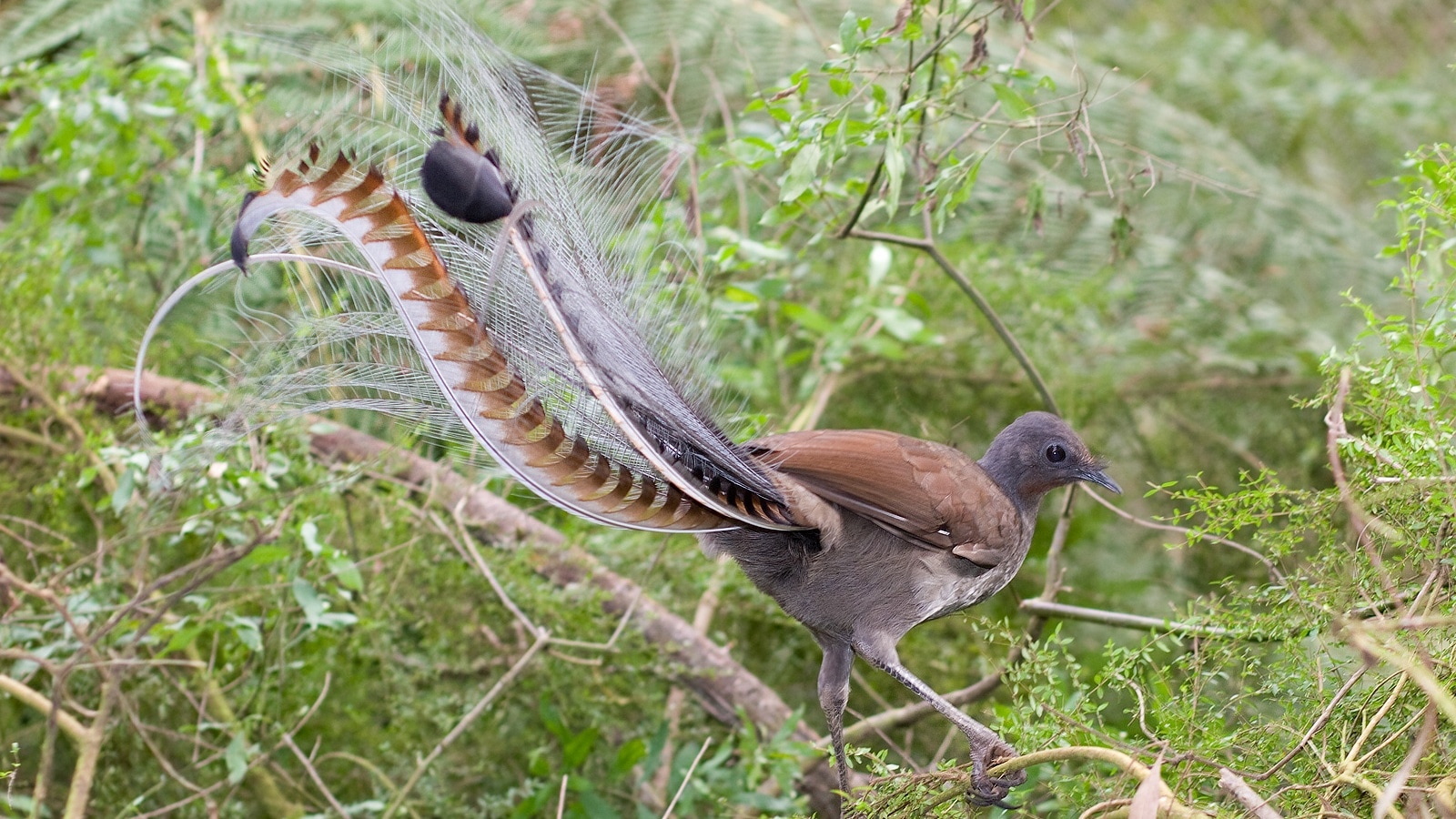
Imagine a bird that sounds like a whole orchestra!
That's the lyrebird from Australia.
It has a special voice box that lets it copy almost any sound it hears.
It can sound like other birds, a chainsaw, a car alarm, or even a baby crying.
The boy lyrebirds put on a big show during mating season.
They use their amazing singing and dance with their beautiful, lyre-shaped tails to impress the girl lyrebirds.
There are two kinds: the common superb lyrebird and the rarer Albert's lyrebird.
Sadly, the places where they live are being cut down, which is a problem for these special birds.
They are like nature's own amazing sound effect artists!

Lyrebirds, found in Australia, are renowned for their extraordinary ability to mimic a vast array of sounds with exceptional accuracy.
Their repertoire includes the calls of other birds, chainsaws, camera shutters, car alarms, and even human voices.
The complex vocal organ, syrinx, allows them to produce these precise imitations.
During the breeding season, male lyrebirds perform intricate dances, displaying their lyre-shaped tails and showcasing their mimicry skills to attract mates.
Habitat destruction poses a significant threat to the survival of both the widespread superb lyrebird and the rarer Albert's lyrebird.
- Who
- Lyrebirds (Superb and Albert's species)
- What
- Birds capable of flawlessly mimicking a wide range of sounds, including other animals, human-made noises, and even inherited calls.
- When
- Throughout the year, with elaborate performances during the breeding season.
- Where
- Forests and woodlands of southeastern Australia, including Tasmania and specific subtropical rainforests in Queensland for Albert's Lyrebird.
- Why
- Mimicry is used for elaborate mating displays and to attract mates, showcasing vocal talent and potentially dominance.
Lyrebird's Vocalizations
Mimicry's Purpose
Sound Repertoire
Lyrebird's Vocalizations
Lyrebirds can flawlessly replicate a vast range of sounds, including other birds, chainsaws, camera shutters, car alarms, baby cries, and mobile ringtones.
Mimicry's Purpose
While lyrebirds mimic a wide range of sounds, the primary purpose is for elaborate mating displays and to establish dominance over rivals.
Inherited Calls
Lyrebird's Vocalizations
Some lyrebirds can mimic bird calls they have never heard in the wild, suggesting an inherited repertoire.
Mimicry's Purpose
Inherited calls are part of the male lyrebird's mating performance, showcasing vocal talent that has been passed down through generations.
- Species
- Superb Lyrebird (Menura novaehollandiae) and Albert's Lyrebird (Menura alberti)
- Location
- Southeastern Australia, including Tasmania; Albert's Lyrebird in Queensland rainforests
- Key Ability
- Highly accurate mimicry of diverse sounds, including other birds, machinery, and human-made noises
- Vocal Organ
- Syrinx, a complex vocal organ enabling precise sound replication
- Breeding Behavior
- Males perform elaborate mimicry and dance routines with tail feathers to attract mates and establish dominance
- Conservation Concern
- Albert's Lyrebird has a limited range; habitat destruction and climate change threaten both species