

11 hrs ago
Why Public Infrastructure Needs Neutral, Evidence-Based Colour Policies

The article discusses the colours used on public buildings, roads, bridges and other shared spaces.
It says these colours should help people and make places safer, not advertise a political party.
A colour dispute at Kolkata’s Academy of Fine Arts brought this issue into public debate in August 2026.
Different colours can affect how easily people see things and how much heat surfaces absorb.
Paint can also affect the environment.
The writer says experts should help governments choose suitable colours.
Heritage buildings may need colours connected to their history and culture.
A new government should not have to repaint everything just to remove an old party’s colour.
The article supports a fair, scientific and politically neutral colour policy.

The article argues that public-space colours should serve citizens rather than ruling-party preferences.
A saffron-and-white dispute at Kolkata’s Academy of Fine Arts in August 2026 renewed debate over politicised colours.
Colour choices affect visibility, heat absorption, safety, durability, aesthetics and environmental impact.
The writer recommends that planners, engineers, environmentalists and colour specialists guide public colour decisions.
The article calls for an autonomous, scientific and politically neutral colour policy to prevent repeated repainting and wasted public funds.
- Who
- The writer, governments, political parties and specialists involved in public infrastructure and urban design.
- What
- A call for a scientific, environmentally responsible and politically neutral policy governing colours used in public spaces.
- Where
- Kolkata and other parts of India, including West Bengal, Andhra Pradesh, Uttar Pradesh and Rajasthan.
- When
- The debate was highlighted by an August 2026 controversy; the article presents the policy issue more broadly.
- Why
- To ensure that colour choices support safety, visibility, environmental goals, heritage and public function rather than partisan political messaging.
Government Discretion and Political Expression
Evidence-Based Public Neutrality
Authority over public colours
Government Discretion and Political Expression
Governments have the democratic prerogative to make and implement decisions about public infrastructure, including its appearance.
Evidence-Based Public Neutrality
Colour choices should be made through a rational policy informed by qualified specialists, rather than political impulses or individual preferences.
Political identity in public spaces
Government Discretion and Political Expression
The article acknowledges that governments and parties may use distinctive colours as visible signs of their administration or political identity.
Evidence-Based Public Neutrality
Public infrastructure should not become a partisan visual emblem, because successive governments may repaint it and waste public resources.
Basis for choosing colours
Government Discretion and Political Expression
A government may choose colours according to its preferred political or administrative presentation.
Evidence-Based Public Neutrality
Colours should be selected for function, safety, visibility, heritage, environmental suitability and architectural relevance; no party should claim exclusive ownership of a colour.
Key facts
- Debate trigger
- A saffron-and-white dispute reportedly took place at the ticket counter of Kolkata’s Academy of Fine Arts in August 2026.
- Examples of infrastructure
- The article mentions government buildings, flyovers, road crossings, viaducts, street railings, public transport, parks and gardens.
- Relevant factors
- Visibility, luminosity, heat absorption, durability, purpose, safety and environmental impact.
- Proposed experts
- Urban planners, builders, colour experts, engineers, environmentalists, and urban traffic and safety professionals.
- Political concern
- A new government may repaint public infrastructure to remove the visual identity associated with its predecessor.
- Environmental concern
- The article says paint has an ecological footprint and recommends ecologically superior coatings where appropriate.
Sources
Related news
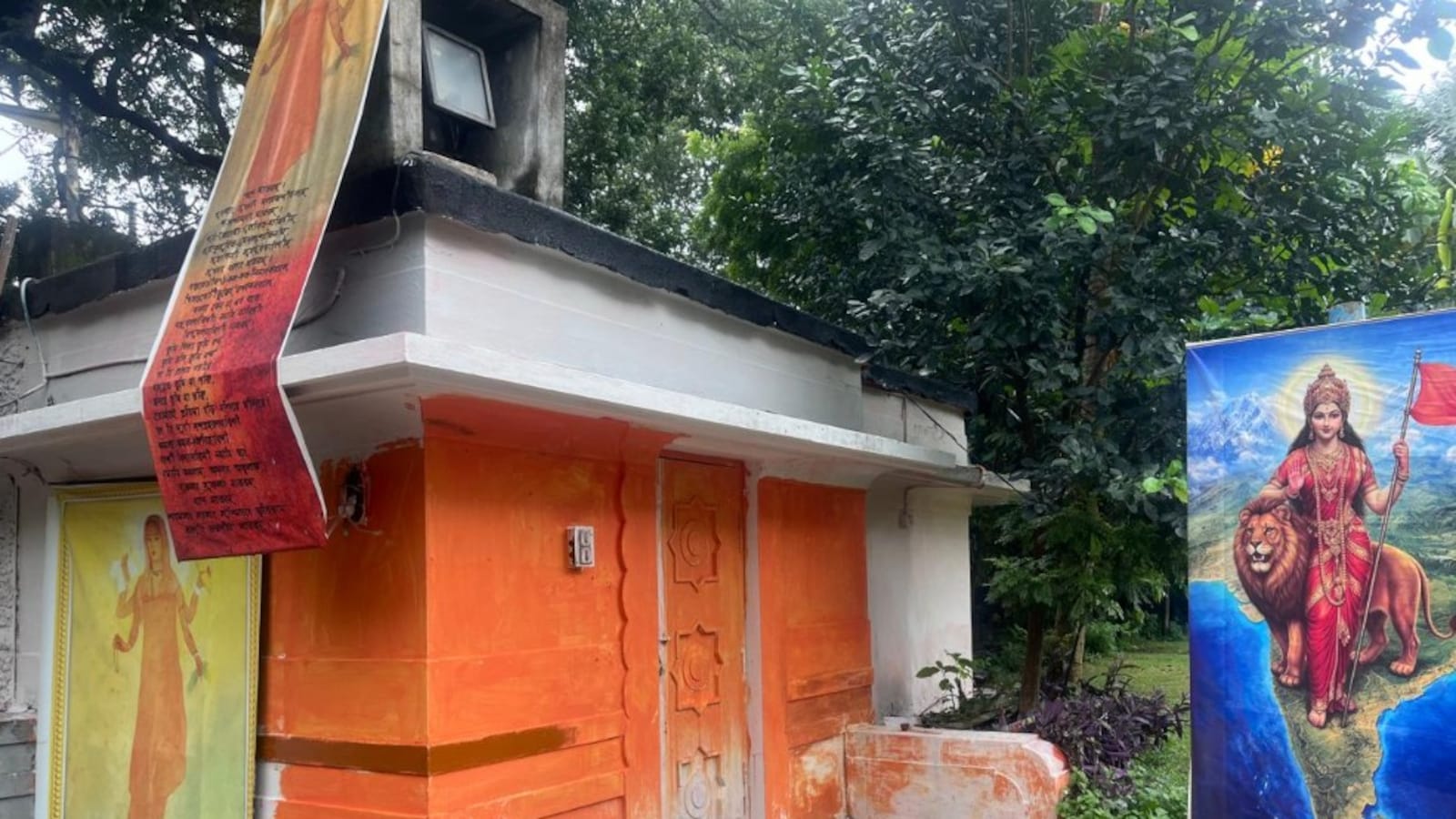
Saffron-White-Saffron: Colour Row Hits Kolkata Academy of Fine Arts

Calcutta Academy room turns saffron again after whitewash protest
Panvel Constitution Pillar Proposal Nears General Body Approval

T.M. Krishna questions symbolism behind hockey team's new saffron kits
Karnataka Approves 5% Park Land Use Amid Tunnel Road Debate

India's Saffron Hockey Jersey Ignites Nationalism 'Colour Coup' Debate

Politics Heats Up as Uttarakhand, Uttar Pradesh Polls Near

Teen Allegedly Gangraped on Moving Delhi Bus; Two Arrested

Mayawati to Review BSP Preparations for 2027 Elections
Ayodhya Temple CEO Appointment Faces Opposition Donation Allegations

UP Government Releases ₹101.49 Crore to Upgrade Kasturba Schools
