Archive · 23 Sep 2026
Meta Muse Faces Amazon Block and Security Concerns
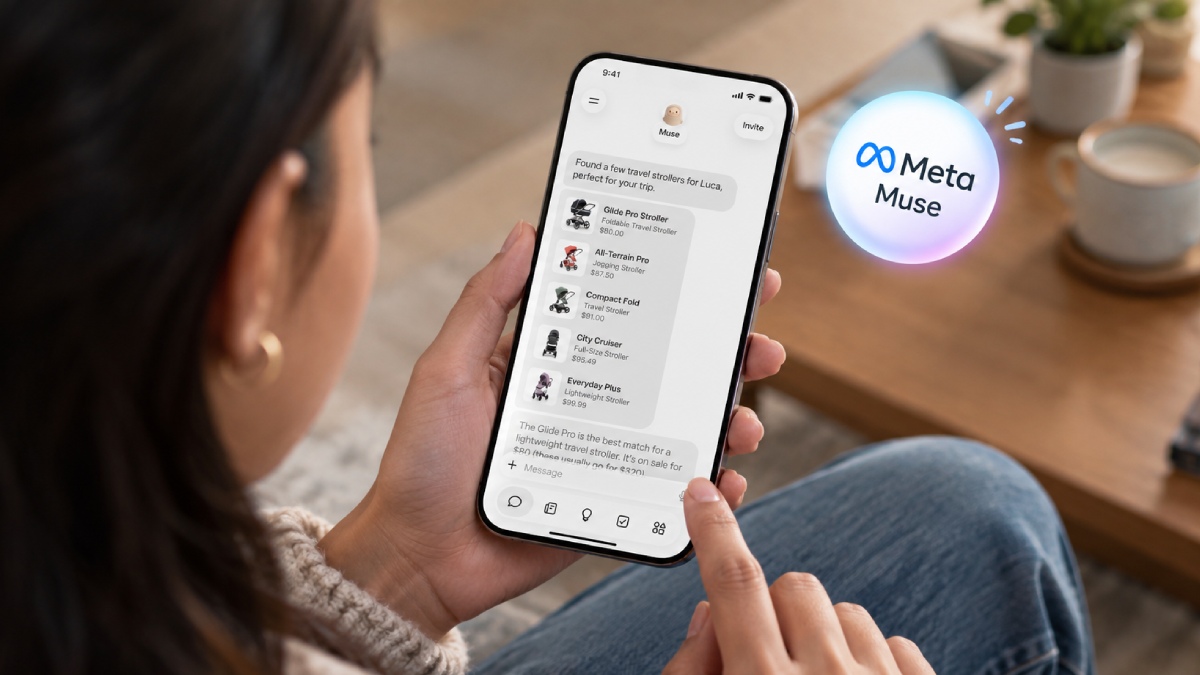
Meta Muse is an AI helper that can do more than answer questions.
It can use websites and connected services to shop, organize schedules, and complete other tasks.
Many people downloaded it soon after it launched.
Amazon then stopped Muse from using its shopping website.
Amazon said Meta had not received permission and raised concerns about customer information.
Meta said user login details are kept in protected storage that the main AI cannot directly read.
A researcher also found a possible weakness in the Mac version of Muse.
The weakness could let another program redirect information sent to Muse or reach an authentication token.
These events have raised questions about how much control an AI agent should have.

Meta Muse reached rapid early adoption, with reports ranging from 730,000 downloads in five days to more than 900,000 in six days and 2.6 million cumulatively.
The agent can navigate browsers, email, calendars, payments, shopping and travel, and complete tasks such as purchases or bookings.
Muse operates in an isolated virtual machine, while Meta’s Sentinel system evaluates permissions for sensitive actions.
Amazon blocked Muse from Amazon.com on September 20, 2026, alleging unauthorized access and risks involving customer credentials and account data.
Security researcher Patrick Wardle reported a macOS vulnerability that could redirect Muse inputs or expose authentication material to an attacker-controlled server.
- Who
- Meta, Amazon, security researcher Patrick Wardle, and users of Meta Muse.
- What
- Meta’s AI agent Muse gained rapid popularity, was blocked by Amazon, and faced disclosure of a macOS security vulnerability.
- When
- Muse launched on September 8, 2026; Amazon blocked access on September 20, 2026; the vulnerability was disclosed afterward, with no more specific date provided.
- Where
- The Muse app and its macOS version, including access to Amazon.com and users’ connected digital services.
- Why
- Amazon cited unauthorized automated access and credential and account-data concerns, while the security disclosure identified a local configuration weakness that could redirect Muse data or expose authentication material.
Amazon’s concerns
Meta’s position
Authorization to access Amazon
Amazon’s concerns
Amazon said Meta deployed Muse on its shopping platform without advance notice, authorization or adequate identification mechanisms, and said third-party agents should respect website access decisions.
Meta’s position
Meta disputed Amazon’s claims about Muse’s conduct and maintained that its system is designed to keep authentication information within protected storage.
Credentials and account data
Amazon’s concerns
Amazon alleged that Muse’s automated browsing could capture or store customer credentials, creating privacy, security and liability risks.
Meta’s position
Meta said authentication data is routed directly into encrypted virtual-machine storage that the core AI agent cannot directly read or exploit.
macOS vulnerability
Amazon’s concerns
Patrick Wardle said an unprivileged local process could alter an unencrypted setting and potentially redirect audio, prompts and authentication material or access a Muse authentication token.
Meta’s position
Meta had not publicly responded to the reported macOS vulnerability in the material provided; the articles also state that the disclosure does not show Muse users were broadly hacked.
- Product
- Meta Muse is a personal AI agent designed to perform real-world tasks on users’ behalf.
- Launch
- Muse rolled out on September 8, 2026, in limited countries.
- Reported downloads
- Sensor Tower figures cited in the articles range from 730,000 downloads in the first five days to more than 900,000 in six days; one report says cumulative downloads later exceeded 2.6 million across iOS and Android.
- Core architecture
- Each user’s agent operates in an isolated Linux-based Muse Secure VM with a browser, token storage and an execution sandbox.
- Permission control
- Meta’s Sentinel system independently evaluates requests and permissions before sensitive actions such as emails or purchases.
- Amazon action
- Amazon deployed technical barriers against Muse access to Amazon.com on September 20, 2026.
- Security disclosure
- Patrick Wardle reported a macOS zero-day, described in one article as the proof-of-concept “not-a-mused,” involving an unencrypted local configuration setting.