

Archive · 23 Aug 2025
Arctic Sea Ice Loss Slows, But Climate Change Remains a Threat
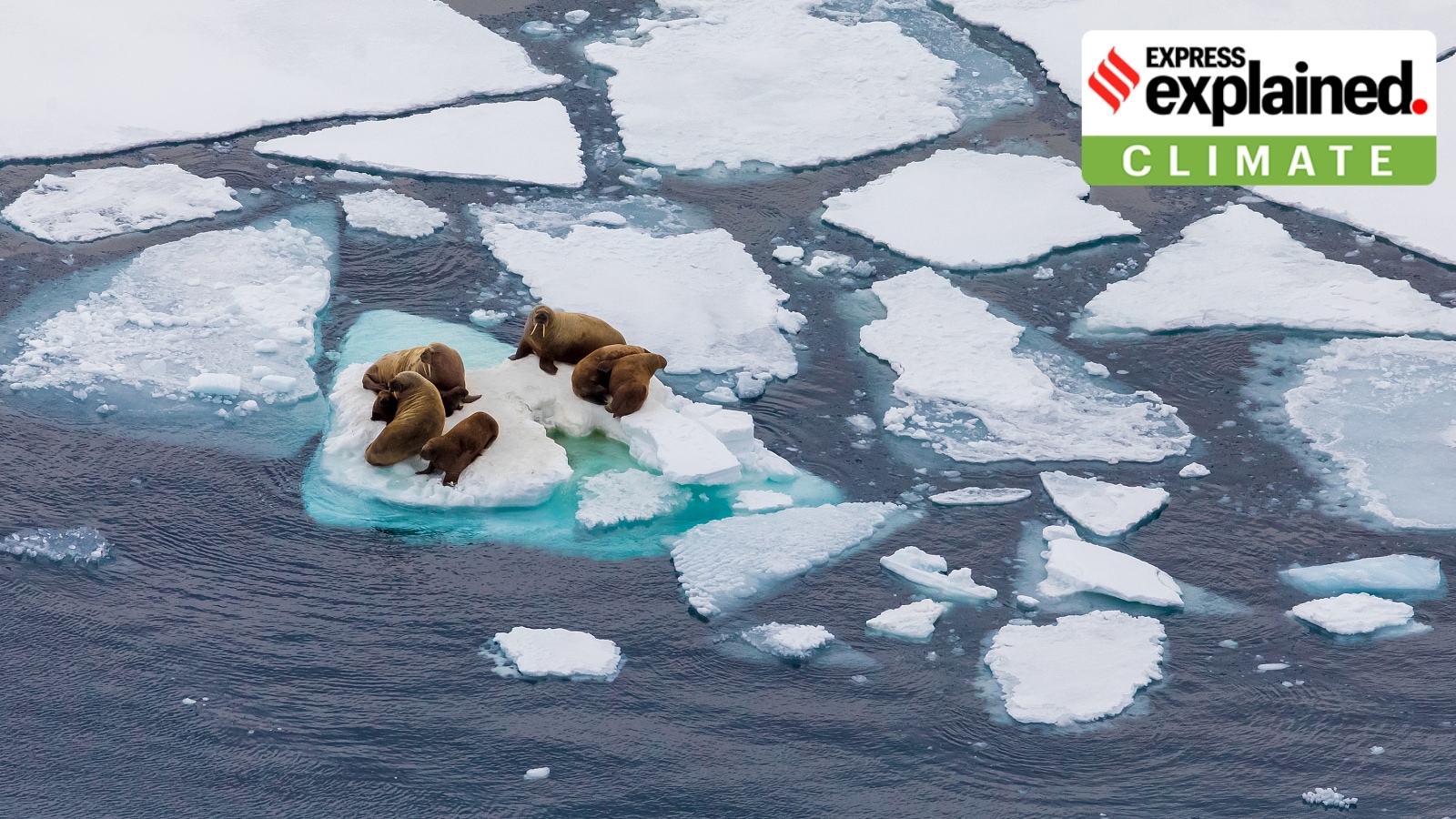
Scientists have found that the melting of Arctic sea ice has slowed down recently.
This doesn't mean climate change is stopping; it's just a temporary pause.
Natural changes in the climate, like variations in ocean temperatures, are likely causing this slowdown.
The ice might melt faster again soon.
Even though the ice melt is slowing down now, the overall trend of global warming continues, and experts say we still need to take action to protect our planet.

Study shows Arctic sea ice loss has slowed in the last 20 years.
The slowdown is temporary and may last another 5-10 years.
Researchers suggest natural climate variations like Pacific Decadal Oscillation are a factor.
The melt rate over the past 20 years is 0.35 sq km/decade, much slower than the peak rate.
Once the slowdown ends, a rapid decline in sea ice cover is expected.
- Who
- Scientists, including M R England, J Screen, A C Chan, and L M Polvani, conducted the study.
- What
- The slowdown in Arctic sea ice loss.
- When
- The slowdown has been occurring over the last 20 years.
- Where
- Arctic region
- Why
- Natural climate variations are likely behind the slowdown, although human-caused global warming is still occurring.
Main Findings
Important Implications
The Future of Arctic Sea Ice
Main Findings
Climate change continues, even with the slowdown in ice melt.
Important Implications
The slowdown may continue for several years before faster melting resumes.
- Study Title
- Minimal Arctic Sea Ice Loss in the Last 20 Years, Consistent With Internal Climate Variability
- Slowdown Duration
- May continue for 5-10 more years
- Peak Melt Rate (1993-2012)
- 1.3 million sq km/decade
- Current Melt Rate
- 0.35 sq km/decade