

Archive · 24 May 2025
Coral Snake vs. King Snake: Key Traits and Differences
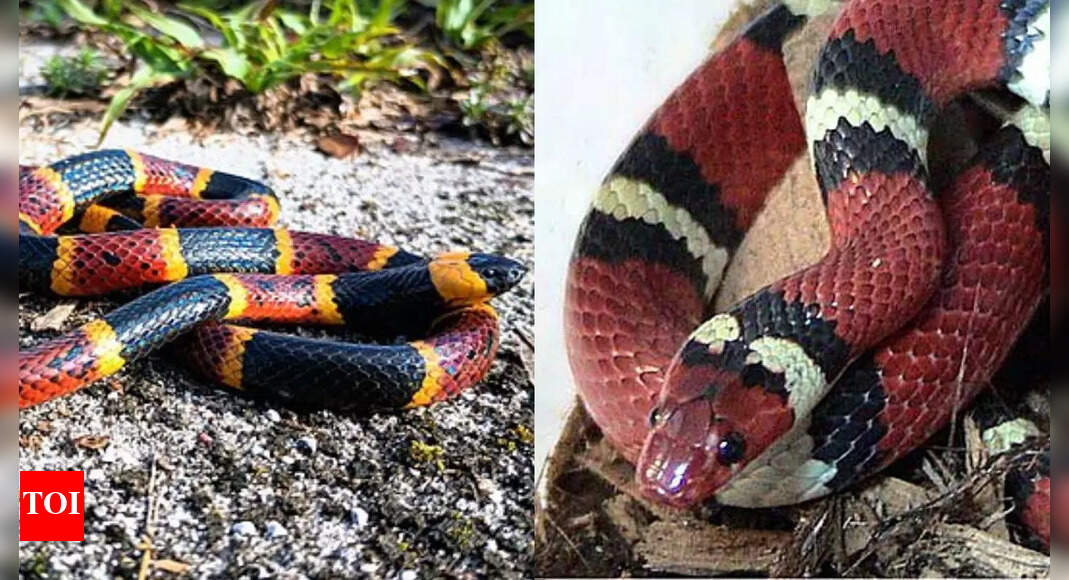
Imagine two snakes, one with a dangerous secret and the other pretending to be dangerous.
The coral snake has a potent venom, like a super-powered bite that can paralyze prey.
It's also shy and hides.
The king snake is a master of disguise and doesn't have venom, but it looks similar to the coral snake.
It eats all sorts of things, including other snakes, even venomous ones, which it can do because it is immune to their venom.
The key to telling them apart is a color pattern: if the red and yellow touch, it's a coral snake; if the red and black touch, it's a king snake.
This helps the king snake trick predators!

Coral snakes are venomous, while king snakes are not; they rely on constriction.
Coral snakes have red, yellow, and black bands with red touching yellow; king snakes mimic them with red touching black.
King snakes eat a diverse diet, including rodents, birds, eggs, and even venomous snakes; coral snakes mainly eat small snakes, lizards, and frogs.
King snakes are found across North America in various habitats; coral snakes inhabit sandy areas and tropical forests in North, Central, and South America.
Coral snakes are shy and slow-moving; king snakes are active, curious, and bold.
- Who
- Coral snakes and King Snakes
- What
- Comparison of the traits of Coral and King snakes
- When
- Information is based on their general characteristics and behaviors.
- Where
- Coral snakes are found in North, Central, and South America; King Snakes across North America.
- Why
- To understand the key differences in their appearance, behaviors, and survival strategies.
- Coral Snake Venom
- Venomous
- King Snake Venom
- Non-venomous, constrictor
- Coral Snake Color Pattern
- Red, yellow, black bands (red touches yellow)
- King Snake Color Pattern
- Red, black, yellow bands (red touches black)
- Coral Snake Diet
- Small snakes, lizards, frogs
- King Snake Diet
- Rodents, birds, eggs, snakes