

Archive · 6 Jun 2025
State to Scrap Solar Projects Under Hybrid Annuity Model
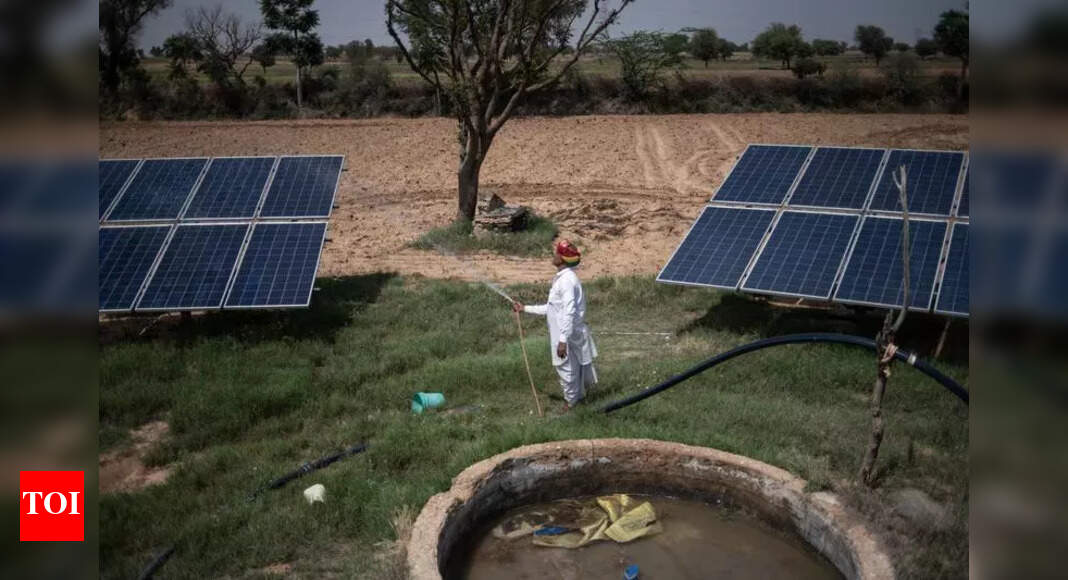
The state government is rethinking how it funds solar projects.
They were using a method called HAM, where they pay companies over time to build solar farms for agriculture.
Some people think this method doesn't work well for solar power because solar power income is steady.
The government is considering stopping this for 4,000 MW of projects.
They are also worried because payments to the companies might be delayed.
However, they plan to continue with the HAM model for 1,000 MW of rooftop projects on government buildings.

The State government plans to scrap 4,000 MW solar projects under the Hybrid Annuity Model (HAM).
The decision followed concerns raised about the HAM model's suitability in the solar sector.
Officials cited that HAM is more suited for sectors with uncertain revenue, unlike the power sector.
Under HAM, the government provides 30% upfront cost, with the remainder in installments over seven years.
Industry representatives expressed concerns about payment delays under the HAM model.
- Who
- The State energy department.
- What
- The state government plans to cancel 4,000 MW solar projects under the Hybrid Annuity Model.
- When
- Recently
- Where
- Jaipur
- Why
- Due to concerns about the HAM model's efficacy in the solar sector.
Government
Industry Experts
HAM Model Suitability
Government
The government provides funding upfront and then over time, after the projects are transferred.
Industry Experts
HAM is not suitable for the power sector, unlike the road sector, because cash flow in power projects is predictable.
Payment Concerns
Government
Government officials have yet to comment about the claims
Industry Experts
Payment delays and potential interference with the HAM model are a cause for concern.
- Project Size Affected
- 4,000 MW
- Model Under Review
- Hybrid Annuity Model (HAM)
- Focus of Projects
- Solarising agriculture connections
- Upfront Payment (HAM)
- 30% of cost
- Payment Period (HAM)
- Seven installments over seven years