Archive · 6 Nov 2025
India Seeks Third Pole Status Amidst US-China 'G2' Discussions
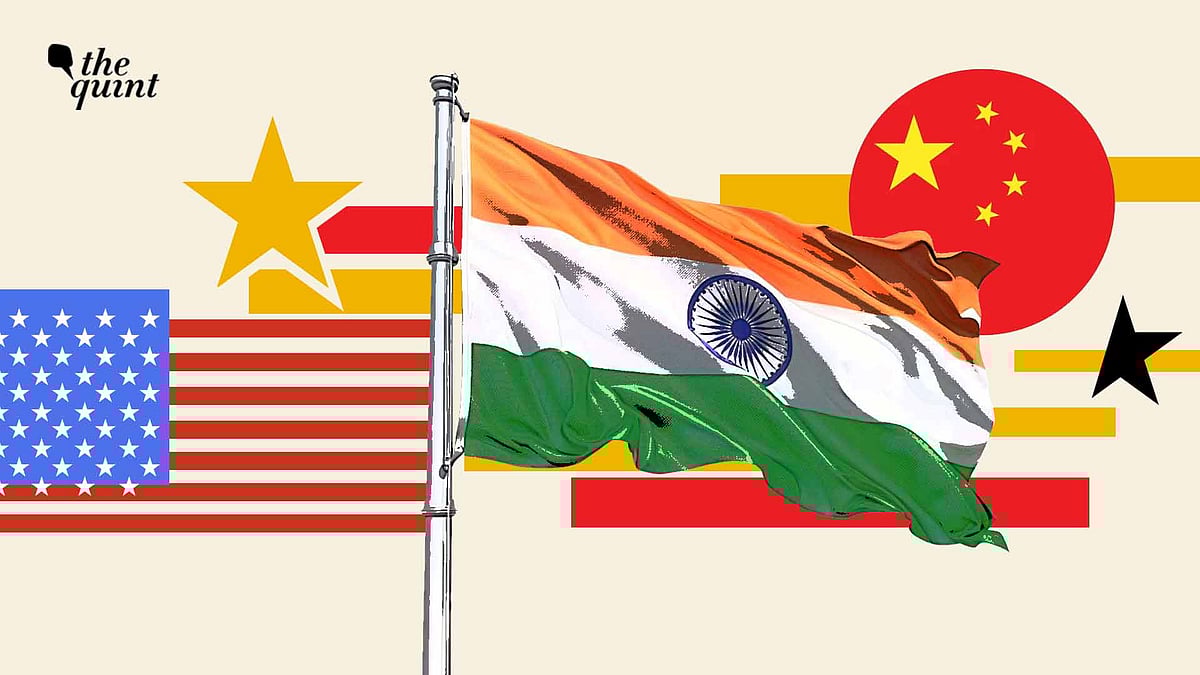
Imagine there are two very popular kids in school, the US and China, and everyone thinks they will decide everything together.
This is like a 'G2' idea.
India doesn't want to be told what to do by either of them or seem like they are taking sides.
India wants to be its own big kid, a 'third pole', making its own decisions based on what's best for India.
If India just follows one of the big kids, it might lose its own importance.
So, India needs to make sure its 'rules' (foreign policy) are independent and strong, especially as China gets more powerful and people talk about these two giants leading the world.

India aims to avoid being perceived as a pawn or proxy in a potential US-China 'G2' global order.
The concept of a 'G2' highlights a global discourse increasingly focused on decision-making between Washington and Beijing.
India's foreign policy must prioritize strategic autonomy, aligning with national interests rather than following external instructions.
Historical global power structures have shifted from bipolar to unipolar, and now discussions point towards a G2.
Maintaining a distinct 'third pole' status is crucial for India's diplomatic leverage and its position on the world stage.
- Who
- India, United States, China
- What
- India's strategic imperative to maintain autonomy and act as a 'third pole' amidst global discussions of a US-China 'G2' framework.
- When
- Recent and ongoing global discourse, with reference to historical power shifts and future projections (e.g., China's GDP by 2030).
- Where
- Global stage, specifically concerning the Indo-Pacific region.
- Why
- To protect India's diplomatic leverage and ensure its rise as a distinct global power rather than becoming subservient to dominant nations.
US-China 'G2' World Order
India's Strategic Autonomy
Global Power Dynamics
US-China 'G2' World Order
The world is increasingly moving towards a 'G2' framework where global decision-making is concentrated in Washington and Beijing.
India's Strategic Autonomy
India must resist being defined by a US-China binary and maintain its strategic autonomy to emerge as a distinct 'third pole'.
India's Role
US-China 'G2' World Order
Global choices are often framed around the US and China, suggesting a future dominated by these two powers.
India's Strategic Autonomy
India's foreign policy should be aligned with its own interests, not instructions from any superpower, to avoid becoming a pawn or proxy.
Historical Context of Power Structures
US-China 'G2' World Order
The post-WWII era saw a bipolar world (US-Soviet Union), followed by a unipolar moment (US dominance) after the Soviet collapse, leading to current discussions of a G2.
India's Strategic Autonomy
India's hard-earned diplomatic leverage risks erosion if it is perceived as subservient to any superpower.
- Projected China GDP by 2030
- $25 trillion
- Concept of 'G2'
- Indicates a potential global decision-making framework concentrated in Washington and Beijing.
- Historical World Orders
- Bipolar (US-Soviet Union) during the Cold War, Unipolar (US dominance) after 1991.
- US Leader's View on 'G2'
- Former President Donald Trump suggested increasing concentration of global decision-making in Washington and Beijing.