Archive · 3 Oct 2026
Nepal Plans to Drain Four Glacial Lakes After Deadly Flood
Nepal plans to lower the water in four very high mountain lakes.
These lakes are held back by natural walls made of rock and ice.
If a wall breaks, a large flood could rush into valleys below.
Workers would use canals and gated structures to release water safely into rivers.
The project will also use sensors and warning systems.
Communities downstream will be helped to prepare for possible floods.
The work could cost about $50 million and take up to six years.
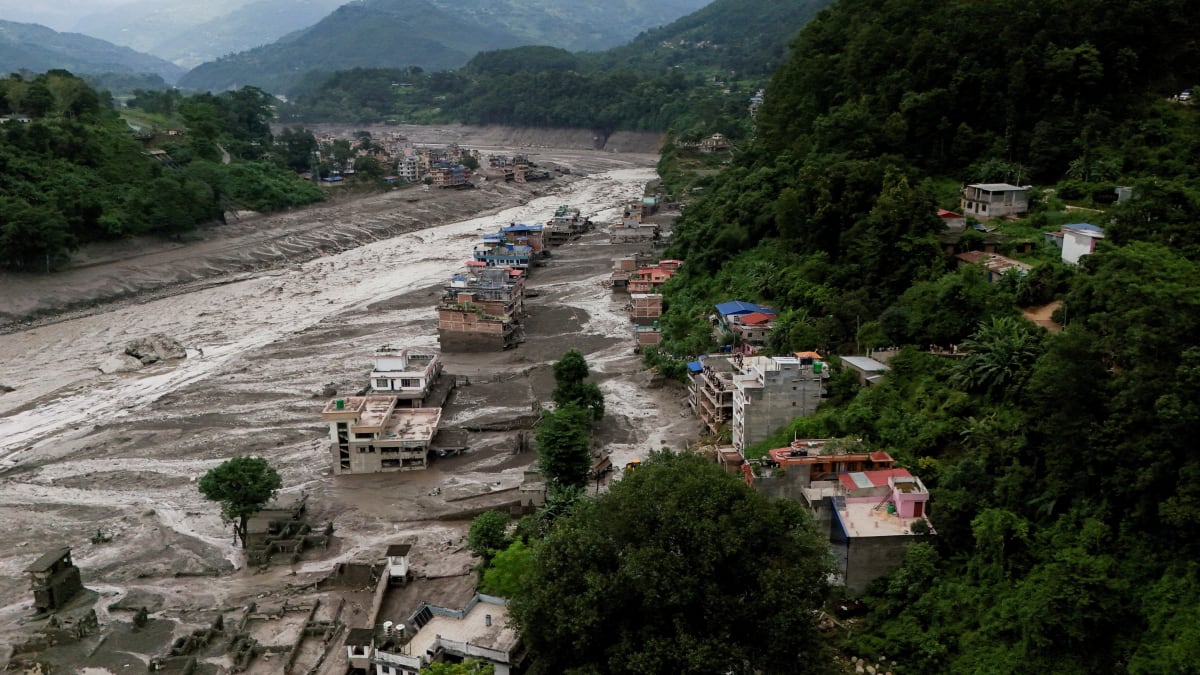
The plan comes after an August glacier collapse and flood killed more than 1,400 people.
More than 5,000 people are still missing, according to officials cited in the reports.

Nepal plans to drain four high-altitude glacial lakes to reduce downstream flood risks.
The targets are Thulagi, Lower Barun, Lumding Tsho and Hongu II.
The lakes lie between 4,050 and 5,483 meters above sea level.
The approximately $50 million project could take up to six years after detailed studies.
The plan follows an August disaster that killed more than 1,400 people, with over 5,000 still missing.
- Who
- Nepal’s government research and water-resources officials, supported by the Green Climate Fund, the United Nations Development Programme and the International Centre for Integrated Mountain Development.
- What
- Nepal plans to study and drain four potentially dangerous glacial lakes and install monitoring and flood-warning systems.
- When
- Design work and detailed studies are scheduled for the fiscal year ending in mid-July 2027; drainage could take up to six years after the studies.
- Where
- The lakes are in Nepal’s central and eastern Himalayas, at elevations of 4,050 to 5,483 meters.
- Why
- To reduce the risk that the lakes’ natural dams will breach and cause downstream floods.
- Targeted lakes
- Thulagi, Lower Barun, Lumding Tsho and Hongu II
- Estimated cost
- Approximately $50 million
- Lake elevations
- 4,050 to 5,483 meters above sea level
- Drainage method
- Canals and gated structures would release water into nearby rivers
- Additional measures
- Sensors, flood forecasting, warning systems and downstream community preparedness
- Expected duration
- Up to six years after detailed studies
- Recent disaster
- An August glacier collapse caused landslides and flash flooding that killed more than 1,400 people; over 5,000 remain missing
- Previous projects
- Nepal lowered Tsho Rolpa by 3 meters in 2000 and reduced Imja’s level about a decade later