

Archive · 2 Aug 2026
West Bengal Water Supply Lacks Treatment, Exposes Millions
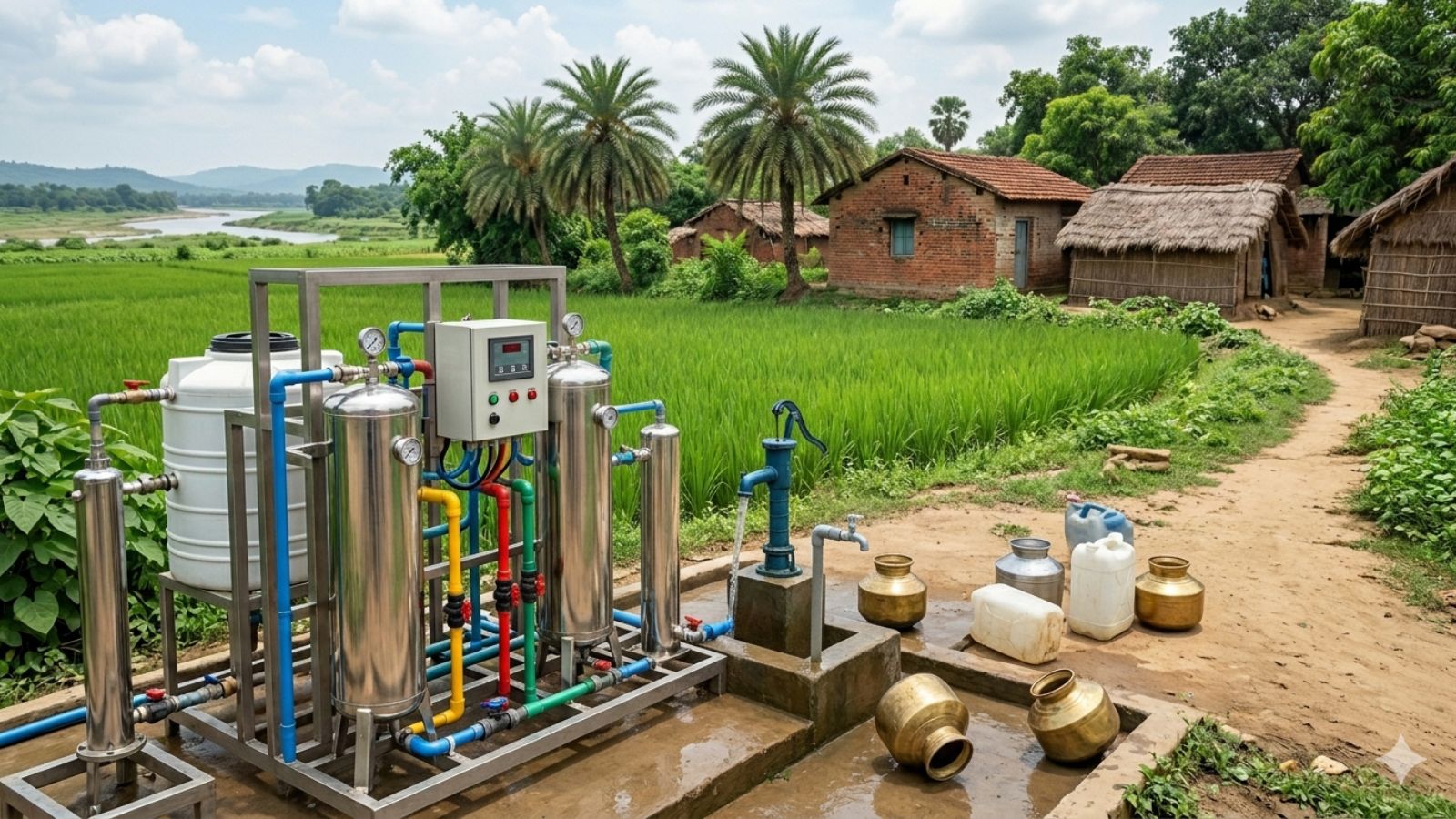
In West Bengal, many villages have new water taps, but the water that comes out is not cleaned.
The government built pipes faster than it built machines that remove bad stuff like arsenic and fluoride.
Because of this, people can get sick from the water, like getting skin problems or stomach sickness.
A government audit said the water system is unsafe and told the health department to fix it.
The audit also warned that if a pipe breaks, bad water can spread quickly, making many people ill.

73% of tap connections in Nadia and North 24 Parganas supply untreated groundwater.
Only 32% of Birbhum households receive treated water despite fluoride contamination.
Rapid pipeline expansion under Jal Jeevan Mission outpaced installation of mandatory treatment units.
Untreated water poses risks of arsenic, fluoride, and microbial diseases, including typhoid and diarrhoea outbreaks.
CAG urges PHED to align pipeline rollout with treatment plant installation to ensure safe drinking water.
- Who
- West Bengal Public Health Engineering Department and the Comptroller and Auditor General of India
- What
- Audit found that most rural tap connections supply untreated groundwater, lacking mandatory treatment units
- When
- Recent audit
- Where
- West Bengal, India – Nadia, North 24 Parganas, and Birbhum districts
- Why
- Rapid pipeline expansion outpaced installation of treatment infrastructure, exposing residents to arsenic, fluoride, and microbial contamination
- Affected districts
- Nadia, North 24 Parganas, Birbhum
- Untreated water percentage
- 73% in Nadia & North 24 Parganas, 68% in Birbhum
- Missing treatment units
- Arsenic-iron removal plants (AIRP) and fluoride demineralisation units
- Health risks
- Arsenic exposure, fluoride toxicity, typhoid, hepatitis A, diarrhoea
- CAG recommendation
- Align pipeline expansion with treatment installation