

Archive · 14 Aug 2026
Iran's Nationalism Grows More Important Than Islamism Amid War
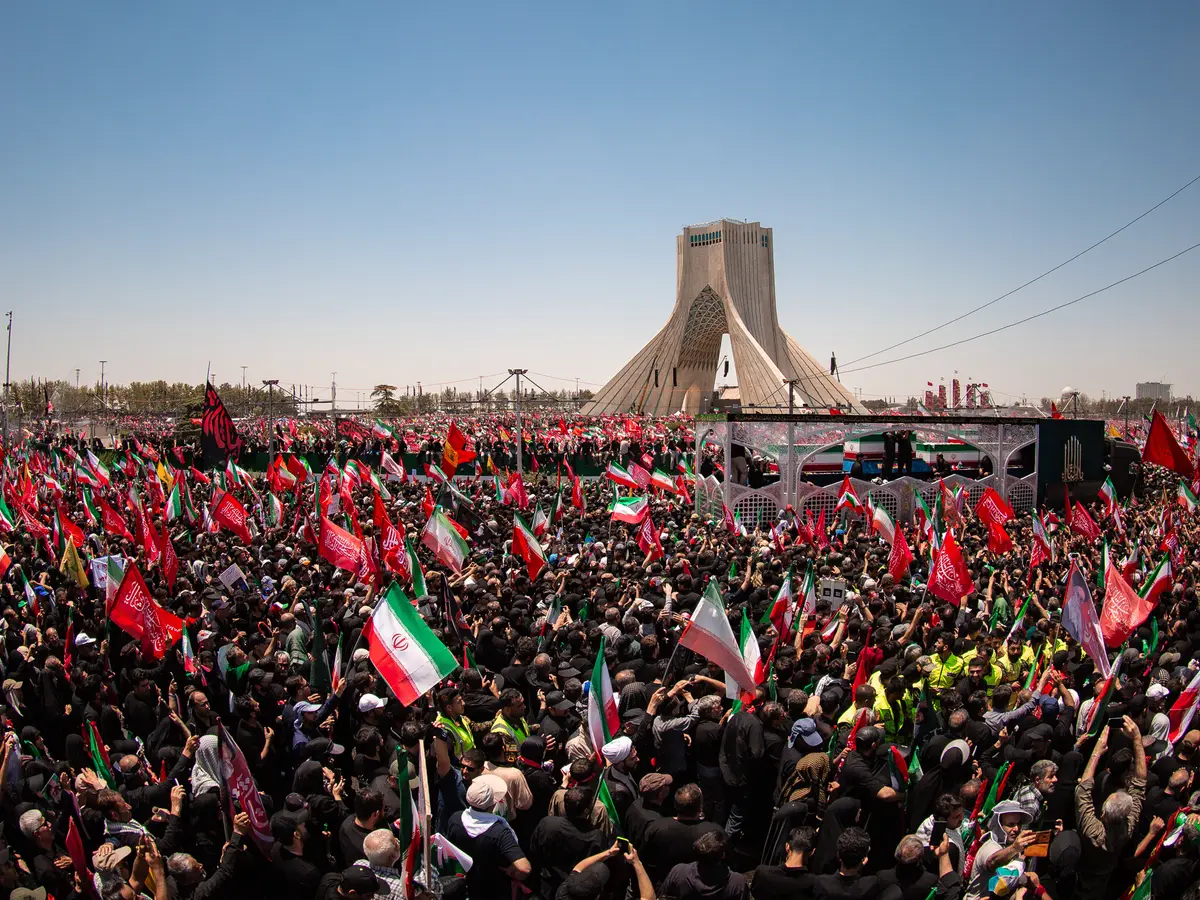
Iran is a country that has been in a war with Israel and the United States.
The Iranian government used to talk mostly about religion, but now it talks a lot about loving Iran.
It is using old Persian stories, heroes, and songs to bring people together.
Many people in Iran who usually disagree have joined together because the country is being attacked.
The government is not forcing women to cover their hair as much anymore.
Years of protests made it hard for police to enforce the veil rule.
However, the government has not officially ended the rule about the veil.
The government still keeps its religious laws and a powerful military group called the IRGC.
People in Iran now cheer for their country even if they do not support the government itself.

Iran's regime is increasingly emphasizing nationalism and national unity over its traditional Islamist ideology during the war with Israel and the US.
Tehran has promoted pre-Islamic Persian symbols, including Arash the Archer, Achaemenid and Shahnameh imagery, and the patriotic song 'Ey Iran.'
Secular nationalists, moderates, and even regime critics have united against external enemies, with the slogan 'Neither Gaza nor Lebanon, my life for Iran.'
Hijab enforcement has been relaxed, with morality patrols largely disappearing from major cities, though the Hijab and Chastity Law remains on the books.
Nationalism is being added to Islamism rather than replacing it, as clerical institutions, Sharia-based laws, and IRGC networks remain largely intact.
- Who
- The Islamic Republic of Iran's regime and Iranian society, with analysis from the Washington Institute's Patrick Clawson and Human Rights Watch.
- What
- Iran is shifting emphasis from Islamism to nationalism, drawing on ancient Persian symbols and easing hijab enforcement to unite the population during wartime.
- When
- Over the past months of regional conflict this year.
- Where
- Iran.
- Why
- The war with Israel and the US made national-unity messaging necessary because purely religious mobilization is no longer enough to secure support.
Regime's Nationalist Campaign
Grassroots and Opposition Nationalism
Use of Iranian nationalism
Regime's Nationalist Campaign
The regime invokes ancient Persia, national territory, and patriotic music to unite society and project national unity during the war.
Grassroots and Opposition Nationalism
Many Iranians, including regime critics and protesters, embrace Iranian identity as distinct from the state, using pre-1979 symbols like the Lion and Sun flag to challenge the regime.
Easing of hijab enforcement
Regime's Nationalist Campaign
The relaxed veil enforcement reflects adaptation to changing times, with unveiled women at pro-government rallies presented as symbols of national unity.
Grassroots and Opposition Nationalism
Human Rights Watch says reduced violent arrests reflect national-security priorities rather than recognition of women's rights, and the regime can restore pressure when political conditions change.
Future of Islamism
Regime's Nationalist Campaign
Islamism remains dominant: clerical rule, Sharia-based laws, IRGC networks, and the judiciary are intact, so nationalism is only being added to the ideology.
Grassroots and Opposition Nationalism
The regime's growing reliance on Persian history and national unity reveals how much its original ideological monopoly has weakened, with loyalty to Iran no longer meaning loyalty to the regime.
- Country
- Iran
- Regime
- Islamic Republic
- Conflict context
- War with Israel and the US
- Ideological shift
- Nationalism placed alongside, and at times ahead of, Islamism
- Symbols promoted
- Arash the Archer, Achaemenid and Shahnameh imagery, 'Ey Iran' song
- Hijab status
- Mandatory since 1979 Revolution; street enforcement largely suspended, law not formally repealed
- Watchdog assessment
- Human Rights Watch sees relaxed enforcement as reflecting national-security priorities, not women's rights
- Power shift
- Influence moving from clerical establishment toward the Islamic Revolutionary Guard Corps (IRGC)