

Archive · 15 Aug 2025
Environmental News: Jellyfish, Whales, Arctic, and Winds
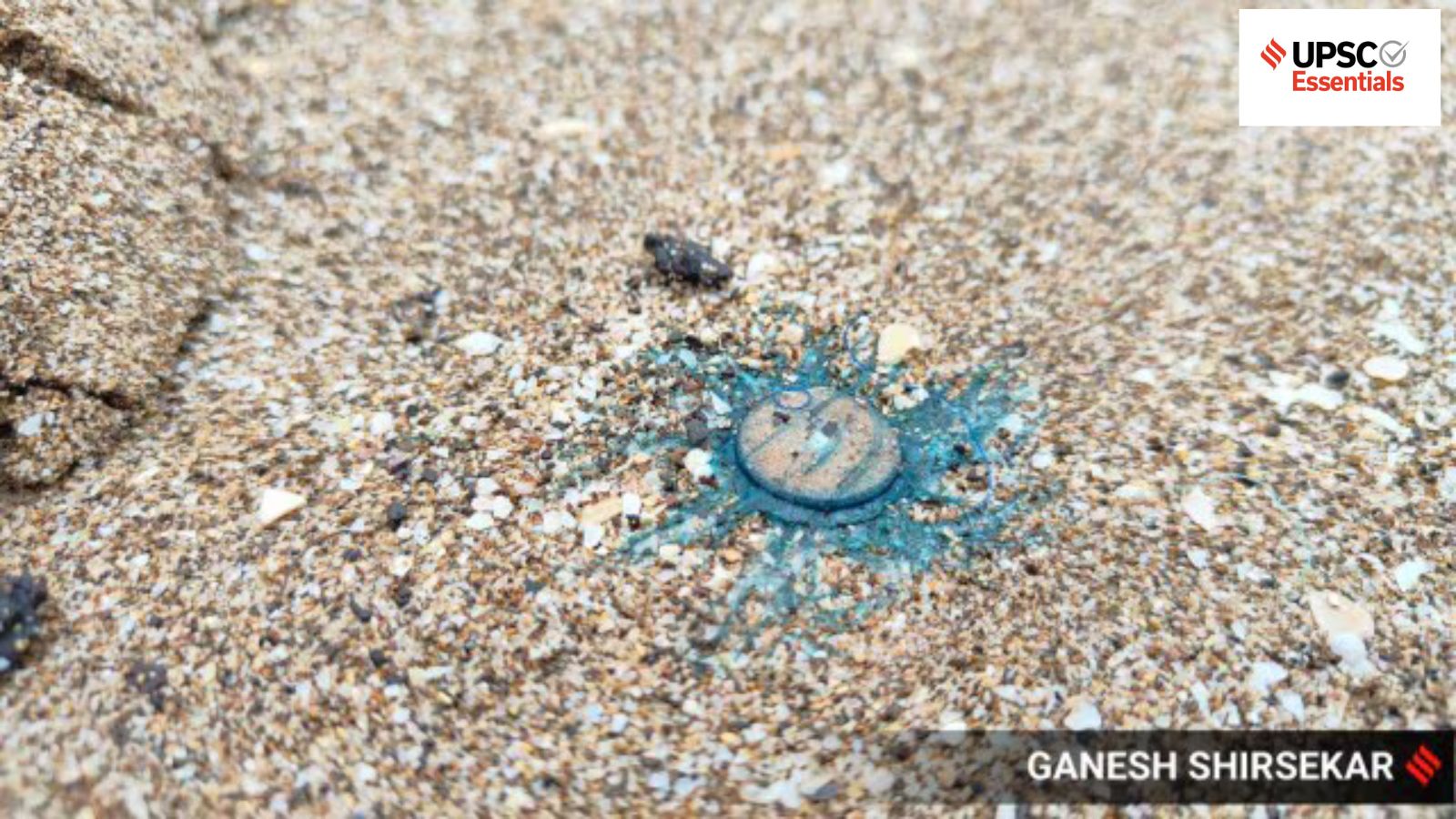
Scientists are seeing some big changes in the environment.
Jellyfish are growing in numbers because the oceans are getting warmer, there's more plastic, and some of their predators are gone.
Whales are getting stranded more often.
The Arctic is getting warmer quickly because of melting ice and warm water.
The winds can cause warm areas of water to move to different places.
When high pressure is in one area and low pressure in another, like around California, it causes strong winds that can dry out forests.

Jellyfish populations are increasing due to climate change, plastic pollution, and overfishing.
Whale strandings along India's southwest coast have increased tenfold.
The Arctic's rapid warming is influenced by the albedo effect, hot sea surface temperatures, and the lack of convection.
In the neutral ENSO phase, the eastern Pacific is cooler than the western Pacific.
Santa Ana winds are caused by high pressure in the Great Basin and low pressure on California's coast.
- Who
- Focuses on environmental factors.
- What
- Multiple environmental phenomena: increased jellyfish populations, whale strandings, Arctic warming, ENSO phases, and Santa Ana winds.
- When
- Not specified, but recent trends.
- Where
- Global, with specific mentions of France, India, the Arctic, the Pacific Ocean, and California.
- Why
- Various factors, including climate change, pollution, and atmospheric pressure differences.
Environmental Issues
N/A
N/A
Environmental Issues
N/A - No opposing viewpoints were identified in the articles.
N/A
N/A
- Jellyfish Increase Factors
- Climate change, plastic pollution, overfishing
- Whale Stranding Increase
- Tenfold increase along India's southwest coast
- Arctic Warming Factors
- Albedo effect, hot sea surface temperatures, lack of convection
- ENSO Phases
- Neutral, El Niño, La Niña
- Santa Ana Wind Cause
- High pressure in the Great Basin, low pressure on California's coast