1 day ago
Delhi Court Grants Bail to Satyendar Jain in DJB Case

A Delhi court gave Satyendar Jain bail in a corruption case involving a water board tender.
Investigators say the tender rules were changed to help a private company.
They also allege that Jain, who was the minister at the time, helped a larger conspiracy.
Jain has not been found guilty, and the case will still go to trial.
The judge said the evidence linking Jain to the alleged kickbacks was not strong enough to keep him in custody.
The judge also questioned why Jain was arrested so late in the investigation.
The court said important documents and electronic evidence had already been collected.
Jain must follow strict rules while free, including surrendering his passport.
He must return whenever investigators or the court require him.

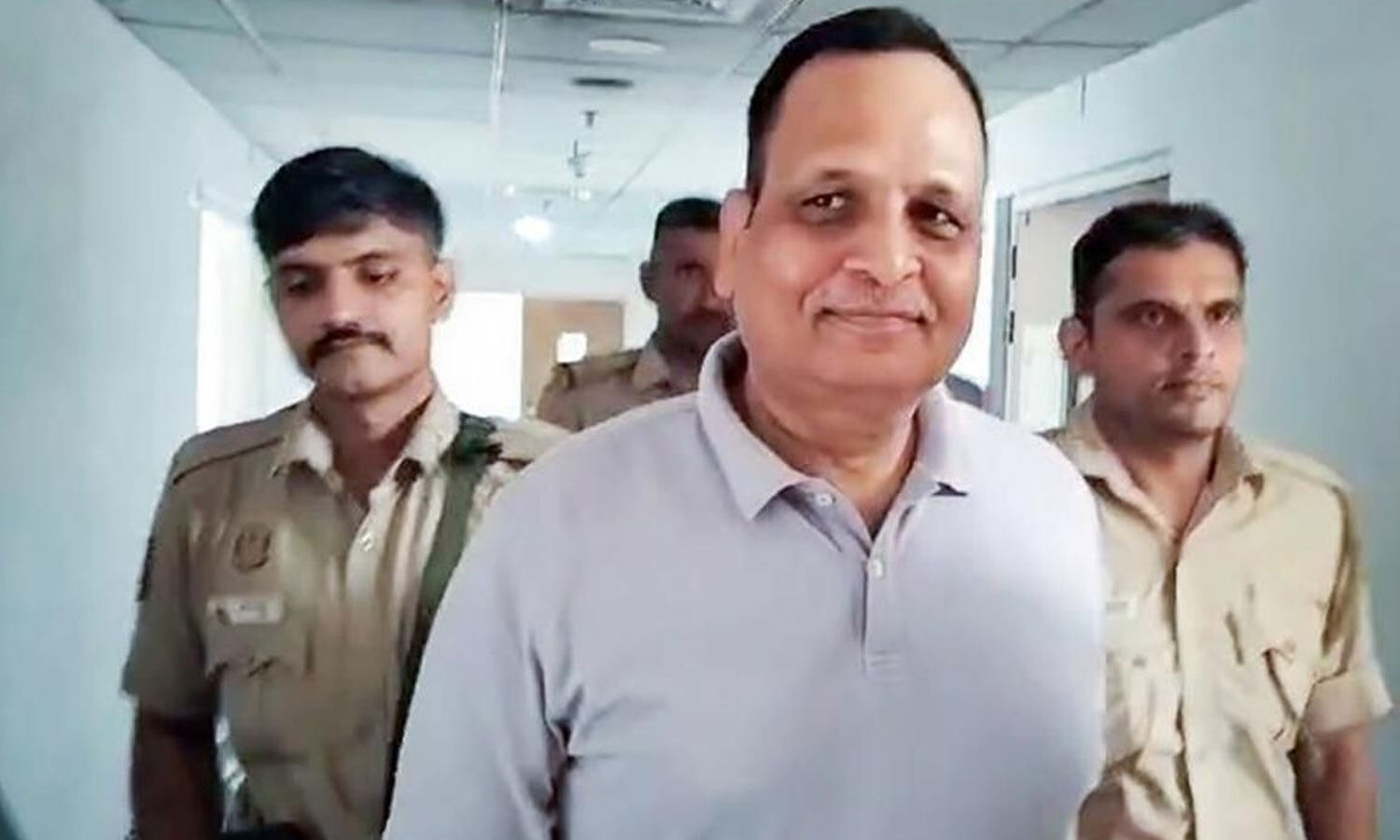
A Delhi court granted former Delhi minister Satyendar Jain bail in a Delhi Jal Board corruption case.
The court said the evidence was prima facie insufficient to deny bail and that Jain was not a flight risk.
It criticized the Anti-Corruption Branch for arresting Jain near the investigation’s end after an allegedly unexplained 27-month delay.
The Anti-Corruption Branch alleges tender conditions were manipulated to favor Euroteck Environmental Private Limited.
Jain must provide a Rs 2 lakh bond, surrender his passport, avoid witnesses, and join the investigation when required.
- Who
- Satyendar Jain, former Delhi minister and AAP leader; the Delhi government’s Anti-Corruption Branch is investigating the case.
- What
- A Delhi court granted Jain regular bail in a corruption case concerning a Delhi Jal Board tender.
- Where
- Delhi, in a case involving the Delhi Jal Board.
- When
- The order was reported on September 3; the article describes an arrest in August 2026 and an FIR registered in May 2024, dates that appear internally inconsistent.
- Why
- The court found the evidence prima facie insufficient to deny bail, said Jain was not a flight risk, and criticized the delayed arrest and generic claims about evidence tampering.
Court’s Bail Reasoning
Anti-Corruption Branch’s Allegations
Strength of evidence
Court’s Bail Reasoning
The court said the material was prima facie insufficient to deny bail and noted that no WhatsApp chats, phone records, or SMS messages presently linked Jain to alleged kickbacks and hawala transactions.
Anti-Corruption Branch’s Allegations
The Anti-Corruption Branch alleges Jain was involved in a conspiracy and aided illegal transactions connected to other accused people.
Timing of arrest
Court’s Bail Reasoning
The court criticized the sudden arrest after a prolonged investigation, saying the agency had not shown a strong new reason or changed circumstance requiring custody.
Anti-Corruption Branch’s Allegations
The Anti-Corruption Branch pursued Jain’s arrest in the corruption investigation and argued that the conspiracy had not yet been fully uncovered.
Risk of interference
Court’s Bail Reasoning
The court said the evidence was largely documentary and electronic, had already been seized, and described the agency’s claims about tampering or influencing witnesses as stereotyped.
Anti-Corruption Branch’s Allegations
The Anti-Corruption Branch claimed Jain could tamper with evidence or influence witnesses.
Key facts
- Court
- Special Judge Dig Vinay Singh, Delhi
- Case
- Delhi Jal Board tender and alleged corruption case
- Alleged beneficiary
- Euroteck Environmental Private Limited
- Tender estimate
- Rs 1,546.32 crore for 10 sewage treatment plants
- Bail bond
- Personal bond of Rs 2 lakh with two sureties of the same amount
- Evidence cited by court
- Documents, electronic evidence, notes, files, technical proposals, and bank statements had been seized
- Bail conditions
- Jain must surrender his passport, avoid influencing witnesses, and join the investigation when required
Quotes
Special Judge Dig Vinay Singh
Delhi special judge who granted Jain bail and issued the court’s observations
“The ACB’s decision not to seek police custody upon the applicant’s arrest or thereafter till now, and the request of only judicial custody, demonstrates that there is no active requirement for custodial interrogation.”
 theprint.in
“The material till now is prima facie insufficient to deny the applicant bail; the applicant’s availability for further investigation, interrogation, and trial is not in question.”
theprint.in
Sources
Related news
Satyendar Jain Granted Bail in Delhi Jal Board Case
Court Reserves Order on Satyendar Jain Bail in Scam
ACB Seeks 14-Day Judicial Custody For Satyendar Jain
Satyendar Jain, Five Others Arrested in Delhi Jal Board Case

Satyendar Jain Challenges Delhi Jal Board Tender Case Arrest

Satyendar Jain Arrest Sparks AAP-BJP Clash Over Punjab Polls

Report Labels India’s Waste-to-Energy Plants Most Polluting Industrial Sector

Delhi Expands Winter Pollution Enforcement With 334 Monitoring Teams
Delhi Simplifies Nursing Home Registration, Issues Renewals Within Two Days

Delhi Enforces Winter Construction Ban to Curb Air Pollution