

1 hr ago
Winkle Twinkle Traces Bengal’s Political and Personal Transformation
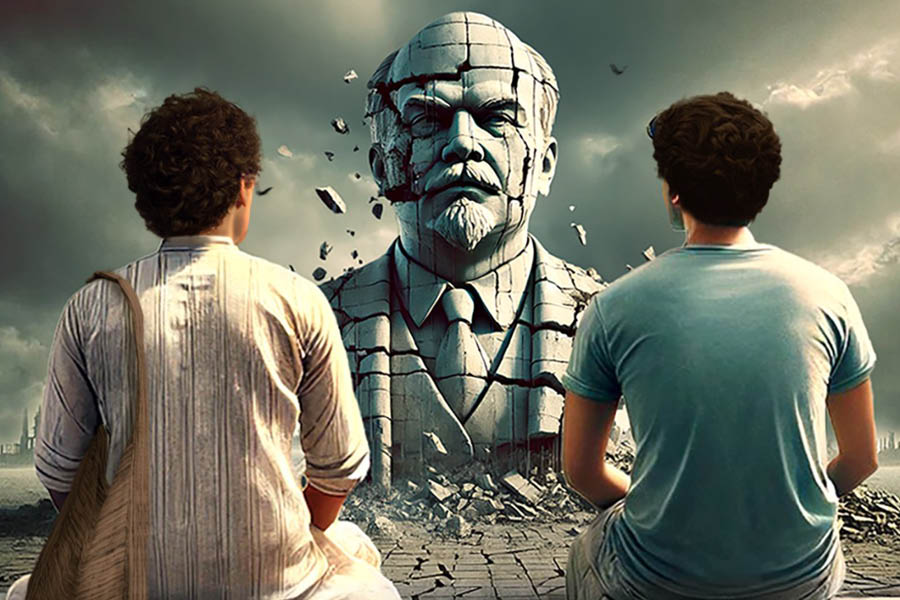
Winkle Twinkle is about a political activist who disappears in 1976 and returns in 2002.
He thinks only a short time has passed, but 25 years are gone.
His city, family and political world have all changed.
His wife has grown older, and his children are now adults.
His son Indra has very different ideas about politics.
The father believes in sacrifice and strong ideals.
The son believes politics has become more practical and based on deals.
The film asks whether ideals can survive when people and political movements change.
It also tells a sad and gentle story about love, ageing and lost time.

Sabyasachi Sen disappears in 1976 after escaping police custody and returns believing little time has passed.
He discovers that 25 years have elapsed and that Kolkata, his family and Bengal’s politics have profoundly changed.
The film centers on Sabyasachi’s conflict with his pragmatic, politically assertive son Indra.
Srijit Mukherji’s adaptation explores idealism, political compromise, power and the changing meaning of ideology.
Ritwick Chakraborty’s performance and the film’s music and score are praised for conveying dislocation, memory and loss.
- Who
- Sabyasachi Sen, a Left-wing activist, and his family, including his son Indra; the film was directed by Srijit Mukherji and adapted from Bratya Basu’s play.
- What
- A film about Sabyasachi’s return after a 25-year disappearance and his struggle to understand a transformed family, city and political landscape.
- Where
- Kolkata and Bengal.
- When
- Sabyasachi disappears in 1976 and returns in 2002.
- Why
- The story examines what happens when political ideals and personal relationships confront time, power, compromise and social change.
Idealism and Sacrifice
Pragmatism and Power
Meaning of politics
Idealism and Sacrifice
Sabyasachi sees politics as a commitment to ideals, sacrifice and changing society.
Pragmatism and Power
Indra views politics as more complicated, pragmatic and transactional.
Political legacy
Idealism and Sacrifice
The film presents concern that ideology can be diluted and political language can lose its original meaning.
Pragmatism and Power
The newer political outlook is shown as assertive and practical rather than simply villainous.
Judging the characters
Idealism and Sacrifice
Sabyasachi’s ideals remain emotionally powerful even though the world has moved beyond them.
Pragmatism and Power
The film does not portray Indra or political pragmatism as wholly wrong, leaving the contradictions unresolved.
Key facts
- Director
- Srijit Mukherji
- Source material
- Bratya Basu’s acclaimed play
- Central character
- Sabyasachi Sen, played by Ritwick Chakraborty
- Time span
- Sabyasachi disappears in 1976 and returns in 2002
- Core conflict
- Sabyasachi’s idealistic politics clashes with his son Indra’s pragmatic and transactional politics
- Political backdrop
- The Emergency, the aftermath of the Naxalite movement, the Left Front years and the rise of Trinamool Congress
- Music
- Songs composed by Tamalika Golder, with background score by Prabuddha Banerjee
Sources
Related news
Srijit Mukherji’s Winkle Twinkle Revives a Timely Political Drama
Padatik offers contrasting portraits of Mrinal Sen’s life and cinema

Jeet’s New Historical Drama Explores Revolution After Independence
India's 80th Independence Day: Sen and Chaterji reflect on freedom

'Creativity Takes Backseat When Playing With Power': Jeet
