9 months ago
Rajasthan Mandates Newspaper Reading in Schools

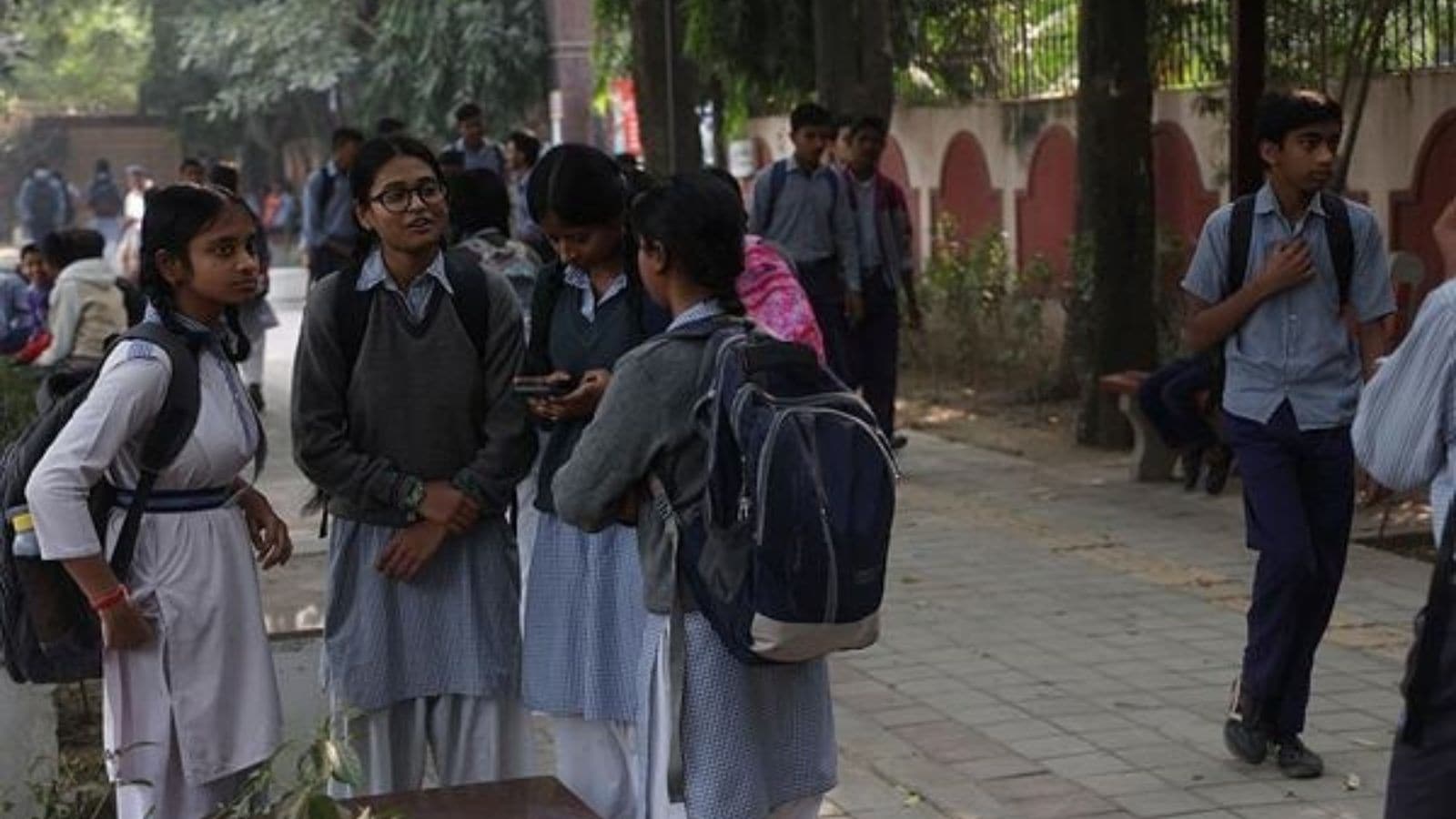
The Rajasthan government has made it a rule for all government schools to read newspapers every day during the morning assembly.
Students will read newspapers for at least 10 minutes.
The schools will have to subscribe to at least two newspapers, one in Hindi and one in English for senior secondary schools, and two Hindi newspapers for upper primary schools.
The government will pay for the newspapers.
Schools will also pick five new words from the newspapers each day and explain them to the students.
During the assembly, one national-level newspaper in English and one in Hindi will be read aloud.
The goal is to help students learn about current events, improve their language skills, and get ready for competitive exams.
Some people think this will help students spend less time on screens, but others are not sure if it will really make a difference.

Rajasthan government mandates daily newspaper reading in all government schools.
Students required to read newspapers for at least 10 minutes during morning assembly.
Schools must subscribe to at least two newspapers, one in Hindi and one in English for senior secondary schools, and two Hindi newspapers for upper primary schools.
Expenditure for newspaper subscriptions will be borne by the Rajasthan School Education Council.
Schools to identify and explain five new words from newspapers daily to strengthen language skills.
- Who
- Students in government schools in Rajasthan
- What
- Mandatory newspaper reading during morning assembly
- Where
- All government schools in Rajasthan
- When
- Effective immediately, as per a December 31 order
- Why
- To promote reading habits, improve vocabulary, enhance general awareness, and prepare students for competitive examinations
Proponents of Newspaper Reading
Skeptics of Newspaper Reading
Effectiveness in Reducing Screen Time
Proponents of Newspaper Reading
Proponents believe that structured newspaper reading can help reduce screen dependence and improve focus among students.
Skeptics of Newspaper Reading
Skeptics argue that there is a lack of evidence linking newspaper reading to reduced screen time, questioning its effectiveness.
Key facts
- Schools
- All government schools in Rajasthan
- Programs
- Daily newspaper reading during morning assembly
- Duration
- 10 minutes
- Newspaper Types
- One Hindi and one English newspaper for senior secondary schools, two Hindi newspapers for upper primary schools
- Expenditure
- Borne by the Rajasthan School Education Council, Jaipur
- Benefits Highlighted
- Improved reading habits, better vocabulary, enhanced general awareness, preparation for competitive examinations
- Challenges
- Lack of evidence linking newspaper reading to reduced screen time
Quotes
Principal Minakshi Kushwaha
Principal of Birla Vidya Niketan in Delhi’s Pushp Vihar
“We don’t get the main newspaper. The students’ edition is very well designed for children. Frankly speaking, I don’t know.”
 indianexpress.com
“This is all to promote current affairs and general knowledge. In my school, current affairs are taken very seriously.”
indianexpress.com
Principal Tania Joshi
Principal of The Indian School in Sadiq Nagar
“During the zero period, the teacher discusses things with children related to the newspaper. It’s not only for knowledge or to encourage reading, but also to help children connect concepts. It’s the cheapest resource, not only for the teacher but also for the child. I wouldn’t say it’s mandatory, it’s a habit we’ve inculcated. But when it comes to screen time, we have not held any survey particularly to see if there has been a reduction. All I can say is I’ve noticed children turning to more books in their free period as compared to before we started the newspaper reading exercise.”
indianexpress.com
Government school teacher in South Delhi
Mathematics teacher in a government school in South Delhi
“There isn’t any such regulation. But libraries do have newspapers and children are encouraged to read them. It’s not made mandatory or a habit in our school.”
indianexpress.com
Ajay Kumar Choubey
Principal of Sarvodaya Bal Vidyalaya near Rouse Avenue
“Earlier, government schools used to subscribe to newspapers. That practice stopped when funding dried up. Reading newspapers will definitely reduce the impact of screen time. It has not been made mandatory by the state, but we encourage it. It’s a very powerful instrument.”
indianexpress.com
Punam Batra
Professor of education and former faculty at Delhi University’s Central Institute of Education (CIE)
“Reading newspapers every day is not a bad thing at all. But the claim that it will automatically reduce screen time is a tall order. There is no research in our context or otherwise that shows reading a physical newspaper reduces addiction to screens. Newspapers and other media have largely been captured by the state. A more meaningful intervention would be to shift children from consumers of news to producers. This helps children learn to distinguish fact from opinion and propaganda.”
indianexpress.com
Latika Gupta
Faculty member at Delhi University’s Department of Education
“While newspaper reading should be encouraged in schools, it cannot be projected as a cure for children’s screen dependence. A child can always come back home and turn to a screen to access more information. Reading from print allows for deeper engagement than reading from a device. A physical newspaper requires children to slow down and read patiently, which often helps them grasp content better than scrolling through information on a screen. Since the 1970s, the NCERT has been suggesting that schools keep two copies of newspapers for a set of students in each classroom to cultivate the reading habit.”
indianexpress.com
Professor R Govinda
Former Vice-Chancellor of the National University for Education Planning and Administration and instrumental in drafting the Right to Education Act
“Evidence linking newspaper reading to reduced screen time is minimal. Children will read what interests them. A Class 12 student, an eighth grader, and a fourth grader approach newspapers very differently. Few young children are drawn to political news in the first place.”
indianexpress.com
Dr Bhavna Barmi
Senior clinical and child psychologist and founder of Happiness Studio
“Structured reading routines in schools can play a meaningful role in reducing children’s overall screen time, particularly outside school hours. When reading is built into the school day, it acts as a healthy habit replacement, occupying time that might otherwise be spent on screens. Reading demands sustained attention and cognitive engagement, which strengthens attention span and makes passive screen consumption less appealing. Over time, this also supports better self-regulation — children who develop stronger executive functioning are more capable of setting limits on their own screen use. School-based reading routines often spill over into home environments, encouraging families to reinforce reading after school and, thereby, reducing unstructured screen time. Replacing screens with reading, especially in the evening, can also improve sleep patterns and reduce late-night screen dependence.”
indianexpress.com
Dr Kamna Chhibber
Clinical Psychologist and Director of the Mental Health Programme at Fortis Healthcare, Gurgaon
“When you introduce structured activities like reading, you are automatically reducing the time available for screens — it’s simple logic. Reading, especially from a physical book or newspaper, is far less stimulating than digital media. It reduces distractions, improves attention and focus, and trains the brain to engage with neutral, low-stimulus content. This is important because many children today struggle with focus because they are constantly exposed to high levels of stimulation on screens.”
indianexpress.com
Sources

Related news

Delhi Police Arrest Four in Suspected Fake Currency Racket

Delhi’s October Air Quality Worst First Week Since 2023

Onion Prices Ease as Kharif Arrivals Rise Ahead of Festivals
Udaipur School Roof Plaster Injures Three Children

Government Expects Onion Prices to Fall as Kharif Crops Arrive