

Archive · 29 Jul 2026
Travellers Wrap Passports in Foil to Block RFID Scanning
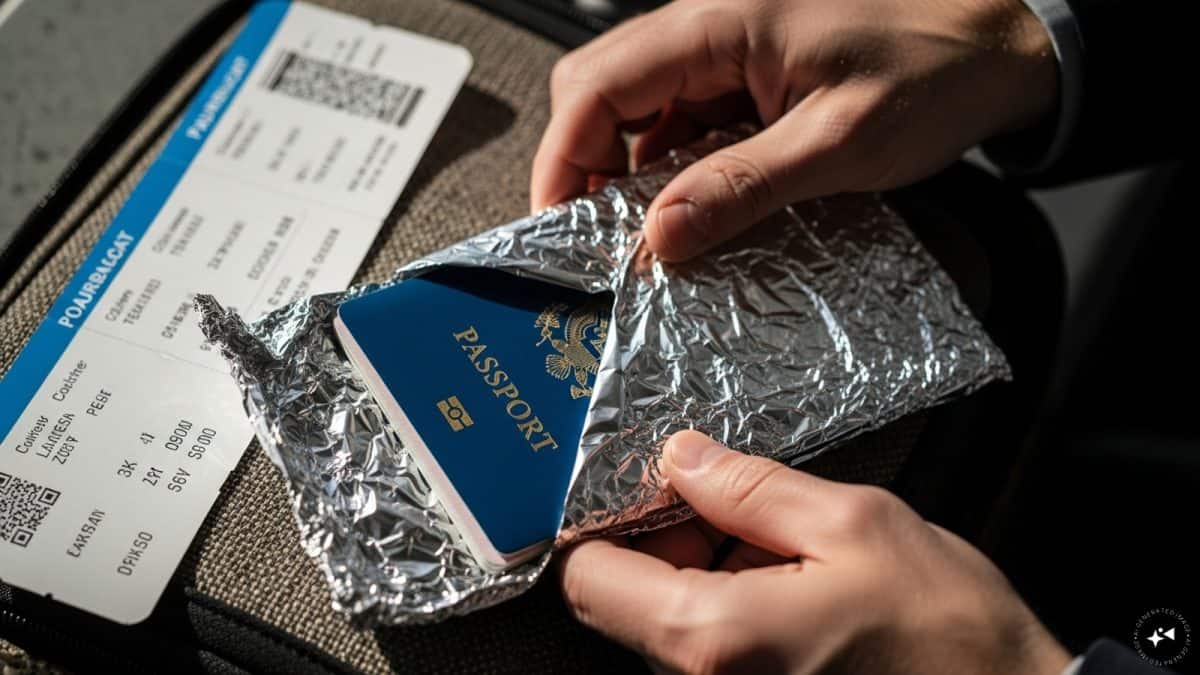
Some travelers are wrapping their passports and wallets in aluminum foil to stop unauthorized scanning of their personal data.
This trend is driven by concerns over RFID chips in passports and contactless cards, which can be read wirelessly.
The foil acts like a shield, blocking the radio signals that read these chips.
However, experts say this protection might not be necessary because the chips are usually not accessible unless the passport is open.
Also, foil can be impractical as it tears easily and is inconvenient to use frequently.
Official agencies do not endorse this method, but travelers can use RFID-blocking covers and wallets for better protection.

Travellers are wrapping passports and wallets in aluminum foil to block RFID signals.
RFID chips in passports store personal data like biometric information and passport numbers.
Foil acts as a Faraday cage, blocking radio signals that read RFID chips.
Experts argue that foil wrapping is often redundant and impractical for frequent use.
Official agencies do not endorse foil wrapping, but RFID-blocking covers and wallets are available.
- Who
- Travellers concerned about unauthorized RFID scanning.
- What
- Wrapping passports and wallets in aluminum foil to block RFID signals.
- When
- Recent trend driven by growing concern over digital theft.
- Where
- Global phenomenon, particularly noted in the US and India.
- Why
- To protect personal data stored in RFID chips from unauthorized access.
Proponents of Foil Wrapping
Skeptics of Foil Wrapping
Effectiveness of Foil Wrapping
Proponents of Foil Wrapping
Foil wrapping can block RFID signals, protecting personal data from unauthorized scanning.
Skeptics of Foil Wrapping
Foil wrapping is often redundant as RFID chips in passports are not easily accessible and require the booklet to be open.
Practicality of Foil Wrapping
Proponents of Foil Wrapping
Foil wrapping is a simple and cost-effective method to protect sensitive information.
Skeptics of Foil Wrapping
Foil is impractical for frequent use as it tears easily and is inconvenient during travel.
Official Endorsement
Proponents of Foil Wrapping
Foil wrapping is a personal precaution that individuals can take to enhance their security.
Skeptics of Foil Wrapping
Official agencies like US Customs and Border Protection do not endorse or evaluate third-party document protection methods.
- RFID Chip in Passports
- Stores biometric data, passport number, and other personal information.
- Faraday Cage Principle
- Metal mesh or foil that blocks radio signals of certain frequencies.
- Effectiveness of Foil Wrapping
- Depends on foil thickness, tightness of wrap, and environmental conditions.
- Official Guidance
- US Customs and Border Protection does not endorse third-party document protection methods.
- Alternative Solutions
- RFID-blocking passport covers and travel wallets offer similar protection without the hassle.