

Archive · 17 Aug 2025
Underwater Volcano Near Oregon Showing Signs of Eruption
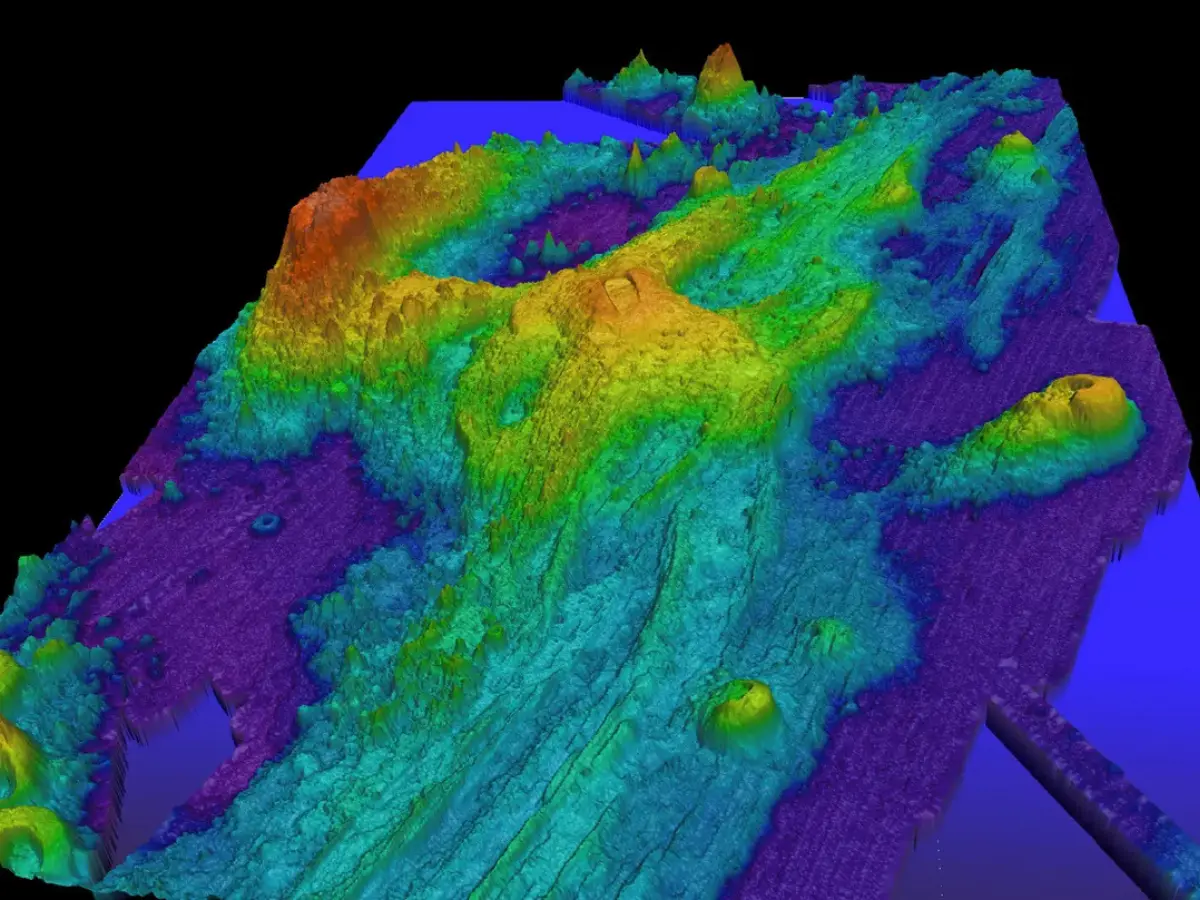
Imagine a volcano under the sea, far from land.
This one, called Axial Seamount, is waking up!
It's like it's getting ready to burp.
Scientists have noticed lots of little shakes, like tiny earthquakes, and the top of the volcano is getting bigger.
It's located off the coast of Oregon.
Luckily, the volcano is deep underwater, so it's unlikely to cause a big splash or waves that would reach the coast.
Scientists are excited because studying this volcano could help them understand how life on Earth started, especially the tiny creatures that live near hot underwater vents, which are rich in chemicals that these tiny creatures need to survive.

Axial Seamount, an underwater volcano off the Oregon coast, shows signs of an imminent eruption.
The volcano, located on the Juan de Fuca Ridge, is considered one of the most active in the world.
Scientists have recorded over 1000 small earthquakes and observed the caldera inflating.
Eruptions are expected to be non-explosive, posing a low threat to coastal populations.
The volcano's hydrothermal vents are considered to be a key research area regarding early life.
- Who
- Scientists are monitoring the Axial Seamount.
- What
- Axial Seamount, an underwater volcano, is showing signs of a possible eruption.
- When
- Scientists predict the eruption could happen in 2025.
- Where
- Approximately 300 miles off the Oregon coast, on the Juan de Fuca Ridge.
- Why
- Scientists are interested in studying the volcano and its hydrothermal vents, which could provide insights into the origin of life. The volcano is also monitored to assess potential risks to underwater equipment like fiber optic cables.
Deep Sea Mining
Science & Research
Damage to Equipment
Deep Sea Mining
Deep sea mining equipment may get frazzled in the brewing eruption.
Science & Research
No explicit information on opposing viewpoints is given in the provided text.
- Volcano Name
- Axial Seamount
- Location
- Off Oregon coast, on Juan de Fuca Ridge
- Depth
- 1 km below sea surface
- Eruption Type
- Non-explosive lavas expected
- Notable Activity
- Over 1000 small earthquakes, caldera inflation