

Archive · 27 Jul 2026
Ancient Fossils Show Earliest Evidence of Handedness
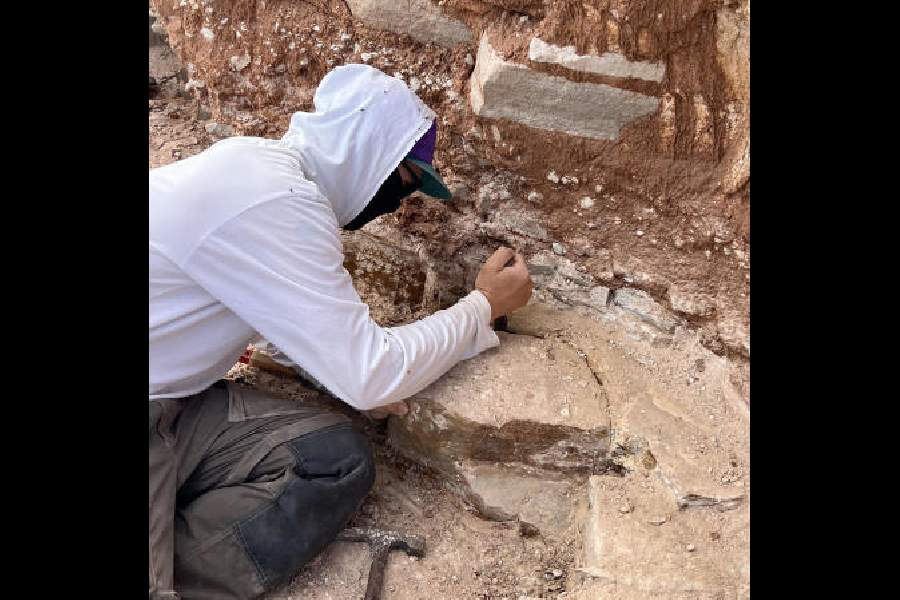
Scientists found old fossils of a creature called Spriggina that lived over 550 million years ago.
These fossils showed that Spriggina usually turned to the right when moving.
This is important because it shows that animals have preferred one side over the other for a very long time, even before they had limbs.
The researchers think this preference might have helped them escape predators faster.
They also think that Spriggina's body plan is similar to ours, with a front, back, left, and right side.
However, they are not sure why Spriggina preferred turning right.

Spriggina fossils show evidence of behavioural handedness, preferring to turn right.
Handedness is an ancient feature among complex life, dating back over 550 million years.
Spriggina's body plan is similar to modern organisms, with distinct left and right sides.
The cause of Spriggina's handedness is unclear, but it may have helped in escaping predators.
Over 100 Spriggina fossils were analyzed, showing a preference for right turns.
- Who
- Researchers led by Scott D. Evans
- What
- Analyzed Spriggina fossils showing evidence of handedness
- When
- Over 550 million years ago
- Where
- Nilpena Ediacara National Park, South Australia
- Why
- To understand the origins of behavioural handedness in animals
Current Influence
Intrinsic Preference
Cause of Handedness
Current Influence
The position of Spriggina's bodies may have been influenced by currents.
Intrinsic Preference
Spriggina likely had an intrinsic preference for turning right, similar to modern organisms.
- Organism
- Spriggina
- Period
- Ediacaran
- Location
- Nilpena Ediacara National Park, South Australia
- Lead Author
- Scott D. Evans
- Publication
- Scientific Reports
- Fossil Age
- Over 550 million years old
- Fossil Count
- Over 100 Spriggina specimens