

Archive · 13 Nov 2025
India's Evolving Federal Structure: From Princely States to Linguistic Reorganization
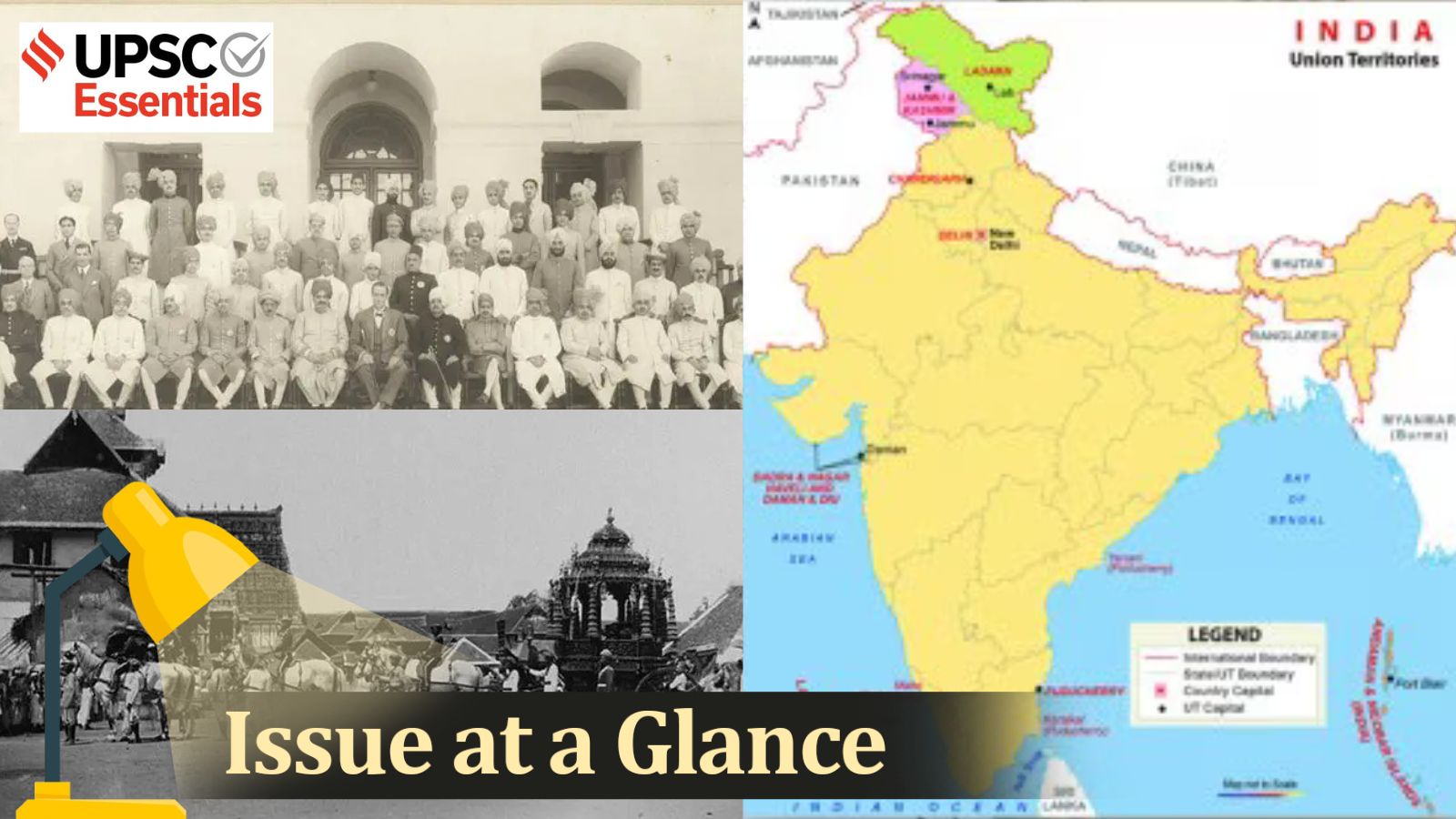
Imagine India is like a big puzzle.
When it became a country, some pieces were already shaped by the British, and others were separate kingdoms called princely states.
Leaders had to carefully put all these pieces together.
Initially, states were mostly like the old British areas.
Later, people wanted states to be formed based on the languages they spoke.
One brave person even went on a hunger strike, which led to the creation of Andhra Pradesh.
This led to a big review, and the country was reorganized into more states based on languages.
Now, if a new state needs to be formed, the Parliament can make it happen by passing a special bill.
This shows how India's map has changed over time to better represent its people and their different languages and needs.

November 2000 marked the 25th anniversary of the formation of Chhattisgarh, Uttarakhand, and Jharkhand.
At India's independence, 60% of the territory was British-ruled, and 40% comprised 565 princely states.
Sardar Vallabhbhai Patel and V.P. Menon were instrumental in integrating the princely states into the Indian Union.
The States Reorganisation Commission (1955) recommended reorganizing India into 14 states and 6 union territories primarily on linguistic lines.
Article 3 of the Constitution empowers the Parliament to form new states or alter existing ones.
- Who
- Indian Parliament, advised by the President, following state legislature views
- What
- Formation of new states and alteration of existing states within India
- When
- Throughout India's post-independence history, with recent examples in November 2000 and ongoing processes
- Where
- Across India
- Why
- To reflect evolving federal structure, regional aspirations, administrative needs, and identity-based demands
- Formation of Chhattisgarh, Uttarakhand, Jharkhand
- November 2000
- Princely States at Independence
- 565 (40% of India's territory)
- Key Figures in Princely State Integration
- Sardar Vallabhbhai Patel and V.P. Menon
- States Reorganisation Commission (SRC) Report
- Recommended 14 states and 6 centrally administered territories on linguistic lines
- Article Empowering Parliament to Form New States
- Article 3 of the Indian Constitution