1 hr ago
West Asia Turmoil Pushes IMEC Toward Flexible Network of Routes
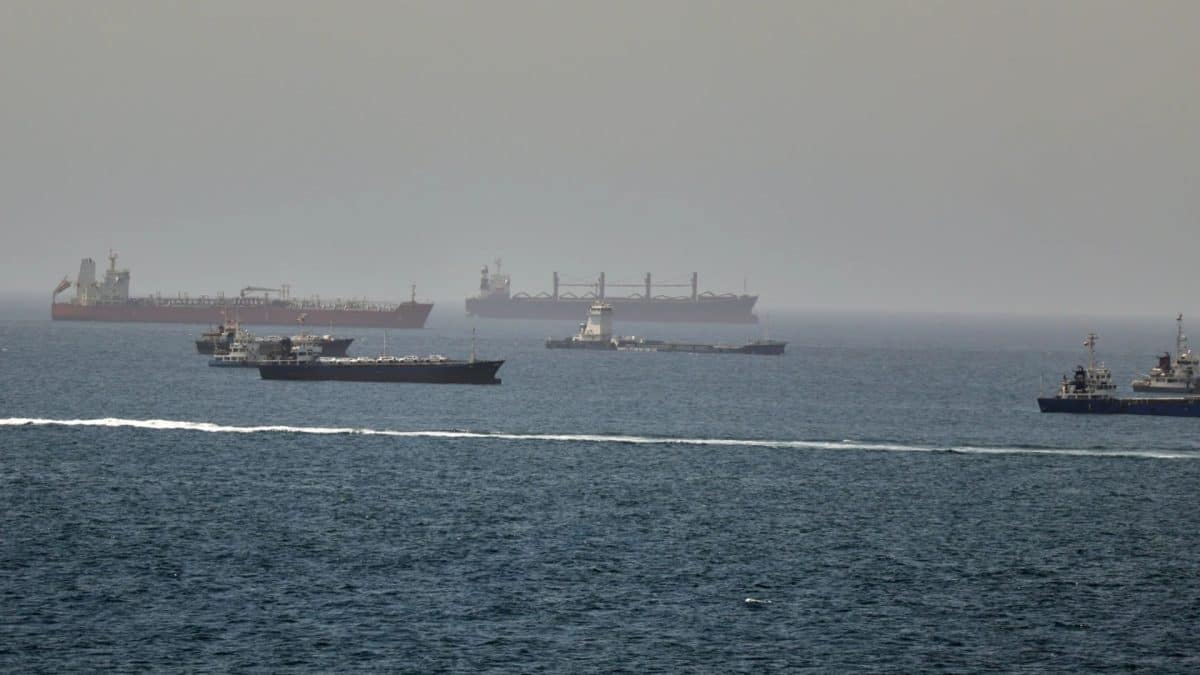
IMEC is a plan to help goods travel between India, the Middle East and Europe.
It was first imagined as one main route using ships, railways and digital systems.
Trouble in West Asia has made some important sea passages harder to use.
Speakers at a discussion said the plan may work better as several routes instead.
They said countries will need to cooperate and make decisions together.
They also said digital tools can help paperwork and transport run more smoothly.
Oman could become more important as traders look for other ways to move goods.
India has started a digital system called MAITRI to support trade.
One challenge for India is finding enough goods to export through the corridor.

Geopolitical disruption around the Strait of Hormuz and Bab al-Mandeb is prompting a rethink of IMEC as a single linear route.
Panellists at ORF’s Sagarmanthan dialogue said IMEC may need to function as a network of routes and options for traders.
Participants called for stronger governance, greater digital integration and flexibility to include additional routes and countries.
OECD’s Marie-Estelle Rey cited Oman’s role and a railway under construction between Sohar and Fujairah as examples of emerging alternatives.
Indian officials said MAITRI went live in May and that finding export cargo remains a key challenge for India.
- Who
- Officials and experts discussing the India-Middle East-Europe Economic Corridor (IMEC), including representatives of the OECD, MENA2050, India’s Ministry of Ports, Shipping and Waterways, and UN Trade and Development.
- What
- Participants said IMEC may need to evolve from a linear trade route into a flexible network, with stronger governance and digital integration.
- Where
- At ORF’s Sagarmanthan: The Great Oceans Dialogue; the proposed corridor connects India, the Middle East and Europe.
- When
- The discussion took place at ORF’s Sagarmanthan dialogue; the corridor was announced at the G20 Summit in September 2023.
- Why
- Disruptions around the Strait of Hormuz and Bab al-Mandeb have increased the need for alternative routes and greater flexibility.
Key facts
- Corridor
- The India-Middle East-Europe Economic Corridor (IMEC)
- Announced
- At the G20 Summit in New Delhi in September 2023
- Original design
- A multimodal network of shipping links, railways and digital infrastructure
- Projected benefits
- Expected to cut transit times by up to 40% and logistics costs by around 30%
- Digital initiative
- MAITRI, or Master Application for International Trade and Regulatory Interface, went live in May this year
- Oman-UAE connection
- A railway between Sohar in Oman and Fujairah in the UAE is starting construction, according to Rey
- India’s stated challenge
- Finding cargo for export
Quotes
Rajesh Kumar Sinha
Former Special Secretary, Ministry of Ports, Shipping and Waterways.
“We have MAITRI, which stands for Master Application for International Trade and Regulatory Interface. It is the cornerstone digital framework developed to support the Imec, which went live in May this year.”
 firstpost.com
“one single legal entity to monitor collaboration and cooperation between Imec nations.”
firstpost.com
Marie-Estelle Rey
OECD adviser on South and Southeast Asia.
“If the Strait is closed, it is not us who would advise; it's the traders who would take alternative routes. What we are doing is monitoring the changes. The original constituency of Imec as a linear route has changed; it now involves multiple routes and options for traders, and this is why neighbouring countries to the initial corridors, such as Oman, play a significant role now.”
firstpost.com
Sources
Related news

France Says Middle East Crises Strengthen Case for IMEC

French Envoy Says Multiple Routes Key to IMEC Amid Hormuz Crisis
More Nations Seek to Join India-Middle East-Europe Corridor

French Envoy Says IMEC Financing Differs Sharply From China’s BRI
Trump Backs IMEC Amid Iran War and Regional Tensions
Bolton Warns Middle East Risks Could Threaten IMEC Corridor
Israeli Ambassador Calls for Cooperation After Flydubai Cockpit Attack
Flydubai Flight Highlights Gulf’s Shifting Security Order and India’s Strategy