

Archive · 30 Jul 2025
Whale Songs Dim: Ocean Heatwave Silences Blue Whales
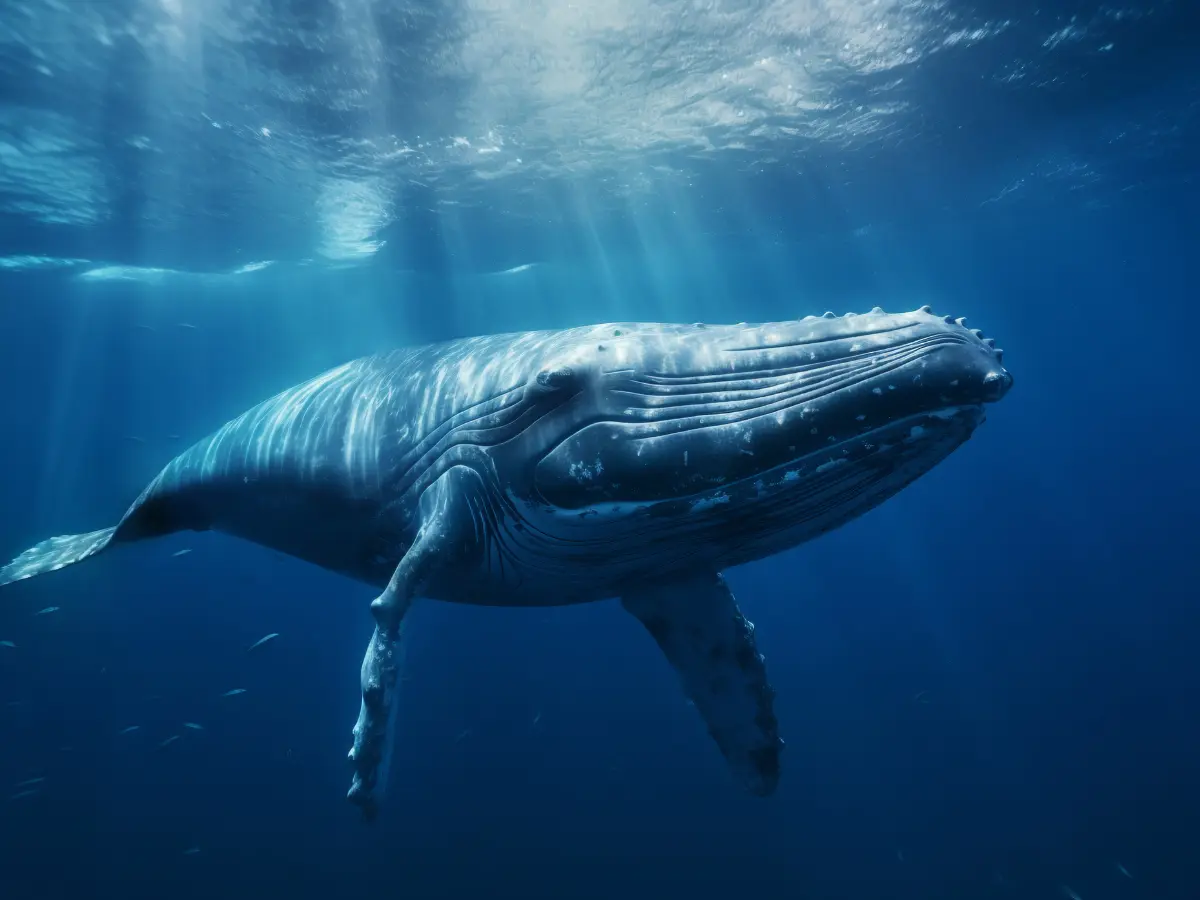
Imagine whales singing in the ocean like they're singing songs.
Scientists listened to these songs and noticed that blue and fin whales weren't singing as much.
This is because a huge heatwave warmed the ocean, causing a food shortage for the whales.
The whales primarily eat tiny creatures called krill, but the heat killed off many of them.
The whales were hungry and had to spend all their time looking for food instead of singing.
Scientists are worried because these changes could mean big problems for the ocean and its animals.

Blue and fin whale vocalizations decreased due to food scarcity during a marine heatwave.
A study using underwater microphones tracked whale songs over several years.
The heatwave, known as 'The Blob', caused krill populations to collapse, impacting the whales' food source.
Humpback whales, with a more varied diet, were less affected than blue and fin whales.
Scientists are concerned about the implications of these changes in the ocean.
- Who
- Scientists studying whale songs, blue whales, fin whales, humpback whales, and krill.
- What
- Decline in blue and fin whale vocalizations due to a marine heatwave impacting their food source.
- When
- The decline was observed over several years, starting around 2015, during a marine heatwave.
- Where
- Central California Current Ecosystem in the Pacific Ocean.
- Why
- Due to a collapse in krill populations, a key food source, caused by a marine heatwave and warming oceans.
- Study Period
- Several years, starting around 2015
- Whale Species Impacted
- Blue and fin whales
- Primary Food Source
- Krill
- Cause of Krill Decline
- Marine Heatwave ('The Blob')
- Humpback Whale Impact
- Less impacted due to varied diet
- Hydrophone Location
- 51-kilometer-long cable along California coastline
- Ocean Temperature Increase
- More than 4.5°F during 'The Blob'