

Archive · 19 Jun 2025
Europe's Economic Strain From War, Energy Shift and Inflation
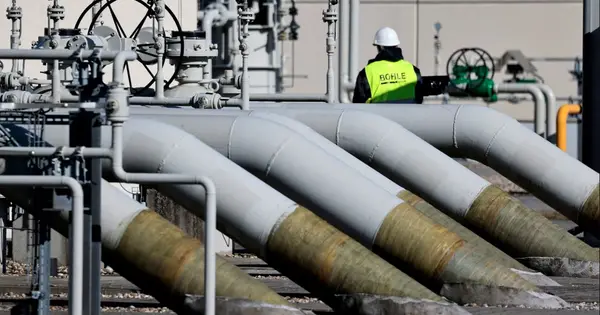
The war in Ukraine is hurting Europe's economy.
Before the war, Europe used cheap gas from Russia, but now they get it from other places that cost more.
This makes it harder for businesses, especially smaller ones, to make money.
Industries that need a lot of energy are struggling, and Europe's plan to use more clean energy is also facing problems.
Some experts worry this could make Europe's economy weaker compared to countries like the US and China.

Germany's GDP growth slowed to 0.4% in Q1 2025, with a 0.0% forecast for the year.
Europe shifted to more expensive LNG from the US and Qatar after cutting ties with Russian gas.
SMEs in Germany face higher risks from energy inflation due to lack of long-term contracts.
Industries like chemicals, metals, and autos are struggling with high energy costs.
Europe's green energy transition is encountering delays and investment challenges.
- Who
- European economies, particularly Germany, and energy-intensive industries.
- What
- Europe's economy is suffering due to the Russia-Ukraine war and the shift away from cheap Russian gas.
- When
- The economic impact has been felt since the beginning of the Ukraine war.
- Where
- Primarily in Europe, with a focus on Germany, Austria, Hungary, and Slovakia.
- Why
- The war caused a shift away from cheap Russian gas, leading to higher energy costs and economic challenges.
Economic Impact
Strategic Necessity
Economic Costs vs. Strategic Necessity
Economic Impact
European economies are struggling due to the war and the shift away from Russian gas.
Strategic Necessity
The decision to wean itself off Russian gas was a moral and strategic necessity, even with economic costs.
- Germany GDP Q1 2025
- 0.4% growth
- Germany GDP 2025 Forecast
- 0.0%
- Germany Industrial Production Decline
- 0.2% (March year-on-year)
- Energy Sources
- Shift from Russian gas to LNG (US & Qatar)
- Affected Industries
- Chemicals, metals, autos