

Archive · 16 Nov 2025
India's E-Truck Push Gains Momentum with PM E-Drive Scheme Approvals
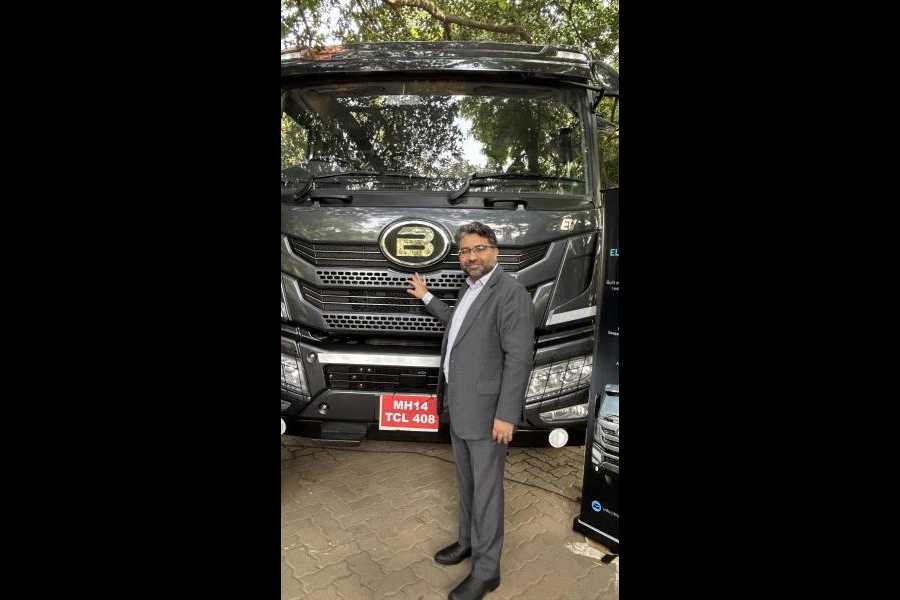
India is trying to make its big trucks run on electricity instead of diesel to help the environment.
A government plan called PM E-Drive gives money to companies that make electric trucks and use parts made in India.
Three companies, IPLTech, Tata Motors, and Volvo Eicher, are getting close to having their electric trucks approved for this plan.
They had some trouble with rules about using parts made in India, especially for special magnets needed in electric motors.
The government made a temporary exception to allow them to use imported motors for now.
This is important because big trucks cause a lot of pollution, even though there aren't many of them.
The plan also wants to help buyers by lowering the cost of these electric trucks.
However, electric trucks are still very expensive to buy, and it's hard to find places to charge them, especially for long trips.
The government is extending the plan to help more electric trucks get on the road.

India's PM E-Drive scheme is accelerating electric truck adoption, with IPLTech, Tata Motors, and VECV nearing testing and approval stages.
A temporary relaxation on localization norms for rare-earth magnet motors has been introduced, as alternatives are not yet viable for heavy-duty EVs.
The PM E-Drive scheme has been extended by two years and allocates ₹500 crore to subsidize over 5,600 medium and heavy-duty e-trucks by FY28.
E-trucks are crucial for reducing vehicular carbon emissions, despite comprising a small percentage of vehicles on the road.
Key challenges for e-truck adoption include high upfront costs, inadequate charging infrastructure, and potential difficulties with long-haul transport due to battery size and charging times.
- Who
- IPLTech Electric Pvt Ltd, Tata Motors Ltd, and Volvo Eicher Commercial Vehicles (VECV)
- What
- Are nearing approvals and testing phases for their electric trucks under the PM E-Drive scheme, which incentivizes EV adoption and aims to boost localization.
- When
- Approvals and testing are expected shortly; the PM E-Drive scheme has been extended by two years and is allocated funds until FY28.
- Where
- India, with specific mention of the PM E-Drive scheme and its application to medium and heavy-duty trucks.
- Why
- To electrify India's heaviest freight movers, reduce vehicular carbon emissions, and encourage domestic manufacturing of EV components, with a temporary relaxation on rare-earth magnet motor imports.
Government's Approach
Industry Concerns
Localisation Requirements
Government's Approach
The government is implementing localisation norms to encourage domestic component manufacturing, though temporary relaxations for rare-earth magnet motors have been provided due to a lack of alternatives for e-trucks and e-buses.
Industry Concerns
Truckmakers faced a crisis of scale and difficulty in meeting localisation standards. While the temporary exemption for imported motors is welcomed, ensuring a stable supply chain for components remains a challenge.
Adoption Challenges for Long-Haul Transport
Government's Approach
The government views e-trucks as a sunrise sector to reduce vehicular carbon emissions.
Industry Concerns
The diverse topography of India poses challenges for long-haul e-trucking due to large battery sizes and long charging times, potentially making adoption slow and infrastructure unviable. E-trucks might be more suitable for intra-city transport.
Upfront Costs and Infrastructure
Government's Approach
The PM E-Drive scheme offers subsidies ranging from ₹2-9 lakh on the upfront cost of e-trucks.
Industry Concerns
Fleet owners face high upfront costs for electric trucks (₹1.0-1.5 crore) compared to diesel trucks (₹25-50 lakh), alongside a lack of affordable financing mechanisms and inadequate charging infrastructure at major truck hotspots.
- Scheme
- PM E-Drive
- Scheme Allocation
- ₹10,900 crore
- Subsidy per E-truck
- ₹2-9 lakh
- Target Vehicles
- Over 5,600 medium and heavy-duty e-trucks (N2 and N3 category)
- Scheme Extension
- Two-year extension for e-bus, e-truck, and electric/hybrid ambulance segments
- Current E-truck Sales (Jan-Nov 2024)
- 309 goods carriers (N2/N3 category)
- Previous Year E-truck Sales (2023)
- 320 units (N2/N3 category)
