

Archive · 12 Nov 2025
Pakistan's Patriarchy and Feudal Traditions Limit Women's Societal Roles: Report
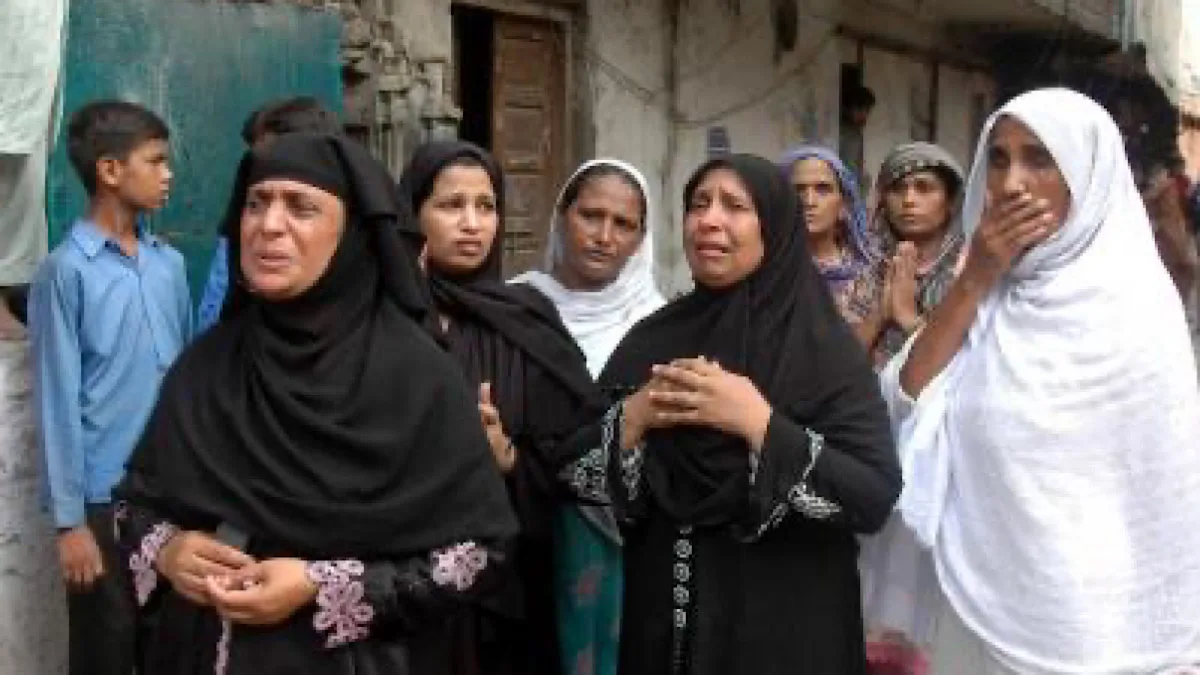
Imagine a country where grown-up men hold all the power, and women are mostly expected to stay at home and take care of the house and family.
This report says that Pakistan is like that because of old traditions.
Women are not given many chances to earn their own money and are sometimes treated like property.
The report also mentions that many women face violence.
It points out that even though Pakistan talks about protecting others, it doesn't always protect its own women very well.
Some laws from a long time ago also made things harder for women.
The report concludes that it's still a big challenge for women to have the same rights and safety as men in Pakistan.

Pakistan's society is deeply entrenched in patriarchal and feudal structures that confine women to domestic roles.
Women are often excluded from opportunities for financial autonomy and viewed as property.
The country faces low global gender parity rankings and a high incidence of gender-based violence.
The state's promotion of religious conservatism, influenced by legislation like the Hudood Ordinance, has further stifled women's rights.
Pakistan's treatment of its women contrasts with its outward pronouncements on minority rights, while gender parity remains a distant goal.
- Who
- The report by think tank 'Geostrata'
- What
- Highlights that Pakistan's patriarchal and feudal structures severely restrict women's roles, confine them to domesticity, deny financial autonomy, and expose them to high rates of gender-based violence. The report criticizes the state's promotion of religious conservatism and its hypocrisy in advocating for minority rights abroad while failing to protect its own female population.
- When
- The report was released on Tuesday, referencing data up to 2024 and including historical events like the 1971 Operation Searchlight and the 1979 Hudood Ordinance.
- Where
- Pakistan
- Why
- Patriarchal and feudal traditions, state promotion of religious conservatism, and historical legislation like the Hudood Ordinance perpetuate the subjugation of women.
- Gender Parity Ranking
- Lowest globally, at 56.7%
- Reported Gender-Based Violence Cases (2024)
- 32,617
- Hudood Ordinance Enactment
- 1979 (under Zia regime)
- Female Literacy Rate
- 49% (2022 World Bank report)
- Women Representatives in Parliament (2024)
- Approximately 17%
- Women's Population Share
- 49.3%