

Archive · 7 Nov 2025
Nehru Champions Tech Education, Spurs India's IT Growth Amidst Challenges
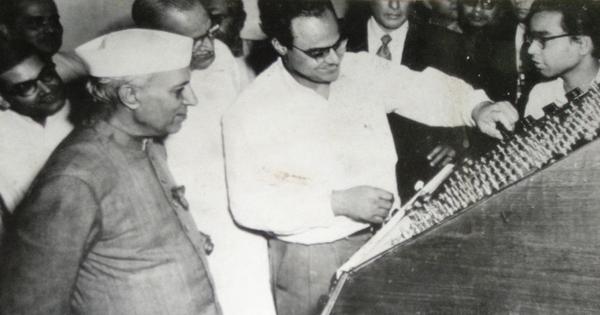
Imagine India wanting to build new things like roads and canals, but not having enough skilled workers.
So, the leader, Jawaharlal Nehru, decided to build special schools called IITs to teach science and technology.
These schools got help from America, and even got one of the first big computers ever!
People learned how to use computers and write programs, and even wrote their own books.
But, many people were scared computers would take their jobs, and there weren't many jobs for computer experts in India back then.
Some people even went to other countries for work.
Companies like IBM, which sold computers, also had some issues with the Indian government.
The government thought IBM was charging too much for old computers, so after a big disagreement, IBM had to leave India.
Even though it was hard, these efforts helped India become good at technology later on.

Jawaharlal Nehru initiated the establishment of Indian Institutes of Technology (IITs) to boost technical education and workforce development.
The first intensive computer courses in India were offered at IIT Kanpur in 1963, following the arrival of an IBM 1620 computer.
V Rajaraman authored the first Indian textbooks on computing, making the subject more accessible.
Public anxiety over job losses due to automation led to protests and government regulations on computer installations.
IBM ceased its India operations in 1978 after failing to reach an agreement with the Indian government over pricing and business practices.
- Who
- Prime Minister Jawaharlal Nehru, Indian scientists, foreign universities (US), IITs, V Rajaraman, IBM, Vinayak Mahadev Dandekar committee, Indian government, IBM executives
- What
- Initiated technological education by establishing IITs, introduced early computers and programming courses, faced public anxiety over automation, and ultimately saw IBM exit India due to regulatory disputes.
- When
- Primarily in the 1950s, 1960s, and 1970s, with IBM's exit in 1978.
- Where
- India, with a focus on institutions like the Indian Institutes of Technology (IITs) such as IIT Kanpur, and multinational corporations like IBM.
- Why
- To meet independent India’s need for a technically qualified workforce for development projects and to regulate multinational companies' market dominance and practices.
Indian Government Stance
IBM Stance
Business Practices & Pricing
Indian Government Stance
Accused IBM of unfairly profiting by 'dumping junk' (obsolete machines) and overcharging clients.
IBM Stance
Claimed the Indian government was uncooperative by demanding price slashes and delinking sales from servicing.
Market Control & Partnership
Indian Government Stance
Sought to control multinational influence, particularly IBM's monopoly, and mandated partnership with an Indian company.
IBM Stance
Felt constrained by government orders that were unpalatable for a company accustomed to setting its own terms.
Exit from India
Indian Government Stance
Blamed IBM for its exit due to failure in negotiations and confirmed malpractices.
IBM Stance
Blamed the Indian government for its bitter exit following failed talks.
- First IITs Established
- 1950s and 1960s
- Kanpur Indo-American Program (KIAP) Start
- August 1961
- First Computer at IIT Kanpur
- IBM 1620 in Summer 1963
- First Indian Computing Textbooks
- Written by V Rajaraman
- First PG Program in Computer Science
- 1970 at IIT Kanpur
- IBM's India Operations Closure
- 1978
- Life Insurance Corporation (LIC) Computer Installation Protest
- 1963