Archive · 8 Oct 2026
Opposition Marches Demand Election Chief’s Resignation Over Voter Roll Changes

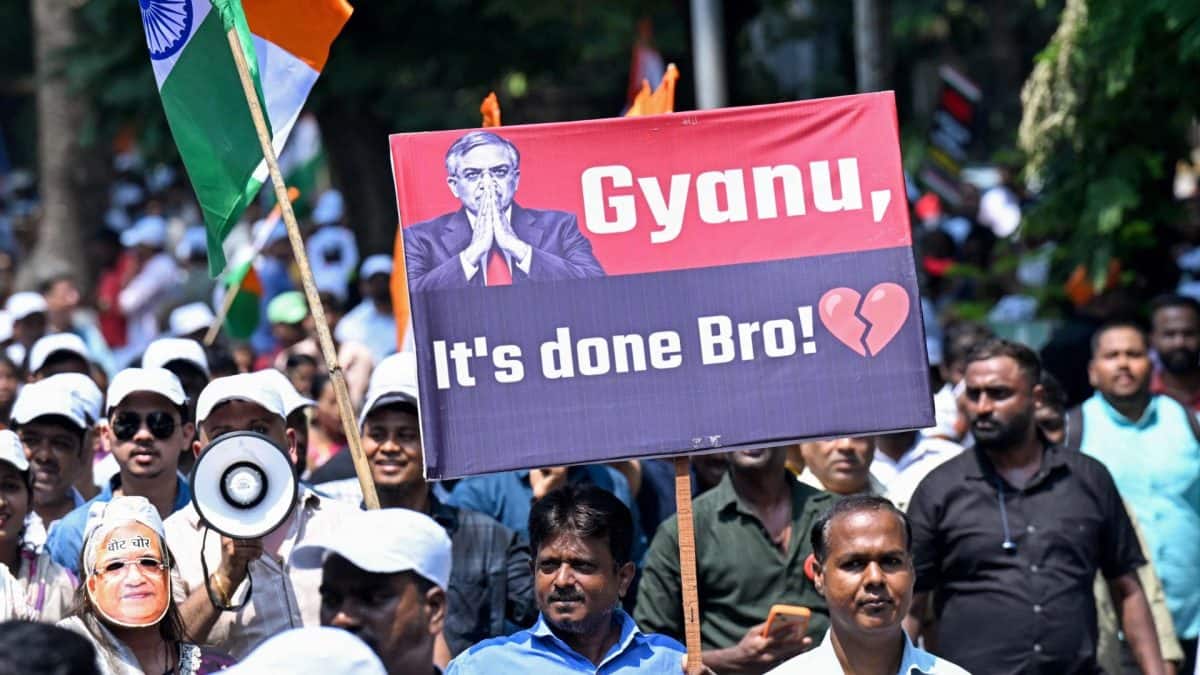
Opposition parties and other groups protested in New Delhi on October 6.
They want election chief Gyanesh Kumar to resign over changes to voter lists.
They worry that some people who should be allowed to vote could be left off the lists.
They say the paperwork needed to prove eligibility may be hard for some people to get.
The Election Commission says it is trying to remove duplicate and ineligible names while keeping eligible voters registered.
It also says decisions about the revision were unanimous.
Police stopped the march near the Commission’s office and detained several leaders.
The Supreme Court did not temporarily stop Kumar from working because it said it needed to check the facts first.

Opposition leaders, student groups and civic organisations protested in New Delhi on October 6, demanding Chief Election Commissioner Gyanesh Kumar’s resignation over voter-roll revisions.
Rahul Gandhi, Priyanka Gandhi Vadra and other leaders marched toward the Election Commission’s office; police stopped the march and detained several participants.
Protesters said the Special Intensive Revision could exclude eligible voters and called for greater transparency, citing concerns about documentation and verification requirements.
The Election Commission and government rejected wrongdoing allegations; the Commission said revision decisions were unanimous and the process targets duplicate and ineligible entries while retaining eligible voters.
The Supreme Court declined to temporarily restrain Kumar from functioning, saying it needed to verify the facts before acting on the allegations.
- Who
- INDIA bloc opposition leaders, student groups and civic organisations, including Rahul Gandhi and Priyanka Gandhi Vadra.
- What
- They protested and demanded Chief Election Commissioner Gyanesh Kumar’s resignation over the Special Intensive Revision of electoral rolls.
- When
- October 6, 2026, described in the articles as Tuesday.
- Where
- New Delhi, during a march from Parliament toward the Election Commission of India’s office.
- Why
- Protesters say voter-roll changes and document requirements could exclude eligible voters; the Election Commission says the exercise removes duplicate and ineligible entries while keeping eligible voters registered.
Opposition and critics
Election Commission and government
Effect of voter-roll revisions
Opposition and critics
Critics say documentation and verification requirements could make it difficult for some people to prove eligibility and could leave genuine voters off the rolls.
Election Commission and government
The Election Commission says the revision is intended to remove duplicate and ineligible entries while ensuring eligible voters remain registered.
Conduct of the Election Commission
Opposition and critics
Opposition parties accuse the Commission of mishandling the process and question its independence; some allege voter registrations are being manipulated to benefit the ruling Bharatiya Janata Party.
Election Commission and government
The Commission and government reject allegations of wrongdoing. The Commission says decisions relating to the revision were unanimous, while a cited report says two commissioners had raised objections on some SIR-related orders.
- Protest date
- October 6, 2026
- Main demand
- Gyanesh Kumar’s resignation as Chief Election Commissioner
- Issue
- Special Intensive Revision (SIR) of electoral rolls
- March destination
- Election Commission of India office, Nirvachan Sadan, New Delhi
- Police action
- The march was stopped near the office and several opposition leaders were detained
- Reported scale of deletions
- One article says more than 13 crore voters have been deleted
- Election Commission’s position
- It says revision decisions were unanimous and the exercise targets duplicate and ineligible entries
- Supreme Court action
- Declined an interim order restraining Kumar, saying it needed to verify the facts