

1 hr ago
Trump Faces Difficult Choices in Contest With China Over AI
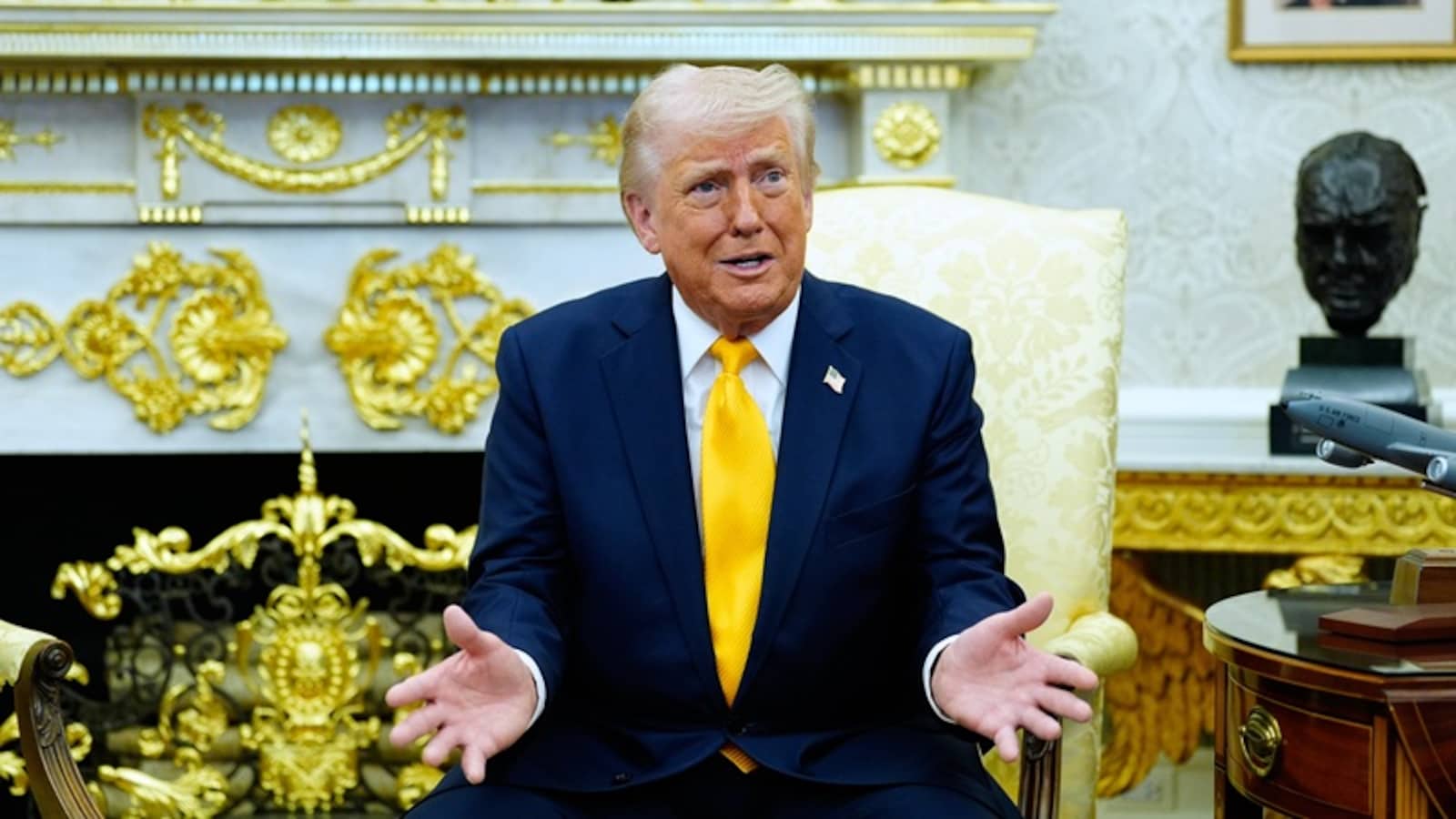
The United States and China are competing to become the strongest country in artificial intelligence.
Many American officials and technology companies worry that China is catching up quickly.
Dario Amodei of Anthropic wants the United States to limit China's access to powerful computer chips and American AI technology.
President Donald Trump supports some restrictions but has also considered selling certain chips to China.
China says the American accusations about unfair copying are unfounded and that US restrictions are meant to hold back its progress.
China can respond by limiting exports of rare earths, which are important for many high-tech products.
American companies also worry that Chinese firms can rent powerful US chips through data centers in other countries.
The two governments plan to discuss these disagreements during talks connected to a meeting between Trump and Xi Jinping.

Donald Trump and Anthropic CEO Dario Amodei agree that the United States should prevent China from overtaking it in artificial intelligence.
Amodei urged restrictions on advanced AI chips, stronger action against chip smuggling, and measures against unauthorized copying of American AI models.
The Trump administration has maintained some export controls but has considered selling Nvidia H200 chips to China and has not imposed broader penalties over alleged AI-model distillation.
China has narrowed the AI gap through companies such as DeepSeek and Moonshot AI while using its control of rare-earth exports as leverage in trade negotiations.
Upcoming US-China discussions around the September 24 summit are expected to address AI competition, technology controls, model copying, and access to advanced chips.
- Who
- The Trump administration, Anthropic CEO Dario Amodei, Chinese officials, and American and Chinese AI companies.
- What
- The United States is weighing how to limit China's access to advanced AI chips and American AI technology while preserving its lead in artificial intelligence.
- Where
- The competition involves the United States, China, and technology infrastructure in Southeast Asia and other countries.
- When
- The issue is expected to feature in AI talks planned around the September 24 summit between Donald Trump and Xi Jinping; the article also references prior talks in May 2024.
- Why
- China is rapidly narrowing the AI gap, while Washington wants to protect its technological and national-security advantages without provoking Chinese retaliation involving rare earths or other supply chains.
US Restriction Advocates
Chinese Objections and Retaliation
Access to advanced chips
US Restriction Advocates
US officials and technology advocates argue that Washington should block China's access to advanced chips, including through cloud data centers and smuggling networks.
Chinese Objections and Retaliation
China opposes what it calls US containment measures and wants export controls and entity-list designations removed before deeper technical dialogue.
AI-model distillation
US Restriction Advocates
Anthropic, US security agencies, and administration officials accuse Chinese companies of using unauthorized distillation to copy capabilities from American AI systems.
Chinese Objections and Retaliation
Beijing has dismissed the claims as groundless and says Washington is applying a double standard to suppress Chinese competition.
Balancing competition and cooperation
US Restriction Advocates
The United States wants to preserve its AI lead while exploring controls that limit China's technological advancement.
Chinese Objections and Retaliation
Chinese officials say meaningful cooperation requires mutual political trust and an end to measures that create friction in bilateral relations.
Key facts
- Central disagreement
- Washington wants to restrict China's access to advanced AI technology, while Beijing calls the measures containment and a double standard.
- Anthropic proposal
- Dario Amodei called for limits on advanced chip sales, action against chip smuggling, and measures against unauthorized AI-model distillation.
- Trump administration policy
- The administration maintains export controls but has also been open to selling Nvidia H200 semiconductors to China.
- Chinese AI progress
- The article says models from DeepSeek and Moonshot AI have narrowed the capability gap with US frontier systems, often at lower cost.
- Retaliatory leverage
- China has used export controls on rare earths as leverage in negotiations with the United States.
- Planned discussions
- US and Chinese officials are expected to hold AI talks around the September 24 summit between Trump and Xi.
- Proposed legislation
- A bipartisan bill in Congress would seek to curb China's remote access to Nvidia chips through cloud computing.
Quotes
Jiang Tianjiao
Research fellow at the Center for Global AI Innovative Governance and associate professor at Fudan University
“China has always maintained that if you want a dialogue - especially on sensitive technical issues - there must first be mutual political trust. That means establishing mutual respect without triggering unnecessary friction in bilateral relations.”
 NDTV
NDTV
“Washington has to tread carefully now that Beijing has sharper retaliatory tools, such as export controls on rare earths. Also, the American AI boom relies on many data center components from China.”
NDTV
Daniel Remler
Senior fellow at the Center for a New American Security and former State Department AI policy official
“Both countries see AI as one of, if not the most important arena of strategic competition. But leaders and senior policymakers on both sides have to see AI in the context of every other issue they have to contend with, from the war in Iran to rare earths.”
NDTV
Sources
Related news
Trump Links AI Data Center Opposition to China Advantage

Beijing Rejects Anthropic CEO’s Call to Curb China’s AI

China Calls Anthropic AI Slowdown Proposal a Cold War Tactic
Trump Rejects AI Slowdown, Says Strong President Is Guardrail

Lutnick Says China Ignored Trump Offer for Advanced AI Chips

China Says AI Is Not a Monopoly of Great Powers

Apple Pushes iPhone Into Ultra-Premium Foldable Tech Market

Samsung Reportedly Supplies Apple’s First Foldable iPhone Display

BRICS Forum Focuses on Secure Sea Lanes and Local Currencies

Putin Proposes NDB Investment Platform to Expand BRICS Cooperation
