

Archive · 8 Nov 2025
Salim Ali: India's Birdman and His Lifelong Scientific Journey
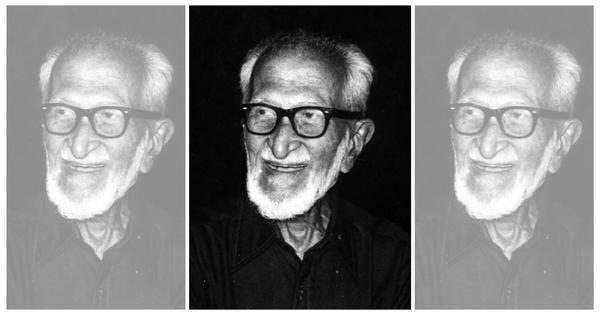
Imagine a young boy named Salim who loved watching birds.
One day, he shot a sparrow and noticed something interesting: another sparrow quickly replaced the one he shot.
This event sparked his curiosity about birds.
He later visited a natural history society and discovered a whole new world of bird study.
Back then, it was hard to find books about Indian birds, so Salim decided to document them himself.
He carried a small notebook and pencil to jot down everything he saw.
He wrote detailed notes about birds' behavior and where they lived.
His hard work led to a very popular book called 'The Book of Indian Birds,' which helped many people, including the Prime Minister's daughter, learn about birds.
Salim Ali's detailed observations and writings greatly increased our knowledge of Indian birds.
He also helped start university courses on bird studies.
Even though he wasn't fond of school, his passion for birds made him a legendary scientist.

Salim Ali's scientific journey began in his childhood with observations of sparrow behavior.
A chance encounter with a yellow-throated sparrow opened up a world of ornithology for him.
He focused on detailed field observations and behavior studies, differentiating from the prevailing taxidermy-focused approach.
His influential works, including 'The Book of Indian Birds' and the 'Handbook of the Birds of India and Pakistan,' are landmarks in ornithology.
Ali received numerous national honors for his contributions to ornithology and wildlife conservation and advocated for the inclusion of ornithology in university curricula.
- Who
- Salim Ali, an Indian ornithologist and naturalist
- What
- Pioneered field ornithology in India, focusing on bird behavior and ecology, and authored influential bird guides.
- When
- His scientific pursuits spanned over 80 years, from childhood observations in the early 1900s to his last known seminar in 1986.
- Where
- Primarily across the Indian subcontinent, including India, parts of Tibet, and Burma (Myanmar).
- Why
- Driven by a lifelong fascination with birds, a desire to document them accurately, and to popularize the study of birds through accessible field guides.
- First Recorded Observation
- 1906-07 (age 10)
- First Scientific Paper
- Nesting of the Baya Weaverbird (approx. 1926-1930)
- Major Publication 1
- The Book of Indian Birds (1st ed. 1941)
- Major Publication 2
- Handbook of the Birds of India and Pakistan (1953-1974)
- Key Awards
- Padma Bhushan (1958), Padma Vibhushan (1976)
- Academic Contribution
- Helped Bombay University include ornithology as a post-graduate discipline