Archive · 5 Jun 2025
New Plastic Dissolves Fast in Seawater, Tackling Ocean Pollution
Scientists in Japan have created a new type of plastic that quickly dissolves in seawater, potentially solving the problem of plastic pollution.
This new plastic breaks down into its original, harmless components when exposed to salt water.
It's as strong as regular plastic, but it won't create harmful microplastics.
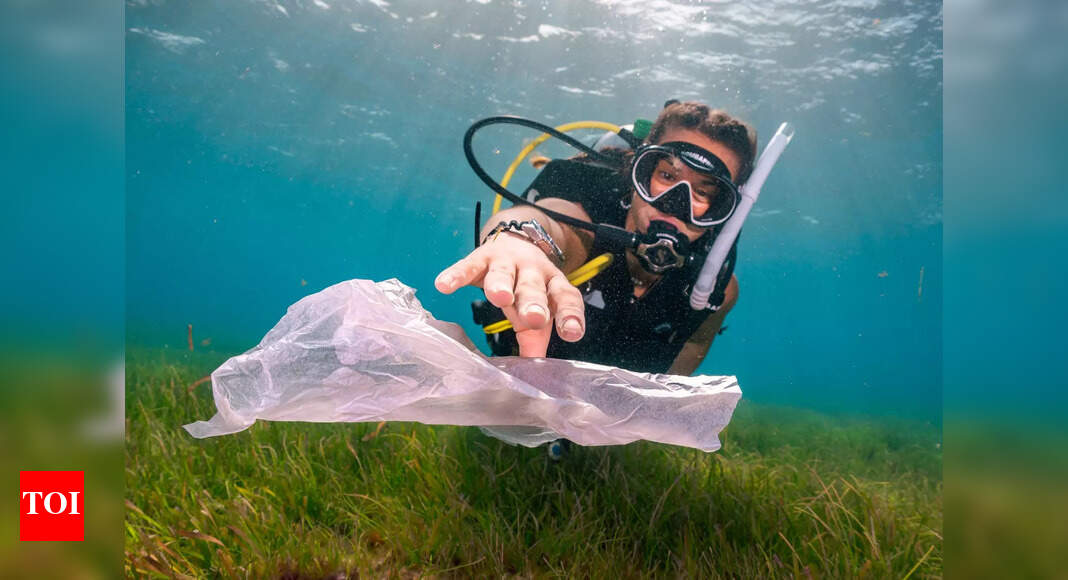
Many divers and environmentalists are also working to clean up plastic from the oceans, which is harming marine life and the environment.
They are advocating for changes before plastic even reaches the sea by recycling plastic waste.
It is vital to protect our oceans by recycling ocean debris and by creating a solution for plastic pollution.

Japanese scientists created a new plastic that dissolves in seawater within hours.
The plastic breaks down into its original components, which can be processed by bacteria.
Plastic pollution in oceans is a growing crisis.
Divers report the sad reality of plastic pollution in oceans, harming marine life.
Efforts include recycling plastic debris into useful materials and promoting clean-up drives.
- Who
- Researchers in Japan, environmentalists, divers, and scientists globally.
- What
- Development of fast-dissolving plastic and efforts to reduce and recycle plastic waste in oceans.
- When
- Ongoing - efforts to combat plastic pollution and develop solutions.
- Where
- Japan (plastic development); oceans worldwide (plastic pollution).
- Why
- To address the global plastic waste crisis, protect marine life, and reduce environmental harm.
- Research Institutions
- RIKEN Center for Emergent Matter Science and the University of Tokyo
- Dissolving Time
- Hours
- Marine litter percentage made up by plastics
- 55-57%
- Plastic waste generated by India annually
- 3.4 million tonnes
- Percentage of plastic recycled in India
- 30%
- Plastic attributes
- Non-toxic and non-flammable