

Archive · 31 Jul 2026
AI Hallucinations Undermine Truth in Rosenbaum's Book
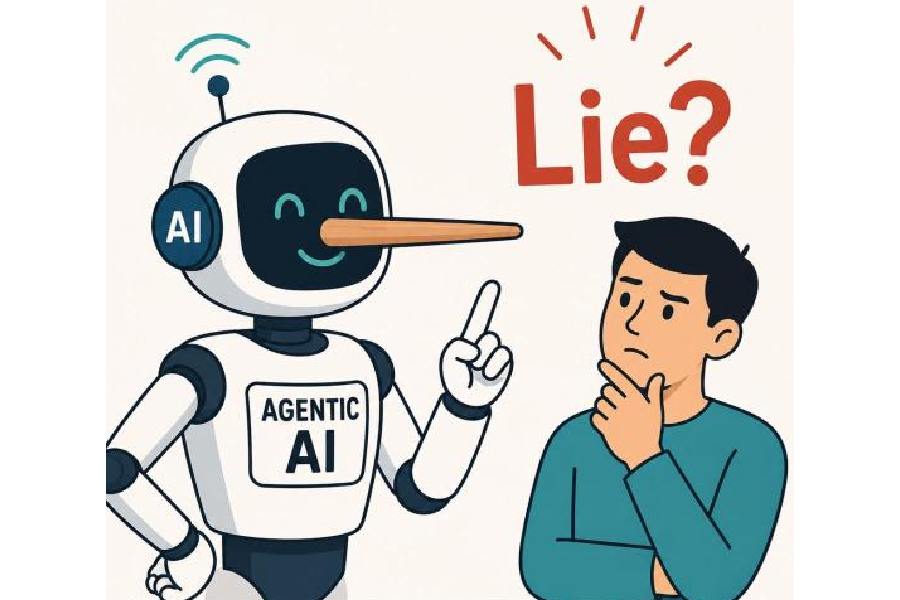
Steven Rosenbaum wrote a book about how AI changes truth, but he used AI tools to help write it.
The AI made mistakes, putting wrong facts and misattributing quotes.
This shows that AI can hallucinate because it picks the most likely answer from its data, not from real facts.
When the data are missing or unclear, the AI may make up information.
Developers are trying to add warnings that AI can be wrong, but the models still can hallucinate.
The book’s errors highlight that people must check AI work with human judgment.
AI is useful, but it isn’t perfect.
It needs careful review to keep information accurate.
The story reminds us that we can’t trust AI alone for truth.

Rosenbaum used AI tools to write "The Future of Truth" but the book contains inaccuracies caused by AI hallucinations.
AI hallucinations happen because models rely on probabilistic data retrieval rather than objective reality.
Limited data and noisy human feedback lead AI to fabricate or confabulate when information is scarce.
Developers add uncertainty statements, yet current LLMs cannot fully eliminate hallucinations.
The incident underscores the need for human moderation when using AI-generated content.
- Who
- Steven Rosenbaum
- What
- Book "The Future of Truth" contains AI-generated errors
- Why
- AI hallucinations arise from probabilistic data retrieval and limited training data
- Author
- Steven Rosenbaum
- Book Title
- "The Future of Truth"
- Issue
- AI-generated inaccuracies
- AI Model
- Large Language Models
- Solution
- Human moderation required