

Archive · 23 Nov 2025
Vulture Population Declines in Telangana's Kaghaznagar Forest Division
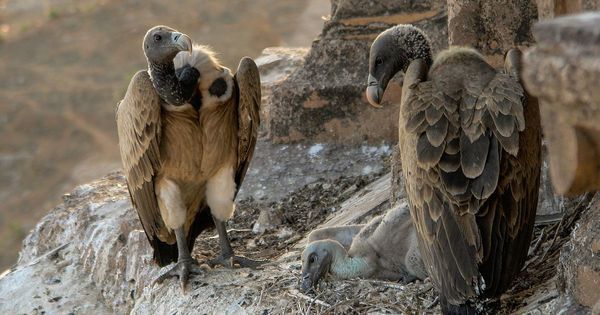
Vulture friends in Telangana are having a hard time.
They're not making enough babies to keep their population big.
A study found that water from a nearby stream might be making them sick.
Scientists want to help them, but they need to work together to make sure the vultures are safe and healthy.

Long-billed vulture population in Telangana's Kaghaznagar Forest Division has declined significantly over 14 years.
A study found that breeding success has been low, with only one nest in 2022 and 2023.
Environmental factors like water toxicity, temperature, and rainfall impact breeding outcomes.
The Sirpur Paper Mill's effluents, which exceed safety limits, are suspected to affect adult health and egg viability.
Conservation efforts are crucial to prevent the collapse of the vulture population in the region.
- Who
- Long-billed vultures (Gyps indicus)
- What
- Experiencing population decline and breeding issues
- When
- Over 14 years (2010-2023)
- Where
- Telangana's Kaghaznagar Forest Division
- Why
- Due to environmental factors, including water toxicity, and slow reproduction rate
Environmental Factors
Industrial Impact
Breeding Success
Environmental Factors
Higher in cooler years and with better airflow
Industrial Impact
Reduced by heavy rainfall and proximity to human activity
- Species
- Long-billed vulture (Gyps indicus)
- Study Duration
- 14 years (2010-2023)
- Number of Nests Monitored
- 23 nests across two colonies
- Eggs Laid
- 116 eggs
- Chicks Survived
- 85 chicks